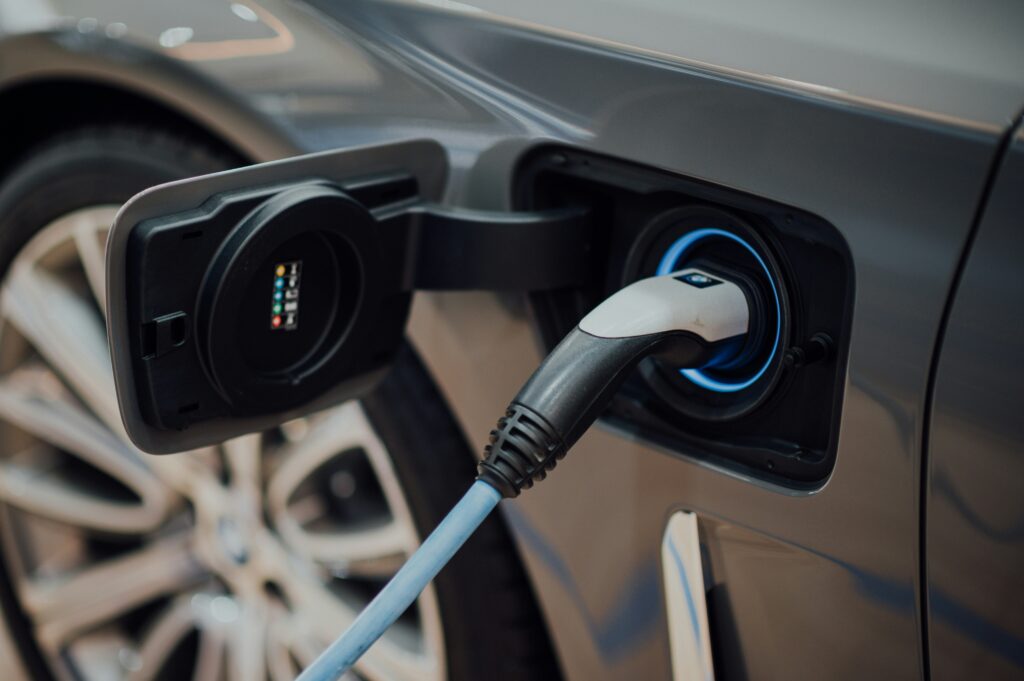

Europe’s electric vehicle charging network is growing fast, but concerns over high prices and the the degree of realism of the 2030 targets are mounting. These were the main messages from a European Commission update to the European Parliament’s transport committee on the Alternative Fuels Infrastructure Regulation (AFIR).
Director Eric von Breska from the Commission’s transport department (DG MOVE) told the committee that Europe currently has 1m charging points, up from around 300,000 in 2021. Meanwhile, electric vehicles (EVs) now represent 17 per cent of new registrations.
Committee members began by focusing on some of the concerns about AFIR that have been raised by drivers in different member states. MEP Jens Gieseke (EPP/DEU) said one of the main obstacles for drivers remains “high prices and lack of price transparency”.
Are the 2030 targets realistic?
Mr von Breska said the Commission has found no evidence of price abuse, arguing that higher prices are due to infrastructure costs and national differences. MEP Jan-Christoph Oetjen (Renew/DEU) said “free choice” depends on clarity and ease of use. Without transparent pricing and reliable infrastructure, he suggested, uptake could slow despite regulatory ambition.
Ahead of this autumn’s scheduled review of AFIR, members also asked if the infrastructure target can be delivered. Currently, only around 2,000 truck-compatible charging points have seen installation, compared to a target of 20,000 by 2030. Mr Gieseke said it is a “very ambitious” objective.
You might be interested
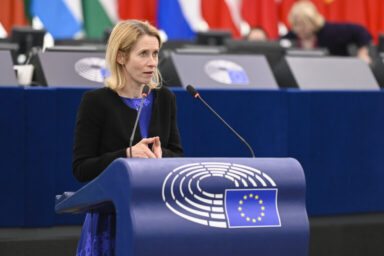
Mr von Breska noted that the rate of roll-out of more than 100,000 charging points a year across Europe makes hitting the target feasible. However, he acknowledged that truck charging is more complex than for cars, since it requires megawatt-level power connections and space.
An ideological approach
Some criticism from the right focuses less on the practicalities and more on the regulatory philosophy behind electrification. MEP Carlo Ciccioli (ECR/ITA) said AFIR is “an ideological thing, the work of the Green Deal”. “We need strict environmental targets,” he said, “but we should leave consumers the choice to select the best technology.”
We’ve moved away from an environmental dream more towards an industrial reality, electrification is happening imposed by legislation rather than consumer demand. — MEP Carlo Ciccioli (ECR/ITA)
The tone in Brussels is changing. Few MEPs openly question decarbonisation objectives. More common is a focus on practicality and affordability.The Commission is preparing an impact assessment ahead of AFIR’s scheduled review later this year. Infrastructure deployment for cars is ahead of minimum requirements in many member states as some of them have raised also the lack of chargers in rural areas. As 2030 approaches, though, there is a growing gap between delivery and ambition on EV infrastructure.