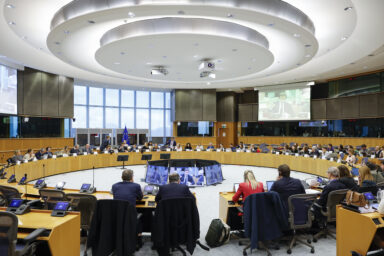

Parliamentarians from the Committee on the Environment, Climate and Food Safety debated on Wednesday the EU’s transition towards a circular economy with special focus on plastic recycling. Commission’s pilot project aims at encouraging investment and innovation including so-called transregional circularity hubs—not everyone, however, is enthusiastic about this idea.
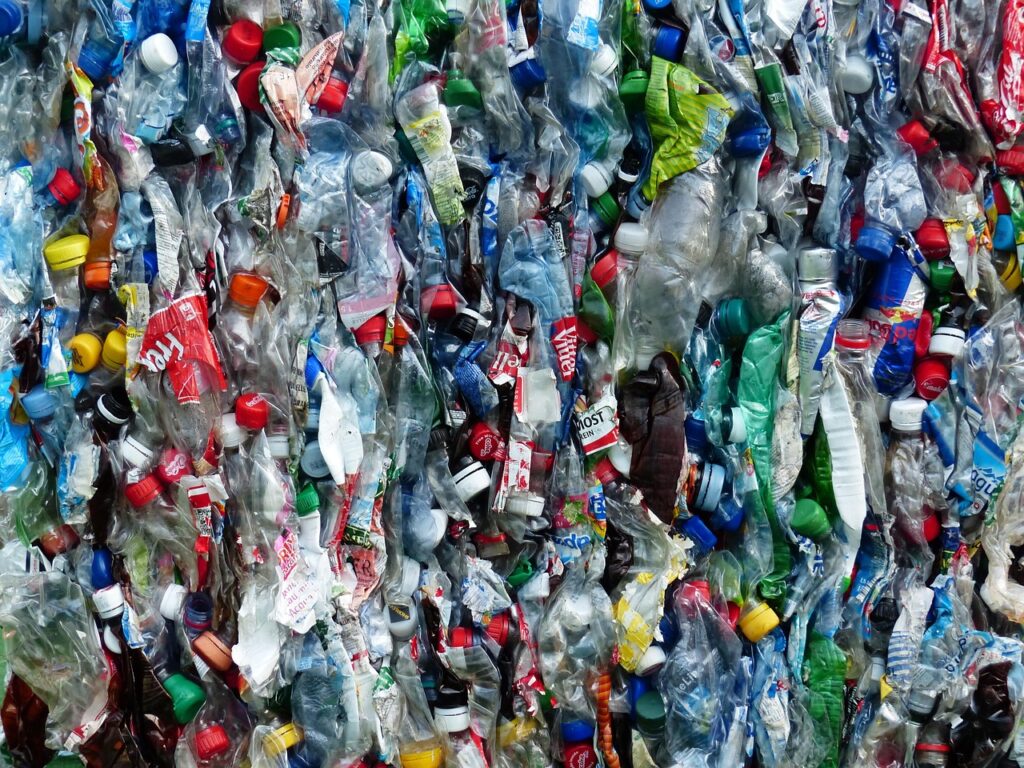
Unclear rules that vary among member states, crisis in the recycling sector, and massive imports of plastics of dubious origin from third countries. These are just some of the problems standing in the way of boosting circularity of plastics within the European Union.
Single market as the key: Commission
Commission representative who was present at the Committee on the Environment, Climate and Food Safety (ENVI) meeting emphasized that it is essential to overcome market fragmentation, i. e. to build a more integrated single market for plastic recyclates across the EU. He also mentioned the first set of pilot actions set by the Commission aimed at accelerating EU’s transition to a circular economy with a particular focus on the plastics sector.
In Commission’s view, optimising the recycling of plastics could unlock the potential of the single market and enhance the EU’s economic security, strategic autonomy, competitiveness and environmental sustainability. This is in line with the analysis of the Draghi report, which highlights circularity and resource efficiency as key levers for strengthening Europe’s industrial competitiveness.
However, the path to this goal may be difficult. “We acknowledge it is important to take measures to protect as much as possible the European recyclers. The sector facing most of the challenges is the sector of plastic recyclers,” Commission representative admitted.
You might be interested
Focus on quality essential
MEPs from the center and left of the political spectrum mostly supported the Commission’s initiative, albeit with reservations. Some were bothered by the absence of specific measures. “I regret there is no longer any Circular Economy Action Plan as we had in the past,” MEP Sara Matthieu (Greens/BEL) said.
I regret there is no longer any Circular Economy Action Plan as we had in the past. – MEP Sara Matthieu (Greens/BEL)
Ms Matthieu also stressed that it is important to promote high quality recycling. “The Commission’s proposal, however, does not give a sound base for this,” the Belgian MEP objected. Other MEPs stressed the necessity to improve controls on EU’s external borders as currently it is not exactly clear what kind of plastic material is entering the EU.
Price is what counts
However, not all parliamentarians presented at the ENVI meeting were enthusiastic about the Commission’s proposal. Some even questioned recycling as a path to a better future.
Recycling is often more expensive than creating new goods, it is essential to find a balance. – Anja Arndt (ESN/DEU)
Anja Arndt (ESN/DEU) pointed to the fact that in her country, Germany, recycling business is in a deep crisis with factories closing. She also mentioned that a lot of recycling capacity has recently disappeared from the market across Europe. “Recycling is often more expensive than creating new goods, it is essential to find a balance (….) The Commission’s pilot project would inevitably lead towards more regulation which is the last thing we need,” Ms Arndt means.