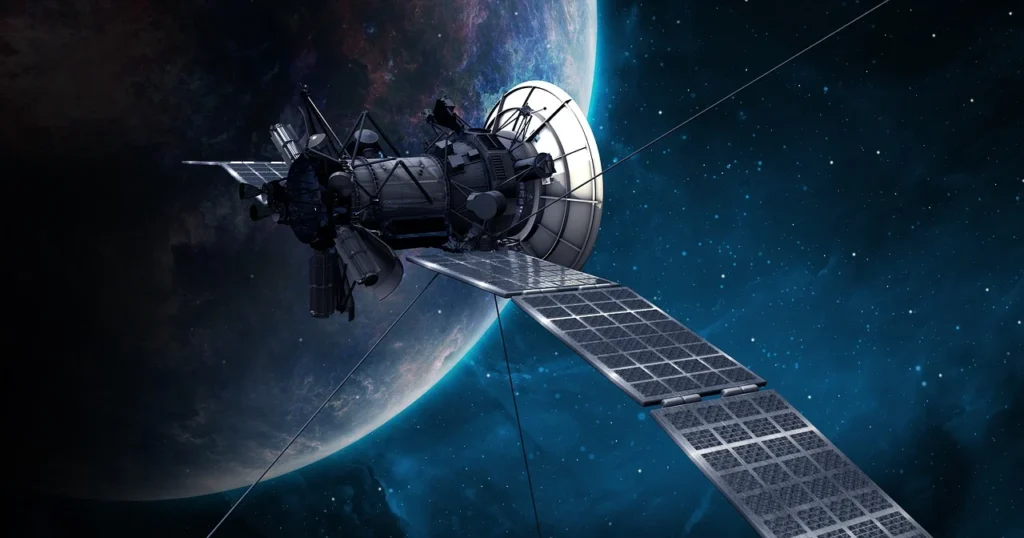

European security officials believe that two Russian space vehicles may have intercepted the communications of about a dozen key European satellites. The data at risk include classified government communications and certain military messages. Commission did not disclose specific measures how to prevent such attacks in the future.
For several years, Europe’s military and civilian space agencies have been monitoring the activity of Luch-1 and Luch-2. These are two Russian objects that have repeatedly carried out suspicious manoeuvres in orbit. Since its launch in 2023, Luch-2 has approached 17 European satellites and experts believe that the Russians may have managed to obtain sensitive data from European satellites.
Unencrypted information
According to Financial Times, a senior European intelligence official expressed concern that sensitive information—notably command data for European satellites—is unencrypted. The reason is that many were launched years ago without advanced onboard computers or encryption capabilities. This leaves them vulnerable to future interference—or even destruction—once hostile actors have recorded their command data.
Most of them are commercial satellites, so not encrypted. – Commission spokesperson
Regarding the protection of satellite data, Commission spokesperson on Wednesday did not give any detailed answer when asked by journalists. “We’re entering the technical details. Indeed, most of them are commercial satellites, so not encrypted. For the encrypted ones and the breakdown, I can get back to you bilaterally with more information if you want,” the answer was.
Advanced space-spying programmes
According to experts, Russia has one of the most advanced space-spying programmes and has been more aggressive in its use of the vehicles to stalk satellites. The current moves in space come as Russia steps up its ’hybrid warfare’ in Europe, including sabotage operations such as the severing of subsea internet and power cables.
The Russian activities are a fundamental threat to all of us, especially in space. A threat we must no longer ignore. – Boris Pistorius, German Defence Minister
“Satellite networks are an Achilles heel of modern societies. Whoever attacks them can paralyse entire nations,” German Defence Minister Boris Pistorius said recently. “The Russian activities are a fundamental threat to all of us, especially in space. A threat we must no longer ignore,” Minister Pistorius added.
However, it remains unclear what kind of protection this should be. The current proposals are a long way off. Last week, Andrius Kubilius, Commissioner for Defence and Space, announced the launch of the Govsatcom programme, which will integrate the existing satellite communication capabilities of all 27 member states. EU is also preparing to establish a secure satellite communications system for military intelligence purposes by 2030.