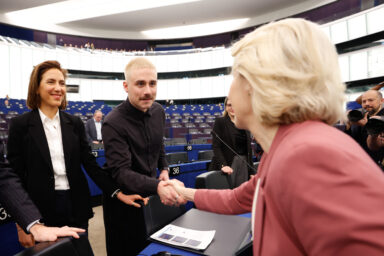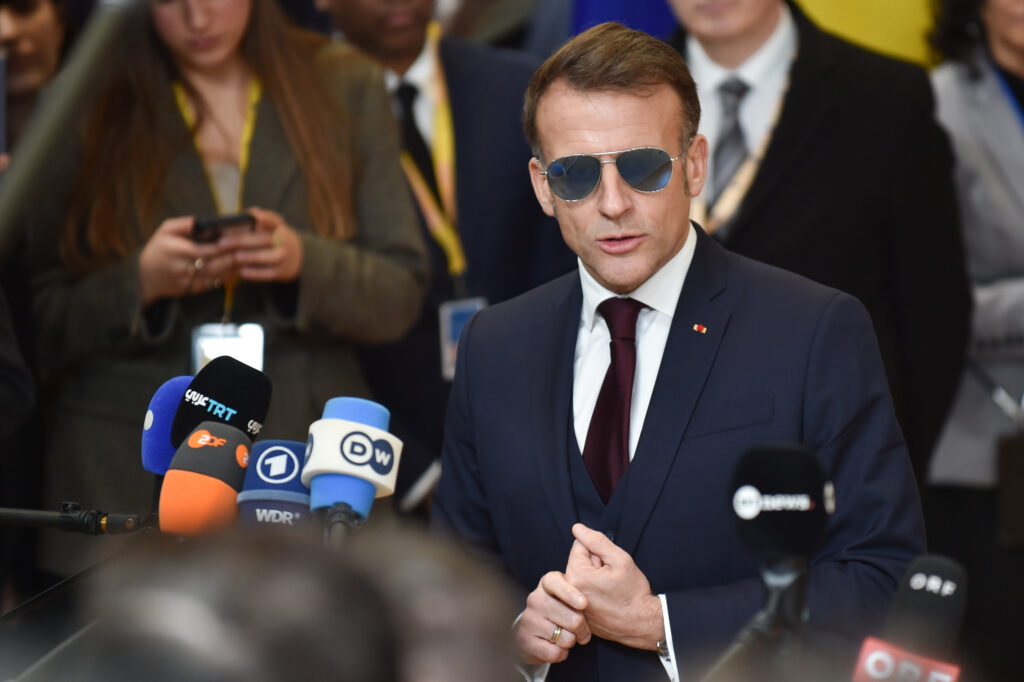

When does economic strategy become identity politics? EU leaders may soon find out. French President Emmanuel Macron heads into this week’s informal summit determined to sell a more self-reliant economic model for Europe—and is already facing pushback from Berlin, Rome and several northern capitals wary of anything they see as protectionist.
At the centre is Mr Macron’s push for a “Buy European” approach: more public investment, stronger industrial policy and procurement rules tilted towards European firms. Supporters say the shift is overdue. Critics warn it risks deterring investment and narrowing Europe’s economic outlook, according to officials and multiple reports ahead of the meeting.
A beautiful rural setting
Leaders gathering at Alden Biesen—a castle in the Belgian countryside—are expected to focus on competitiveness. Instead, they may find themselves debating what Europe’s economic model should look like in a more uncertain world.
Economists Mario Draghi and Enrico Letta, whose reports shape much of the current debate on competitiveness, will take part. Mr Macron wants the moment to be consequential. His pitch includes reducing reliance on external partners, diversifying supply chains, cutting bureaucracy and directing more public contracts towards European firms.
Berlin and Rome tap the brakes
Germany and Italy are not rejecting industrial policy outright. But both are wary of sweeping procurement preferences and keen to preserve trade and investment ties. German Chancellor Friedrich Merz has argued Europe must close the competitiveness gap with the United States and China without retreating behind economic barriers, according to remarks reported in European media.
Northern and Baltic states have been blunter. Estonia, Finland, Latvia, Lithuania, the Netherlands and Sweden warned ahead of the summit that expansive “Buy European” rules could push investment out of the EU and undermine confidence in the single market, according to a joint statement.
You might be interested
Trump in the background
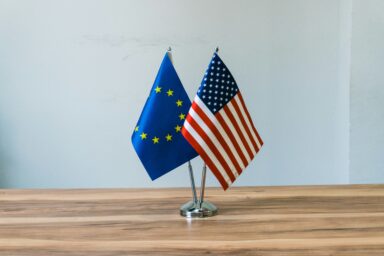
The debate is unfolding against a more fragile transatlantic backdrop—and the tumultuous second term of Donald Trump has sharpened the conversation.
Tariff threats, pressure on trade and increasingly transactional rhetoric from Washington have reinforced concerns in Paris that Europe remains too exposed economically and strategically, diplomats and analysts say. Mr Trump’s push to acquire Greenland—unprecedented in modern transatlantic relations—unsettled policymakers across the bloc and strengthened arguments for greater economic autonomy.
The rupture
Even where tensions have fluctuated, the episode left a scarring impression—the “rupture” Canadian Prime Minister Mark Carney described in Davos. For many European officials, it marked a break with assumptions that had underpinned transatlantic ties for decades and raised the most unsettling of questions: whether the old order is now broken for good.
Germany and Italy are moving more cautiously. Both are wary of provoking trade disputes with Washington and fear overtly protectionist policies could backfire — particularly in defence procurement and advanced manufacturing, where transatlantic supply chains remain deeply embedded.
A familiar European divide
What is emerging is a familiar split. Paris frames industrial policy and economic sovereignty as strategic necessity. Others fear overreach—and the economic costs of moving faster than markets, investors or partners will tolerate. Germany and Italy have floated a narrower version of “Buy European”, limited to strategic sectors, according to policy papers and officials briefed on the talks. Other documents circulating before the summit focus instead on deregulation and strengthening the single market.
Strip away the language and the argument is straightforward: protect Europe’s industry, or keep the market open and rely on competition to deliver. Everyone agrees Europe needs to strengthen its economic position. No one fully agrees how—or how far the bloc should go in reshaping the rules to get there.