
The European Commission is preparing to launch an EU-wide inquiry into the effects of social media and excessive screen time on wellbeing, with a particular focus on children and young people.
The move comes as concern grows that digital environments are intensifying Europe’s mental health challenges.
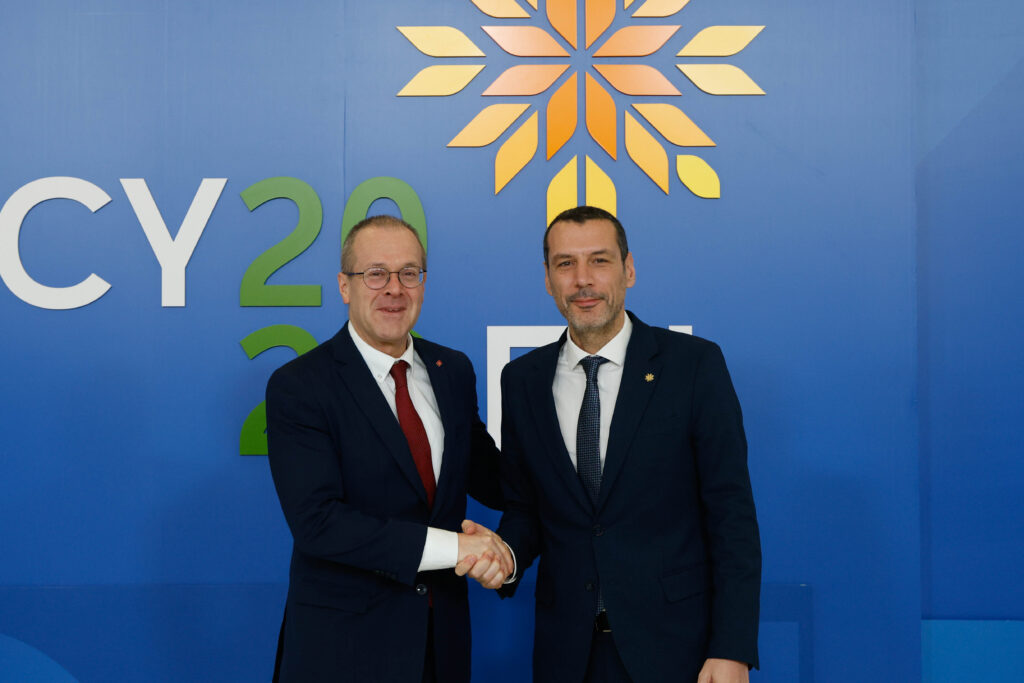
“Young people are the future. Yet the world they live in poses unprecedented challenges to their health and well-being.” That is the message shared by health Commissioner Olivér Várhelyi this week at a high-level conference on mental health and inclusiveness organised by the Cyprus Presidency of the EU Council.
While the meeting addressed mental health across the life course, pressures facing younger generations, particularly in online environments, emerged as a dominant theme.
Digital realities have become real lives. – Dr Hans Henri Kluge, WHO Regional Director for Europe
Várhelyi confirmed that the inquiry, stemming from the mission letter from Commission President Ursula von der Leyen, will go ahead in 2026. The letter tasks Várhelyi with examining how social media and excessive screen time affect wellbeing, especially among young people, and with leading an EU-wide evidence-gathering exercise to inform future policy debate.
Evidence behind the concern
The scale of the challenge was underscored at the conference by Dr Hans Henri Kluge, WHO Regional Director for Europe.
One in seven young people in Europe live with a mental health condition, Dr Kluge said. While suicide remains the leading cause of death among those aged 15 to 29. Digital exposure is compounding existing vulnerabilities, with one in ten adolescents showing signs of problematic social media use.
You might be interested

“Digital realities have become real lives,” Kluge warned. Political attention has not yet translated into sufficient delivery, with access to care still uneven across member states.
A debate shaped by today’s platforms
At the Cyprus conference, policymakers largely framed youth mental health through the lens of social media, screen time and broader digital pressures. These are areas where the EU has already begun to build regulatory and policy responses.
Hosting the meeting, Cyprus’s health minister Neophytos Charalambides argued that Europe must shift away from crisis-driven responses towards prevention.
“Across Europe, demand for mental health support has grown, awareness has increased and expectations, rightly, are higher,” he said. He warned that the social and economic costs of inaction were profound.
Young people, he added, are coming of age amid academic pressure, digital saturation and wider socio-economic uncertainty. “Resilience for youth is not the absence of hardship,” Mr Charalambides said. “It is a capacity to adapt, recover and continue to grow.”
Participants broadly agreed that young people should be involved from the outset in policy design, implementation and evaluation. The aim is to ground mental health policy more firmly in lived experience.
Warnings from Davos: from attention to attachment
Artificial intelligence was not a formal focus of the Cyprus conference. However, warnings voiced days earlier at the World Economic Forum in Davos suggest that the next phase of digital risk for young people may be shaped less by traditional social media and more by AI-powered systems.
Marija Manojlovic, executive director of Safe Online, argued that policymakers risk regulating yesterday’s platforms while overlooking how newer technologies are quietly reshaping mental health.
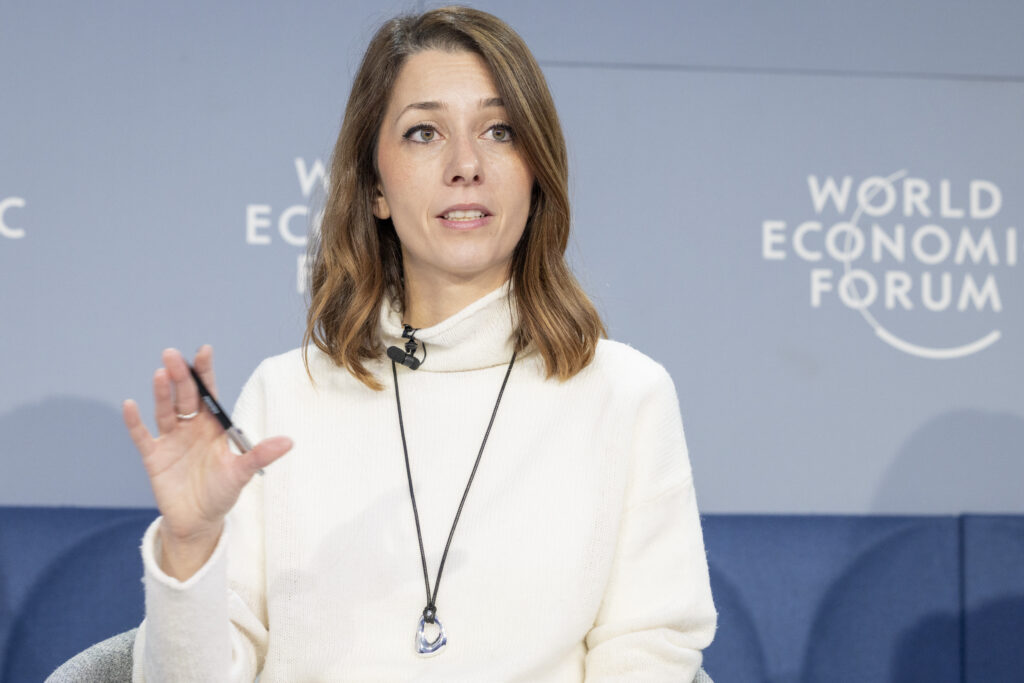
“We are moving from an attention economy to an attachment economy,” she said. Mrs Manojlovic described how AI-driven tools, including conversational chatbots, are increasingly designed to foster emotional dependency between users and machines. Unlike earlier social-media models optimised for engagement, these systems, she warned, shape intimacy, identity and companionship.
“Children are seen mostly by businesses as resources. Children are the early adopters of technologies. And these extractive models that need data actually want to engage children as early as possible,” she said. Mrs Manojlovic argued that young users are drawn into digital ecosystems long before safeguards are in place. Safety, she added, too often remains an afterthought rather than a design principle.
We are moving from an attention economy to an attachment economy. — Marija Manojlovic
Mrs Manojlovic called for a shift towards “well-being by design”. This way technology companies would be expected to demonstrate positive mental-health outcomes, not merely compliance with minimum harm-prevention standards. Regulators, she warned, risk repeating past mistakes if they legislate only for existing platforms rather than anticipating how AI-driven systems will be deployed in education, social interaction and mental-health support.
A policy response takes shape
In Brussels, concerns about youth mental health are beginning to translate into policy instruments. Beyond the inquiry itself, the Commission is assembling a broader evidence and prevention framework.
Mr Várhelyi said the Commission is working with UNICEF on a prevention toolkit for policymakers to improve the physical and mental health of children and young people. It is due to be launched by the end of 2026. It is also supporting the OECD to develop a policy brief examining the impact of the digital sphere, internet marketing and social media on health and mental wellbeing.
“We all have a role to play in building a healthier future for our young people,” the commissioner said. “They deserve policies that prioritise their health and their potential.”
The inquiry also builds on momentum already established at Council level. In June 2025, health ministers meeting in the employment, social policy, health and consumer affairs (EPSCO) Council adopted conclusions on protecting the mental health of children and adolescents in the digital era, calling for safer-by-design digital products, stronger media literacy and better protection against cyberbullying and excessive screen time.
A test of policy speed
Yet implementation remains largely national and uneven. While the Commission points to 20 flagship mental health initiatives backed by around €1.3bn, recent EU data suggest that almost one in two young Europeans still report unmet mental health needs.
The forthcoming inquiry is therefore less an endpoint than a test: whether Europe can translate mounting evidence on digital harm into policy that keeps pace with rapidly evolving technologies, and whether it can shape the next generation of digital systems before those systems further shape the mental health of the next generation. Mental health will be also included in upcoming EPSCO discussions.