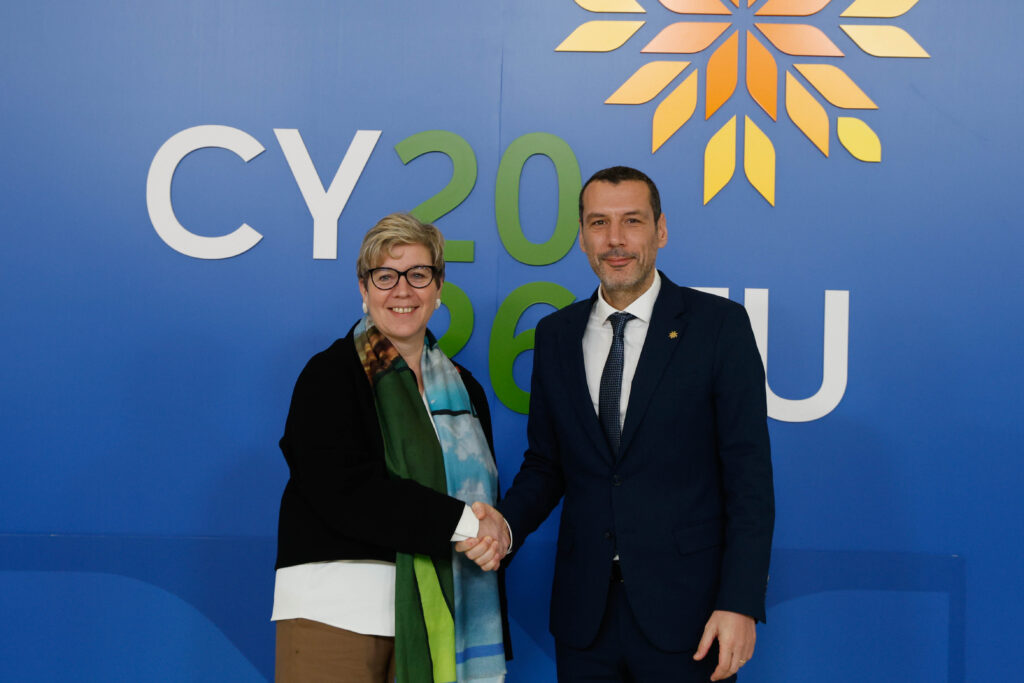

As Cyprus uses its EU Council presidency to push mental health higher up the bloc’s agenda, Luxembourg has stepped forward as one of the first member states to publicly back the initiative. Martine Deprez, Luxembourg’s health minister, tells EU Perspectives about the reasons behind the move.
In an interview with EU Perspectives, Ms Deprez, her country’s Minister of Health and Social Security, goes into her experience as a teacher and what it taught her of the importance of mental health care.
Minister, you were one of the few EU health ministers present at the High-Level Conference on Mental Health in Cyprus. Why was it important for you to attend?
When the Cyprus Presidency decided to put mental health at the top of the agenda, I was very keen to be there. Our government also places mental health at the top of its priorities. For Luxembourg, this fully aligns with our coalition agreement, which clearly identifies mental well-being, prevention, and very early prevention as political priorities. The conference offered a timely opportunity to connect EU-level frameworks with national implementation, to make that link more concrete.
What were your main takeaways from the discussion?
First, it became very clear that member states face similar challenges: workforce constraints, increasing demand, and fragmentation of services. Second, there was a strong emphasis on including the lived experience of people affected by mental health problems in the design, implementation and evaluation of policies and services.
You might be interested
And third, working together and learning from each other is not only about institutions and systems. It is also about listening more systematically to what others are doing well and sharing best practices.
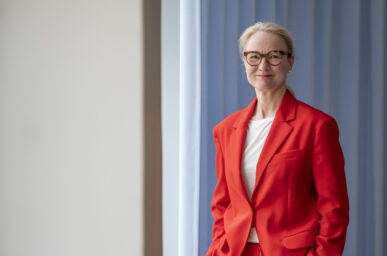
The conference offered a timely opportunity to connect EU-level frameworks with national implementation, to make that link more concrete. — Martine Deprez, Luxembourg’s Minister of Health and Social Security
Were there any examples of best practices that particularly impressed you?
Yes. One example that stood out was a woman who spoke about her own experience of mental illness and how it led her to support others. After going through treatment herself, she went on to work with NGOs, using her lived experience to help people facing similar challenges.
This kind of engagement, where people translate personal experience into concrete support for others, is extremely powerful.
Did the conference lead to concrete follow-up for Luxembourg?
Yes. We made several connections with projects abroad, and we are continuing to work together. The aim is to see how Luxembourg can take part in European actions, but also how Europe can come and see what we are doing as a best practice case.
You presented Luxembourg’s mental health approach during the conference. Could you summarise the key elements of your model?
The foundation of our approach is a strong focus on prevention, health promotion and the systematic involvement of non-medical actors. One central pillar is our mental health first aid programme. Just as we have physical first-aid kits, we have developed mental first-aid training to strengthen mental health literacy in communities and to build practical bridges between everyday settings and professional care.
Schools play a key role in this model. We reach young people primarily through schools, where a certain number of adults receive mental first-aid training. These adults act as reference points, helping young people connect with professionals, while professionals in turn work with schools to improve practices.
Another important element is improving navigation through what is otherwise a system suffering from fragmentation. People need to know where to turn at the right moment. We have therefore developed a platform that explains all available services and helps people find their way more easily through the system.
How does this specifically reach young people?
Schools play a central role. We have mental first-aid training in schools, with a certain number of adults trained to recognise and respond to mental health needs.
We have also developed the Teen programme, which directly targets adolescents aged 16 to 18. It equips young people to support their peers, while always involving a trusted adult. Over time, this builds mental health literacy within schools and helps normalise seeking support.
Is this model unique to Luxembourg?
The Mental Health First Aid programme originated in Australia and has seen implementation in around 50 countries. Luxembourg is one of them. An NGO called Ligue Santé Mentale implements the programme. There are three components: adult-to-adult training, training for adults who work with young people, and a specific programme developed for teenagers in secondary schools.
In my former life, I was a mathematics teacher. I lived through the pandemic with my students, and it became very clear to me that mental health problems among young people existed long before COVID, but we did not talk about them. — Martine Deprez
Young people were a major focus of the conference. How is Luxembourg addressing youth mental health specifically?
In my former life, I was a mathematics teacher. I lived through the pandemic with my students, and it became very clear to me that mental health problems among young people existed long before COVID, but we did not talk about them. During the pandemic, this changed. When I became minister in 2023, it was clear to me that we must address this issue head-on.
In schools, psychological services already exist, but they are often taboo. Young people can feel stigmatised if they are seen accessing them. One of our priorities is therefore to create spaces where young people can seek help without being labelled. A very strong initiative came from young people themselves, through UNICEF Luxembourg, who developed an app with practical mental health information under the message: “You are not alone, it’s okay not to be okay.”
We have integrated this philosophy into our mental first-aid programme. In every secondary school, the message is clear: seeking psychological support is no different from seeing any other health professional. Physical health and mental health cannot be separated.
Do you already see results from this approach?
We see strong demand, which is both encouraging and challenging. At the moment, 14 secondary schools have developed the programme. Almost 9,000 adults have received training, and the programme has so far included approximately 2,500 young people.
We will continue to expand throughout the year, but resources are a limiting factor. There are human-resource constraints and budgetary constraints. Like many governments in Europe, we face budget pressures. That said, we do have the resources to continue developing the programme, but funding has to be discussed and secured every year.
Do you think mental health now receives sufficient prioritisation at EU level?
I do see a clear evolution. Mental health is now included across many policy areas, in non-communicable diseases, in cancer programmes, in vaccination strategies, where we also discuss mental impacts. I believe we are making a real shift towards systematically integrating mental health into policymaking.
We must address mental health across all policies. — Martine Deprez
Looking ahead, where do you see the biggest gap in Europe’s approach to mental health?
We still tend to discuss mental health mainly within health policy. But also labour, social security, family policy and housing affect mental health. We must address mental health across all policies. Daily-life challenges, work, housing, financial insecurity, all affect mental well-being. Health ministers need to work much more closely with colleagues in other policy areas.
Finally, what would success look like five years from now?
Success would mean a genuine acceptation that it is okay not to be okay. People, especially young people, should not feel that they have to be at the top every day. Life is full of crises, and crises cannot be avoided.
What matters is resilience: learning how to live with difficulties, fears and uncertainty. If, in five years, this mindset is widely shared, that would be real progress.
Mental health is expected to feature again at the informal meeting of EU health ministers on 25–26 February, where ministers from all 27 member states will be joined by representatives of European and international organisations to discuss key health priorities, including mental health.