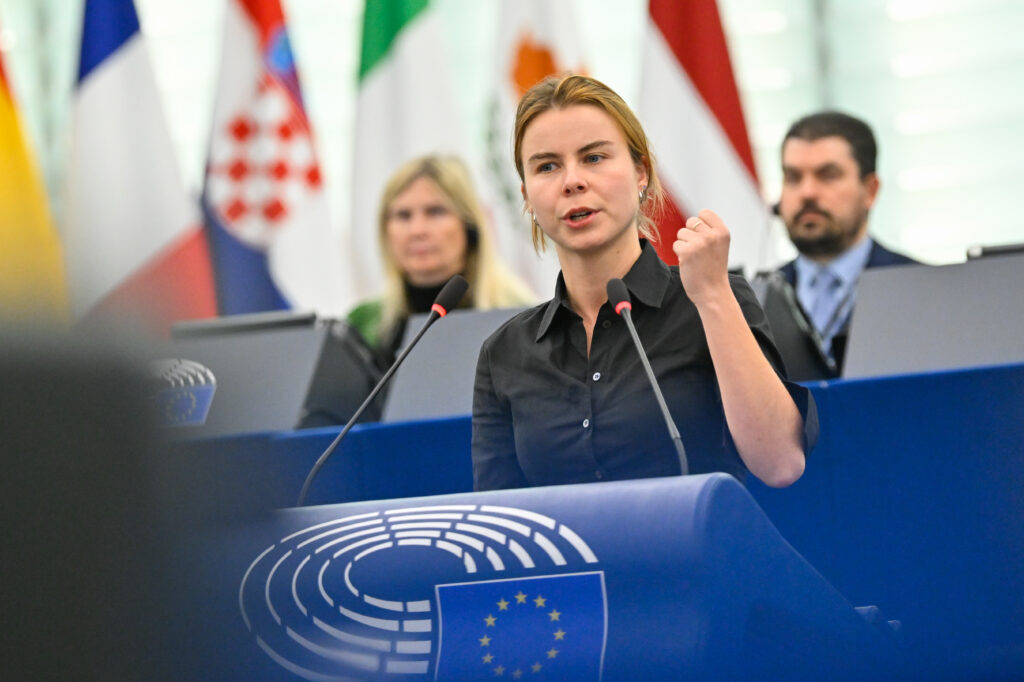

For the first time, the European Commission has unveiled a dedicated visa strategy that explicitly links visa policy to cooperation on migrant returns, marking a shift toward using visas as political leverage. In an interview with EU Perspectives MEP Anna Strolenberg (Greens-EFA/NLD) calls the move “a first step towards an honest debate about migration”, pointing to a persistent paradox: Europe politically stigmatises migration while economically relies on it.
As the Commission stated, the planned revision of the Visa Code in 2026 would allow the EU to introduce targeted restrictive measures against third countries that fail to readmit their nationals making the mechanism faster and more flexible.
The strategy aims to make Europe safer, more prosperous and competitive, more influential globally and more efficient. How could it be possible and how will the European Parliament ensure it?
The migration debate in Europe demonstrates a great contradiction: migration is politically stigmatised, but economically needed. The visa strategy is a first step towards moving to an honest debate about migration. This Strategy concerns visa policies in two ways. First, visas as a foreign-policy tool. The EU wants to link visa policy to cooperation on migration and readmission. Second, visas as an instrument to attract talent. Today, slow procedures, limited appointments, and fragmented national systems still block talent from coming to Europe.
Currently, in the global race for talent, bureaucracy is Europe’s biggest competitor. I have been working on the EU Talent Pool, a ’European Job Tinder’, to match employers to jobseekers. If we want initiatives like the EU Talent Pool to work, visas must become faster, simpler, and predictable. The most important step for members of the European Parliament to ensure success, is simple. It is to openly admit that Europe needs talent.
You might be interested
In the global race for talent, bureaucracy is Europe’s biggest competitor. — MEP Anna Strolenberg (Greens-EFA/NLD)
We need nurses at our beds, we need teachers at our schools. We have an ageing workforce, so we need labor migration to keep our welfare systems intact. With the US adopting ever stricter migration policies, and tough measures on academia and researches, there is a real opportunity for the EU — now, the EU needs to position itself in the global race for talent and skills.
’Fear of the other’ works
Why, in your opinion, are EU leaders afraid to be labeled too pro-migration?
Migration is a topic that lends itself very easily to populism, because it touches directly on people’s lives and fears. It becomes particularly powerful when the ’fear of the other’ is framed as a threat and it is proven that it works for electoral gain to blame all the problems on migrants. It is no coincidence that many far-right and populist parties across Europe have made migration their central political theme. And as a result, left-leaning parties wiggle up to the right, trying not to lose voters.
Even governments that publicly take a very tough stance on migration understand this reality. For example, while presenting herself as ‘very tough’ on migration, Giorgia Meloni has also pursued labour agreements with third countries to bring workers to Italy. But she does not talk about this, because politically it would not serve her well. By remaining in this permanent crisis narrative, we ignore the positive role migration can play. Europe faces a serious demographic challenge: an ageing population, low birth rates and a shrinking workforce. Yet politically, many leaders hesitate to speak openly about the need for migration and talent.
How will the EU, with this strategy, try to remain competitive and attract talent?
There are several strong new ideas in the proposal. For example, longer-validity multiple-entry visas for bona fide travelers would make life easier for frequent business and tourism visitors. Trusted companies, including start-ups and scale-ups, could benefit from fast-track procedures for their employees through a common list of verified employers. That sends a clear message: talent is welcome here in Europe.
Besides, countries are encouraged to introduce fast-track procedures for researchers, STEM professionals, start-up founders, and innovative entrepreneurs. When the US is pushing researchers away, Europe has to open its doors. This comes at exactly the right moment.
Lastly, I welcome the Recommendation to Member States on Attracting Talent. It doesn’t just focus on visas, but it looks at the bigger picture: integration, keeping people here, supporting their families, and helping them move from study or research into work. Because bringing talent to Europe is only the first step. What really matters is whether people can build their lives here. And if we get that right, Europe does not just attract talent; it keeps it.
Labour shortage not the only base
Is not there a risk that the EU Visa Strategy frames migration purely as a solution to labor shortages and demographic decline?
If the message is reduced to ’we need migrants because we lack workers’, it becomes purely utilitarian. I do not support that framing. Migration policy cannot be based only on labour shortages. It must be grounded in rights, human dignity and our legal obligations, especially when it comes to asylum. That is non-negotiable. At the same time, I believe that being honest about demographic realities is not cynical; it is responsible. Europe is ageing and facing structural workforce gaps. Ignoring this does not protect anyone; it just leads to unmanaged migration and pushing the hot potato forward.
For me, the key is balance. We must avoid framing migrants only as ’needed labour’, but we should also avoid pretending that migration has no economic dimension. People come with skills, ambitions and rights. A modern European policy should recognise both their human dignity and their potential contribution. I believe in a pragmatic and values-based approach: legal pathways, fair asylum systems, strong integration policies and a fact-based debate. If we acknowledge both rights and realities, I do not think the message is risky. Rather honest and pragmatic.
“I don’t want us to become like the US. I want us to be better, like the United States of Europe”. Those are your words that you said in the latest Plenary session. How can we accomplish that when it comes to migration?
When I say we must do better, I mean that we must not allow ourselves to slide into dehumanising language or practices. The images coming out of the United States, of people being pulled from workplaces, cars or homes, are deeply disturbing. Often ICE agents are masked and do not even have a warrant. This is not how a democracy operates. Even more important, this is not how we treat people. And this should be a real warning sign for Europe.
We must not allow ourselves to slide into dehumanising language or practices. – MEP Anna Strolenberg (Greens-EFA/NLD)
We have not reached that point, but the anti-migration narrative is spreading here too. Calls for ever “stricter” and “harsher” migration policies are gaining ground. Migrants are too often turned into scapegoats, and politicians compete over who can be the toughest. What we need to do is tell the honest story. Migration policy should be facts-based and must always respect human rights. If Europe wants to lead, we must lead by example.