
Whatever the political weather in Washington, Europe intends to keep its relationship with the US flying straight and level. The European Parliament’s transport committee made that clear on Tuesday.
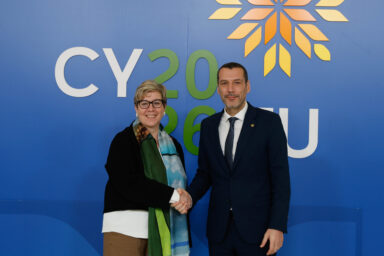
The exchange took place on 24 January during a TRANS committee debate on the Parliament’s consent to the agreement, which governs market access and regulatory cooperation between airlines on both sides of the Atlantic. While the file is largely technical, the discussion briefly took on a more political tone when one lawmaker invoked US President Donald Trump in an argument for pragmatic engagement. MEP Kosma Złotowski (ECR/POL) argued that Europe should view the agreement through a pragmatic lens.
“The fact that the agreement will be approved is evidence that even though some don’t like Trump, we need to talk to Americans,” Mr Złotowski said. “America is a very important market for our carriers.” His intervention came in the context of a broader discussion on the strategic importance of transatlantic aviation cooperation and the need for regulatory stability despite political fluctuations in Washington.
A valuable transport corridor
The EU–US air transport agreement saw the light of day in 2007 and has since seen an extension to cover Iceland and Norway. It regulates market access, traffic rights and regulatory cooperation for airlines on both sides of the Atlantic. The transatlantic air transport corridor is worth more than 70 million passengers a year to the aviation industry, making it one of the most valuable markets in the world. It supports tourism, cargo transport, business travel and investment ties among industries that go well beyond aviation.
Transport committee rapporteur Johan Danielsson (S&D/SWE) described the deal as one that reflects “the reality of today’s transatlantic aviation market”. It has three pillars, he said: legal certainty for airline operators, continued access for EU operators, and strengthened cooperation on sustainability and labour market standards. Aviation stability has added significance in today’s geopolitical landscape defined by changing US politics and competition among great powers.
You might be interested

Mr Złotowski’s remarks reflected a balancing act that often emerges in European Union policymaking: how to maintain a relationship with Washington when political leaders make conflicting statements on trade or other areas of cooperation such as climate policies or industrial policy strategies.
The fact that the agreement will be approved is evidence that even though some don’t like Trump, we need to talk to Americans. — MEP Kosma Złotowski (ECR/POL)
By suggesting that the agreement’s approval would show the EU can separate political disputes from pragmatic economic ties, he made the case that aviation should be part of the latter. The remark was not so much an endorsement of any policy of any recent US president as it was a statement that EU interests in aviation and economic cooperation with the United States need continuity. “We need to talk to Americans,” Mr Złotowski said.
Continuity amid uncertainty
The committee’s endorsement of the deal suggests that Parliament sees it as part of a continuity of supportive arrangements between Europe and the US, even as other political ties experience periods of struggle.
At a time of economic headwinds, pressure for decarbonisation and changes in global geopolitical alignments for air transport markets, few want to see one of the EU’s most commercially important external agreements disrupted.
The agreement now goes to plenary for approval but is likely to sail through smoothly. The message from Brussels is clear: whatever the political mood in Washington, business for Europe’s aviation industry will remain flying high across the Atlantic for now.