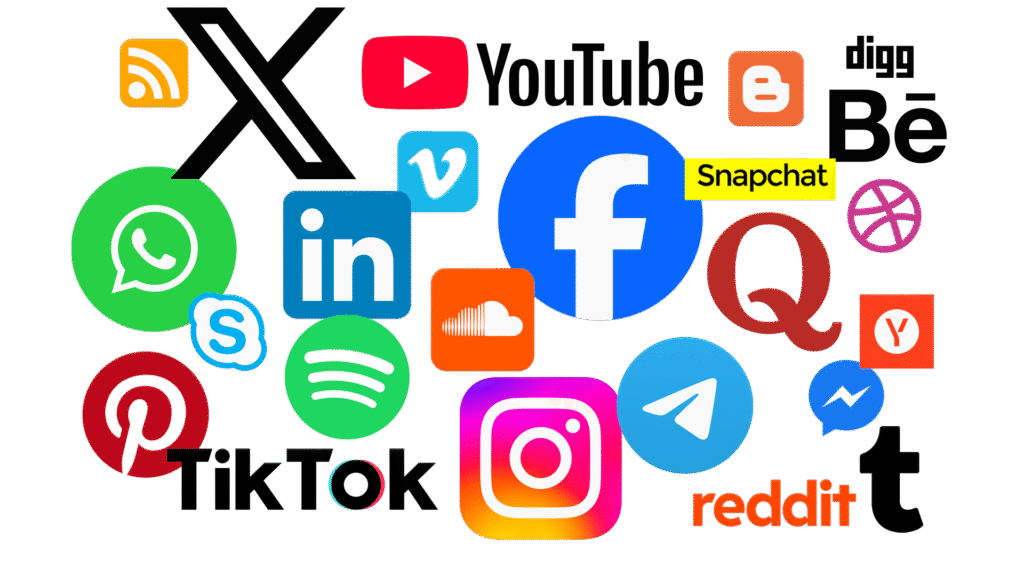

With its planned strict control of social media, the tiny Central European country will join a growing number of countries that have already introduced or are considering similar bans. According to Thursday’s announcement by the Slovenian government, the ban will apply to children under the age of 15 and large platforms such as TikTok, Snapchat, and Instagram.
Australia, France, Denmark, Spain, Greece. This is the (incomplete) list of countries that have either already banned young people from accessing social media by law or are working on relevant legislation. The issue has been gaining momentum in recent months. The latest country to join this movement is Slovenia.
“We care about our children”
The news that Slovenia is preparing draft legislation to ban social media access for children under 15 was first announced by Slovenia’s Deputy Prime Minister Matej Arcon on Thursday, 5 February afternoon. “This has been a hot topic around the world and in Europe in recent weeks and months, and with this, we as a government are showing that we care about our children,” Arcon said after the government meeting, according to Reuters.
Social media ban has been a hot topic around the world and in Europe in recent weeks. – Matej Arcon, Slovenia’s Deputy Prime Minister
Mr Arcon added that the government wants to regulate social networks where content is shared, mentioning TikTok, Snapchat and Instagram.
Necessary protection or risky move?
In November 2025, European Parliament called for an ambitious EU action to protect minors online, including an EU-wide minimum age of 16 and bans on the most harmful platforms. MEPs adopted a non-legislative report by 483 votes in favour, 92 against and with 86 abstentions, expressing deep concern over the physical and mental health risks minors face online. The move called for stronger protection against the ’manipulative strategies’ that can increase addiction. The report also mentions that social media are detrimental to children’s ability to concentrate and engage healthily with online content.
For many children, especially those who are isolated or marginalised, social media is a lifeline providing access to learning, connection, play, and self-expression. – UNICEF report
United Nations International Children’s Emergency Fund (UNICEF), however, voiced a different view on the matter. “While UNICEF welcomes the growing commitment to children’s online safety, social media bans come with their own risks, and they may even backfire (…) Social media is not a luxury. For many children, especially those who are isolated or marginalised, it is a lifeline providing access to learning, connection, play, and self-expression,” the UN Agency wrote.