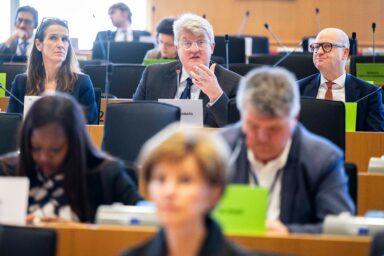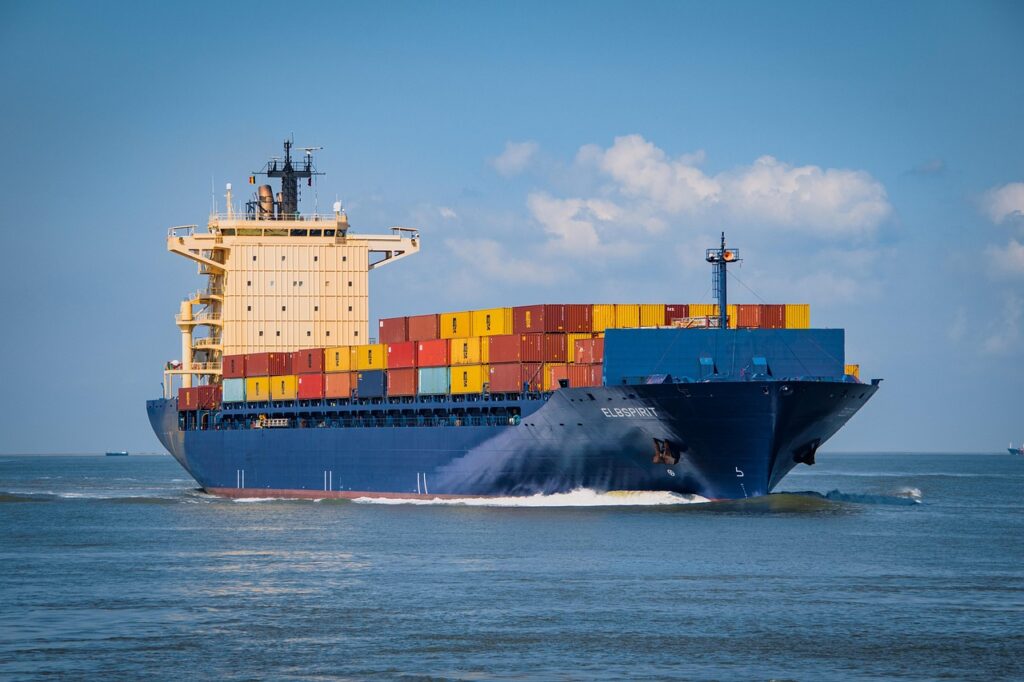

European Parliament trade negotiators meet Wednesday facing a new reality: Parliament has suspended the EU-US trade deal and is demanding safeguards allowing Brussels to retaliate swiftly against American coercion. The tougher stance follows Trump’s Greenland threats, which shattered illusions that accommodation might work. Yet as negotiations unfold, European businesses face prolonged uncertainty.
“For businesses, the developments mean another period of uncertainty around investments in and exports to the US,” Carsten Brzeski, global head of macro at ING, noted following the initial suspension.
“If you’re a business, it’s very difficult to plan on the basis of this as a stable and predictable market access arrangement,” said Anton Spisak, senior research fellow at the Centre for European Reform. The problem isn’t the deal itself but the broader geopolitical moment where an administration is “willing to use tariffs not only as negotiating leverage, but also as a tool of coercion,” he said.
“The real cost of the tariff conflicts—because tariff rates seem to sometimes change by day—is the factories that were never built just because companies aren’t certain enough,” Steven Durlauf of the University of Chicago told CNN.
You might be interested

Greenland changed the calculus
Mr Spisak argues the Greenland crisis fundamentally altered Europe’s calculations: “I think the Greenland episode has been a real turning point in the transatlantic relationship. European leaders still believed their strategy of appeasement might just work fine. But now, after they’ve seen that the US president is willing to use tariffs as a tool of coercion against America’s closest ally, I think that illusion that those threats will not come back is just that—it’s just an illusion.”
The episode also revealed the limits of Trump’s leverage. “You could ask someone on Wall Street and they would say this is just another example of ‘TACO’. Trump Always Chickens Out when it comes to the stock market responding badly,” said Mr Spisak.
Markets did respond badly. On 20 January, the S&P 500 plunged 2.1 per cent—its worst day since October—erasing more than $1.2tn in value, while European markets tumbled in parallel. When Trump backed down the next day, announcing a “framework” deal on Greenland, US stocks surged 1.16 per cent, recovering most losses.
Europe has learned its lesson: the US responds to strength
European lawmakers have signaled a shift away from accommodation. MEP Brando Benifei (S&D/ITA) argued that “the only way is to be very firm and clear that we will not be bullied.”
This perspective marks a departure from the Commission’s negotiating approach thus far. “I don’t think we should be accepting a form of blackmailing based on the principle that ‘okay I’m not invading you, now you have to do this and this and this,’” Mr Benifei warned, capturing Parliament’s resistance to what many MEPs view as coercive diplomacy.
The lack of trust now permeates the ratification process. “We have no confidence [in the Trump administration] at the moment. So what we need is safeguards,” Mr Benifei stated, explaining Parliament’s insistence on protective mechanisms in any agreement. He was explicit about the consequences: “Otherwise we will never accept to reduce the tariffs on steel and aluminum coming from the US.”
The safeguards include automatic suspension clauses triggered by US coercion, an 18-month sunset provision, and import surge protections. Parliament also demands Washington reduce the 50 per cent tariffs on steel and aluminum that increased after July’s agreement.
This harder line reflects a belief that others have mistaken European restraint for weakness. “The strong belief in many sectors of the American elite in government is that we are saying things and we never do anything,” Benifei observed—a view that appears to be driving Parliament’s more confrontational stance.
European business leaders increasingly share this advocacy for firmness over accommodation. “Europe must not allow itself to be blackmailed, not even by the United States,” said Bertram Kawlath, president of the German industrial sector association VDMA, in a statement arguing that capitulation would “only encourage the American president to make the next ludicrous demand and threaten further tariffs.”
Limitations of the anti-coercion instrument
Dan Hamilton, senior non-resident fellow at the Brookings Institution, estimates that deploying the ACI, the EU’s “trade bazooka”—suspending US company licenses or imposing taxes on US services—could require months to implement. This timeline mismatch between American tariff announcements and European institutional response creates asymmetric vulnerabilities.
The fundamental challenge remains economic exposure. “The EU has a trade surplus with the US,” Mr Spisak noted. “So it is in the EU’s ultimate interest to prevent any escalation because it would carry economic costs,” he said.
Yet Europe does retain leverage. “Where the US does have a weak spot is precisely in the services sectors where US tech firms basically need the European market,” Mr Spisak confirmed.
Laurent Douillet, senior equity strategist at Bloomberg Intelligence, wrote that “A Greenland-driven escalation in the US-Europe trade war could erase most European earnings growth in 2026.”
The cost of paralysis
The Parliament’s suspension reflects legitimate concerns about an agreement negotiated under duress, but imposes tangible costs on European businesses who cannot wait for Brussels to resolve internal disputes.
When Parliament’s lead negotiators convene Wednesday, 4 February, their tougher stance reflects necessity, not strategy—Greenland made the original deal politically impossible. European businesses pay the price of prolonged uncertainty: investments deferred, hiring frozen, strategic planning in limbo.