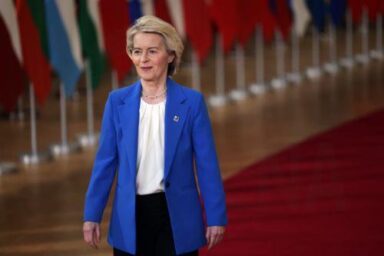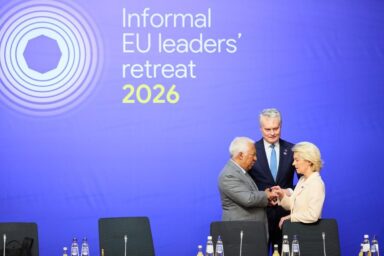

The intention of European Commission President Ursula von der Leyen to provisionally implement the Mercosur agreement has raised the hackles of longtime opponents of the free trade deal.
The agreement, signed in January 2026, remains pending approval on the European side. While Mercosur countries are moving ahead with ratification, the EU process still requires the consent of the European Parliament and, depending on its final legal structure, potentially approval by national parliaments in member states.
Nonetheless, the Commission retains the option of provisional application for elements that fall under EU exclusive competence — a move that could allow trade provisions to take effect before full ratification is completed.
“The Commission will continue to work closely with all EU institutions to ensure a smooth and transparent process,” Ms von der Leyen told reporters. “This is one of the most consequential agreements of the first half of this century,” she said on Friday, leaning on the word provisional.
You might be interested

“‘Provisional application’ is, by its nature — provisional,” she stressed. “It is right there in the name.”
No time to waste
Argentina and Uruguay ratified the agreement this week, signalling their determination to see the 25-year negotiation and implementation finally concluded. Brazil and Paraguay are expected to follow.
Once implemented, the agreement would create one of the world’s largest free trade areas, linking economies representing more than 700 million people across South America and the European Union.
President von der Leyen highlighted the benefits for both sides, saying the deal would open doors for European companies to a market they could “only dream of.” The move found backing from European People’s Party chief Manfred Weber and other longtime proponents of the pact.
Macron reaction
At the same time, the Commission’s position drew a sharp reaction from France, one of the deal’s staunchest critics.
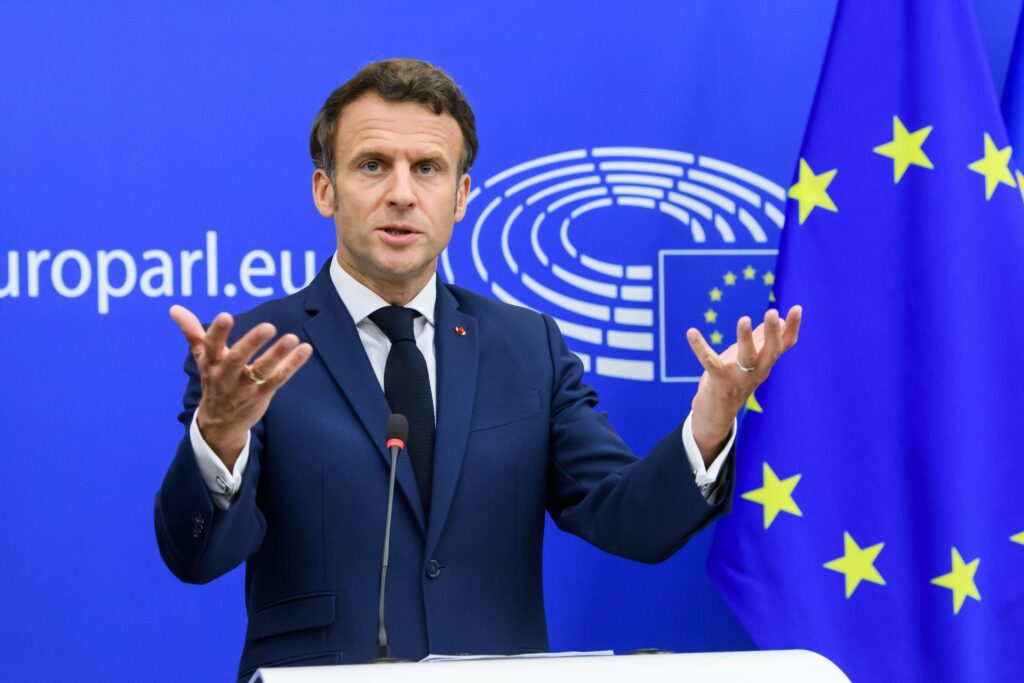
French President Emmanuel Macron called the approach “a bad surprise,” suggesting that farmers concerned about increased agricultural imports, as well as citizens and political representatives, had not been sufficiently respected.
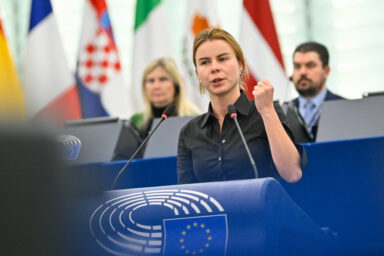
French MEP Manon Aubry, co-chair of The Left group in the European Parliament, criticised the Commission’s steps on X, arguing that the agreement must undergo full legal scrutiny and cannot bypass democratic procedures. She added it was a shame her group were not heeded and mocked Mr Macron for what she called “crocodile tears” saying he had had plenty of opportunities to stop the deal in the past, had he but wanted to.
By ten votes
In January, a narrow vote in the European Parliament triggered a referral to the Court of Justice of the European Union for examination of the agreement’s legal basis — a move expected to delay progress while judges assess compatibility with EU law.
Despite that, Commission officials had already indicated they are prepared to move swiftly once procedural conditions allowed, arguing that the geopolitical and economic case for the agreement has only strengthened amid global trade uncertainty.
The agreement may be signed, but in Europe it is not yet politically settled.