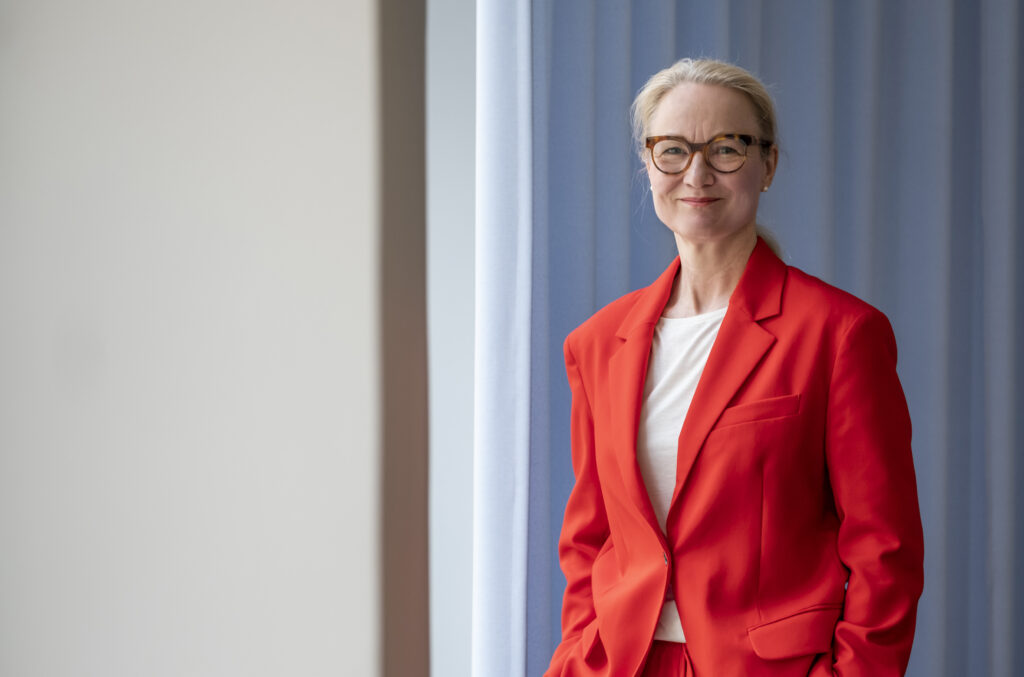
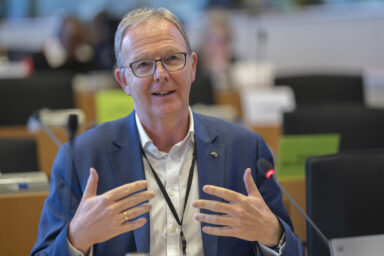
A European framework allows comparison and learning between countries on screening and mortality rates: Ulrika Årehed Kågström / Photo: the Swedish Cancer Society
Poor countries lacking access to treatment report over 70 per cent of cancer deaths. Europe, home to ten per cent of global population, registers a quarter of cancer cases. Ulrika Årehed Kågström, president of the Union of International Cancer Control (UICC), spoke to EU Perspectives about the challenges of fighting cancer on both fronts.
On the occasion of World Cancer Day, the annual global campaign coordinated by the Union for International Cancer Control (UICC), EU Perspectives spoke with its president, Ulrika Årehed Kågström. She is also Secretary-General of the Swedish Cancer Society, a board member of the Nordic Cancer Union and a member of the Swedish Government’s Life Science Advisory Group, and reflected on global progress against cancer, persistent inequalities, and the challenge of turning political ambition into national action.
When you look at the global state of fighting cancer today, where do you see real progress, and where do the biggest gaps remain? Progress is being made every day. If I can point to one example, HPV vaccination really stands out. It has an enormous impact and has the potential, for the very first time, to actually eliminate a cancer, cervical cancer, and significantly reduce other HPV-related cancers. Countries such as Australia, Rwanda and Sweden show how ambitious targets can deliver results. We have already seen declining cervical cancer rates, with even greater progress ahead.
At the same time, we see alarming inequalities in access to diagnosis, prevention and care. More than 70 per cent of cancer deaths occur in low- and middle-income countries, where access to treatment, prevention and care is very limited. Even HPV vaccination is an example of inequality. In some countries, cervical cancer still has the highest mortality rate among women’s cancers.
Another very significant example is radiotherapy. In lower-middle-income countries, nine out of ten cancer patients do not have access to radiotherapy, whereas in high-income countries, one radiotherapy machine may serve around 120,000 people. Meanwhile, in lower-income settings, it can be up to five million people sharing a single machine. So we see progress, and we see areas where we are really on track. But at the same time, there are still so many inequities that we need to address.
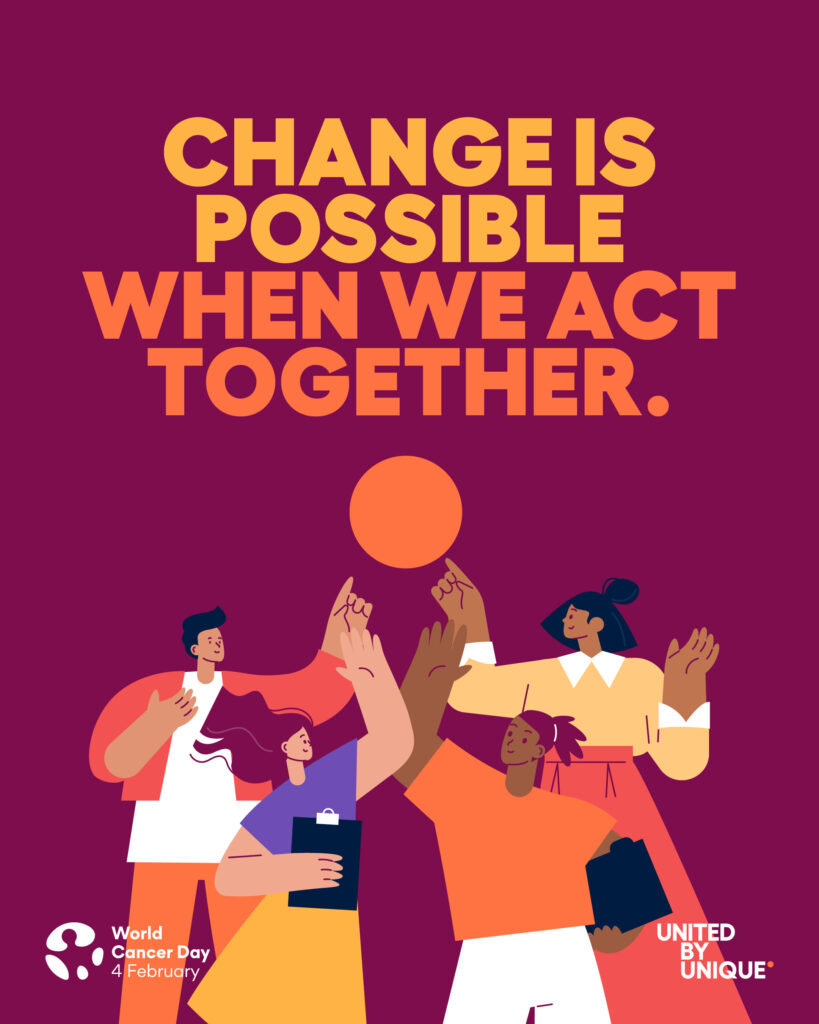
Could you briefly explain your role at UICC and how it links to World Cancer Day? My day-to-day role is as Secretary General of the Swedish Cancer Society. In addition, I am currently president of the Union for International Cancer Control, UICC. It is a two-year presidency. UICC is a global organisation with members in more than 170 countries, and it is the organisation that coordinates World Cancer Day globally. The theme for World Cancer Day, United by Unique runs over a three-year period with a strong focus on people-centred care.
You have mentioned inequalities. When you look specifically at Europe, do you see them as well? Yes, absolutely. We still see large variation, both between countries in Europe and within European countries. This includes survival rates, participation in screening, access to screening, and access to treatment and care. That is why Europe’s Beating Cancer Plan is so important. It really takes a holistic approach to the challenges in Europe, but also to the opportunities and what we can actually do in terms of cancer control.
Global targets exist, but national implementation often seems to lag behind. Do you see this as a major barrier to progress? We really need global targets. One framework is the World Cancer Declaration, which sets out five global targets, five action areas and five cross-cutting areas. We need that to guide ourselves.
But we can also clearly see the obstacles to implementation. The first is political buy-in and national prioritisation. Even when there is broad agreement on the importance of cancer control, other priorities can take precedence, particularly in times of uncertainty. In some countries, national cancer plans exist, but they lack a clear and sustainable financing strategy. There is a plan, but no funding for implementation.
Secondly, global or regional targets need to be adapted to national circumstances. That includes existing infrastructure and data collection capacity. The World Cancer Declaration is designed as a framework that countries can tailor to their own context. Different approaches do not mean different goals, it just means adapting the path to local realities.
Where would you place Europe in relation to these global targets? It varies a lot across Europe. We have had some time to train on this through Europe’s Beating Cancer Plan, which helps focus attention on what can be done. Europe represents around 10 percent of the global population but accounts for about 25 percent of cancer cases. That is a challenge across the continent. Healthcare is a member state responsibility, but a European framework gives countries something to gather around. It allows comparison and learning between countries on issues such as screening implementation and mortality rates.
Planned revisions of tobacco legislation have not yet resulted in adopted laws, which means one of the most effective prevention tools has not delivered its full impact. – Ulrika Årehed Kågström, President of the Union for International Cancer Control (UICC).
Is Europe’s Beating Cancer Plan already making a difference, and where do you still see gaps? I really appreciate Europe’s Beating Cancer Plan. It brings cancer onto the political agenda, strengthens European cooperation on research and data, and helps align national policies on screening and vaccination.
But progress has been uneven, especially in prevention. Tobacco control is a clear example. Planned revisions of tobacco legislation have not yet resulted in adopted laws, which means one of the most effective prevention tools has not delivered its full impact. Gaps also remain in screening uptake, early diagnosis and access to new treatments across and within countries. Overall, the challenge is turning EU ambition into national action.
Looking ahead, what policy priorities should Europe focus on over the next five years? Prevention needs to be at the top of the agenda. The legal framework for tobacco products urgently needs to be updated, particularly given new market trends and changing consumption patterns, including nicotine products. We also see aggressive marketing of unhealthy products targeting children and young people through social media. Raising taxes, restricting marketing, improving air quality, creating green and walkable cities and boosting physical activity can all reduce cancer risk.
At the same time, national cancer control plans remain essential. Every country should have a costed and monitored plan, with population-based registries, equity indicators and funding for implementation. Europe should also continue to prioritise its innovation ecosystem. The EU has long been a leader in medical advancement, and maintaining that leadership is essential to improving outcomes and saving lives.
Countries reaffirmed the importance of reducing deaths from cancer and other NCDs and agreed on the solutions needed to achieve this. Civil society played a critical role in that progress. – Ulrika Årehed Kågström
Given the current geopolitical situation, has progress on cancer control been affected? Despite the political turbulence, I remain optimistic. I attended the UN high-level meeting on non-communicable diseases and mental health last year and returned home more hopeful than I expected. Countries reaffirmed the importance of reducing deaths from cancer and other NCDs and agreed on the solutions needed to achieve this. Civil society played a critical role in that progress.
UICC member organisations do extraordinary work in keeping cancer high on the agenda, from the local to the national and global level. Without their efforts, we would not have seen such strong outcomes from that meeting. Cancer affects everyone, no matter where you live, and there is still momentum and political will to improve cancer control.
Finally, what are UICC’s key priorities in the coming years? We adopted a new business plan running until 2028, with six priority areas. One is strengthening our membership of more than 1,000 organisations across 170 countries. Another is access to medicines, particularly in low- and middle-income countries. We work on this through initiatives such as the Access to Oncology Medicines Coalition. We are also focusing on national cancer control planning.
In 2026, we are organising the second Cancer Planners Forum together with World Health Organization (WHO), the International Agency for Research on Cancer (IARC), the International Atomic Energy Agency (IAEA) and the International Control Partnership (ICCP) bringing together over 40 countries to share best practices and learn from one another.
People-centred care remains central to our work, as does a focus on cancers affecting women, including cervical cancer elimination. Lung cancer is another priority, spanning tobacco control, air pollution, screening and innovation. There is a lot of hard work ahead, but it is achievable.
To provide the best experiences, we and our partners use technologies like cookies to store and/or access device information. Consenting to these technologies will allow us and our partners to process personal data such as browsing behavior or unique IDs on this site and show (non-) personalized ads. Not consenting or withdrawing consent, may adversely affect certain features and functions.
Click below to consent to the above or make granular choices. Your choices will be applied to this site only. You can change your settings at any time, including withdrawing your consent, by using the toggles on the Cookie Policy, or by clicking on the manage consent button at the bottom of the screen.
Functional
Always active
The technical storage or access is strictly necessary for the legitimate purpose of enabling the use of a specific service explicitly requested by the subscriber or user, or for the sole purpose of carrying out the transmission of a communication over an electronic communications network.
Preferences
The technical storage or access is necessary for the legitimate purpose of storing preferences that are not requested by the subscriber or user.
Statistics
The technical storage or access that is used exclusively for statistical purposes.The technical storage or access that is used exclusively for anonymous statistical purposes. Without a subpoena, voluntary compliance on the part of your Internet Service Provider, or additional records from a third party, information stored or retrieved for this purpose alone cannot usually be used to identify you.
Marketing
The technical storage or access is required to create user profiles to send advertising, or to track the user on a website or across several websites for similar marketing purposes.