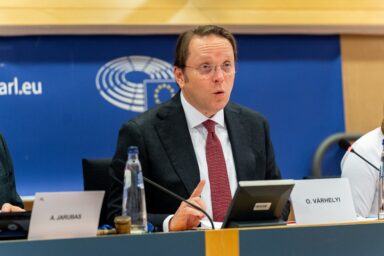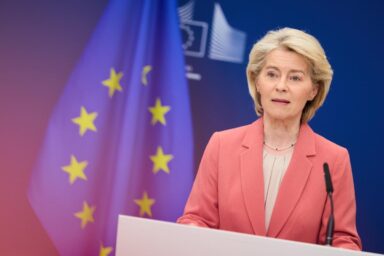

When it comes to effective smoking regulation, few people are more in the know than Clive Bates. The former senior civil servant in Prime Minister Tony Blair’s Strategy Unit and director of Action on Smoking and Health, a leading anti-smoking advocacy group, has been a vocal opponent of both smoking and misguided regulation against it. Following an open letter to European Commission President Ursula von der Leyen—which he co-signed with other experts in response to Commissioner Olivér Várhelyi’s statements on lower-risk nicotine products—Mr Bates spoke to EU Perspectives about the delicate balance policymakers must strike when regulating tobacco use, lest the cure prove worse than the disease.
“If European citizens start to believe that Brussels works for the unaccountable interest groups that crowd around the Commission and Parliament buildings, we will have a much bigger problem,” said Clive Bates in response to Commissioner Várhelyi’s disregard of scientific evidence on less harmful nicotine products.
In your letter to the European Commission, you and your co-signatories stress the importance of communicating relative risk accurately. Why is proportional risk communication central to tobacco harm reduction policy, and what are the public-health consequences if policymakers fail to distinguish clearly between combustible cigarettes and lower-risk alternatives?
We start by asking, “What is regulation?” Regulation is mainly about risk management. Regulation sets minimum health, safety, consumer protection, and environmental standards. It incentivises consumers to migrate from high-risk to low-risk behaviours. For producers, it rewards innovation that mitigates risks and signals a direction to reduce harmful impacts. This focus on risk is not specific to tobacco but applies across sectors, such as pharmaceuticals, automotive, construction, and digital technology.
But regulation will only work if the regulator understands the risks. In our letter, we point to multiple roles played by the European Union in the tobacco and nicotine market, where a misrepresentation of risks can have lethal consequences for European citizens: in taxation, product regulation, international treaty negotiation, and major plans to address cancer and cardiovascular disease.
You might be interested
In reality, smoke-free nicotine products, such as vapes and nicotine pouches, pose a small fraction of the risks of smoked products like cigarettes. But if the Commission presents policy and taxation proposals as if there is no difference in risk, the result will be more smoking, more death and suffering, less beneficial innovation, and more illicit trade and organised crime, as citizens try to avoid counterproductive restrictions.
You argue that misrepresentation of scientific evidence can itself cause harm. In your view, is the European Commission currently failing EU citizens by not adequately reflecting the scientific consensus on relative risk? If so, what concrete health outcomes could result from this policy approach?
We know that around 700,000 European citizens die from smoking each year, and almost one in four adults—or around 90 million people—still smoke. In what world does it make sense to perpetuate myths and falsehoods about the options to switch from high-risk cigarettes to low-risk vapes, nicotine pouches, heated products or snus (smokeless tobacco nicotine pouches)?
When the most senior health official in the European Union is suggesting the risks are comparable or pushing endlessly debunked talking points about popcorn lung or heart attacks from vaping, the effect will be to perpetuate smoking, protect the cigarette trade, and divert citizens from making life-saving lifestyle changes.
The EU has already committed a grave error in this field by banning snus in 1992, even though these products present minimal risks and are responsible for the lowest rates of smoking in the EU in Sweden (Sweden was granted an exemption from the ban and has about eight per cent smoking prevalence compared to the EU average of 24 per cent). Sweden also has about half the lung cancer and oral cancer death rates of Germany, though about the same overall nicotine use.
The big difference is that nicotine is used in a much safer, smokeless form in Sweden. Since the snus ban came into effect, 20 million Europeans have died from smoking. Thousands, maybe millions, of premature deaths could have been avoided if the EU had encouraged switching to snus rather than banning it. We now have the opportunity to generalise from the Swedish experience with vapes, nicotine pouches, and heated tobacco. Despite this history, the Commission seems determined to squander it as if no one involved has learnt any lessons from the snus ban.
Your letter warns against the spread of misleading or incomplete information about nicotine alternatives. At a time when public trust in institutions is already fragile, how dangerous is it for public authorities to communicate risks in ways that may be perceived as exaggerated or politically motivated? What does this mean for evidence-based policymaking in the EU?
Our letter raises larger questions about the credibility of European Union institutions and decision-making. If European citizens start to believe that Brussels works for the unaccountable interest groups that crowd around the Commission and Parliament buildings, we will have a much bigger problem. Act like an out-of-touch, self-serving elite, don’t be surprised if European citizens turn to populist nihilists who oppose the vision of Europe’s leaders.
The numbers affected are huge—90 million smokers, maybe 20 million vapers, and many more future nicotine users—around a quarter of adult citizens. Do they really think they can act with casual disregard for the health and welfare of so many citizens and still command trust and confidence for everything else they are trying to do? The credibility of the EU is not compartmentalised across specific issues; when it fails, it will fail as a whole.
A recurring justification for restrictive policies is the protection of young people. How can regulators protect minors effectively without undermining harm-reduction opportunities for adult smokers? In your view, is the current EU narrative striking that balance appropriately?
The starting point is to put the youth vaping issue into context. There are really two types of young vapers: those who would otherwise be smoking, and those who would never have used nicotine. For the former group, there are major health benefits. For the latter, relatively minor detriments.
The end of smoking will happen through two mechanisms: (i) existing adult smokers switching to safer products, and (ii) young people diverting away from ever smoking to start with and then ageing into the population. We need to be realistic about this and not see every young vaper as a public health disaster, but often as part of the migration of the entire market from high-risk to low-risk nicotine use.
However, that does not mean we should do nothing. We cannot tolerate aggressive marketing to youth, products designed to appeal to youth, youth-oriented branding and trademarks, or retail outlets that specialise in illegally selling to youth. Each of these issues can be addressed through risk-proportionate regulation. It may be uncomfortable for some, but the overriding aim should be to prevent youth smoking uptake, even if that means more young people vape.
In light of the concerns your letter raises regarding risk miscommunication and the role of tobacco harm reduction, what concrete policy recommendations would you offer to the Health Commissioner as the EU prepares revisions to the Tobacco Products Directive? Specifically, how should the Directive reflect scientific evidence on relative risk while balancing youth protection and adult smoking cessation?
It looks like Commissioner Várhelyi has ventured too far into extreme misinformation to make a dignified reversal. It is up to calmer minds in the Commission, Parliament, and Council to push back and try to bring the health directorate back to a rigorous, reality-based approach to risks in this area.
The Commission has various quality control mechanisms for regulatory scrutiny and functions through collective agreement. The Parliament and Council can reject proposals based on flawed foundations. The Council has already rejected Commission proposals on taxation and an extreme common position on the WHO Framework Convention on Tobacco Control. Instead of seeking out biased scientists who will give the Commissioner the answers that he wants, they should understand that ideologically motivated science will eventually fail under democratic deliberation and scrutiny.
It’s time the health directorate stopped serving the agenda of Brussels-based single-issue campaigners and started serving European citizens: that means making policy based on a robust and objective understanding of scientific evidence, inevitable trade-offs, and predictable unintended consequences.