
Lovers of Australian shiraz in Paris will pay less, German electric cars in Sydney will dodge a tax, and EU battery makers will tap Western Australian lithium, after Brussels and Canberra sealed a trade pact.
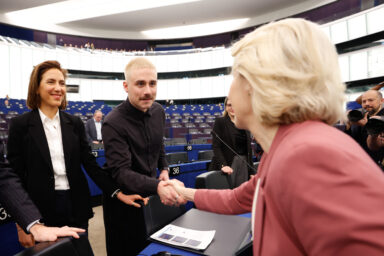
Australian Prime Minister Anthony Albanese and European Commission President Ursula von der Leyen sealed a long-awaited free-trade agreement in Canberra on 24 March. The deal finished eight years of on-again, off-again bargaining and now awaits approval by the European Council before both legislatures vote.
Entry into force may not arrive before 2027. Australia, which last year imported more than 44bn of European goods and exported barely 12bn in return, hopes the pact will shrink its chronic deficit.
All the minerals
“This is an agreement that is a win on both sides,” Ms von der Leyen told reporters. “All Australian industrial exports to the European Union will become tariff free.” Canberra’s miners, vintners and car dealers cheered. Brussels, for its part, secures a friend rich in lithium, nickel and rare earths at a moment when China restricts critical exports and United States President Donald Trump toys with fresh tariff shocks.
EU trade chief Maroš Šefčovič added a forecast. He said this week that he expects the bloc’s annual goods and service exports to Australia to jump one third over the next decade, up from €65bn today.
You might be interested
“Australia is blessed with huge natural wealth and they have possessions almost all critical minerals we need,” Mr Šefčovič said. “But they need the good investors, they need the offtakers, they need the partners to develop this natural wealth.”
Negotiators stalled in 2023 when Canberra demanded bigger beef quotas and Brussels defended farmers from County Kerry to Crete. Talks revived only after diplomats wrote phased quotas and safeguard clauses. Farmers remain wary but business lobbies on both sides pressed hard for a bargain that cuts paperwork on machinery, medical devices and digital services.
A difficult timeline
“These agreements put in place lasting, trust-based structures to support peace and security through strength; driving prosperity through rules-based trade, and working together to uphold global institutions,” Ms von der Leyen said in a statement.
“We are sending a strong signal to the rest of the world that friendship and cooperation is what matters most in times of turbulence,” she said. Alongside the tariff pact the two governments signed a Security and Defence Partnership to deepen maritime patrols, cyber co-operation and support for Ukraine.
History shows why the moment matters. Britain’s entry into the European Economic Community in 1973 throttled Australian butter and lamb. Partial pacts on wine and mutual recognition eased tensions in the 1990s. A political framework in 2008 set the stage for full trade talks, launched in 2018, aborted in 2023 and salvaged after Ms von der Leyen’s visit last March.
What the deal settles
- Eliminates Australian tariffs on cheese, meat preparations, chocolate, wine and sparkling wine
- Sets quotas for 30,600 tons of Australian beef, 55 per cent of which may enter the EU tariff free ten years after the pact starts
- Sets quotas for 25,000 tons of sheep and goat meat to enter tariff free, phased in over seven years
- Allows 35,000 tons of Australian raw sugar cane into the EU tariff free, with smaller quotas for dairy products
- Requires most European geographical names to vanish from Australian labels, though feta and gruyere survive for now
Hundreds of European geographical indications—165 foods, 231 spirits and more than 1,600 wines—gain legal shelter. Australian prosecco must adopt a fresh label ten years after the agreement takes effect. On cars, Canberra will lift its luxury-car tax threshold for electric vehicles to A$120,000, trimming the price of German saloons.
American threats
Legal scrubbing and translation into two dozen EU languages come first. The European Parliament has blocked trade accords before, and Irish beef farmers loathe fresh competition. Yet the strategic context has changed. With Mr Trump threatening new levies and Beijing rationing minerals, centrist MEPs may swallow farm worries.
Washington hovers in the background, and so does its own deal with Europe. US Ambassador to the European Union Andrew Puzder issued a blunt warning this week. “If the trade deal goes away, you guys get hit with the increased tariffs, and for us, nothing changes,” Mr Puzder told Bloomberg News on Monday.
“It’s economic malpractice not to pass this,” he added. Parliament is to vote on the stalled EU–US pact on Thursday, and Mr Puzder sounded confident. “I think we have enough votes,” he said later in a TV interview.
One per cent
Even if the American file drags on, the Australian accord offers useful insulation. The EU secures reliable ores and a democratic ally in the Indo-Pacific. Australia gains better terms for beef, wine and whisky, plus a foothold in Europe’s vast services market.
Consumers may not notice overnight: the beef quota equals barely one per cent of EU demand and food wholesalers often pocket tariff savings. Yet business certainty and quicker customs checks should nudge trade volumes higher.
Australia is blessed with huge natural wealth and they have possessions almost all critical minerals we need. — Maroš Šefčovič, EU trade commissioner
From the butter wars of the 1970s to the handshake in Canberra, EU–Australia commerce has moved from rancour to routine. The new treaty locks half a century of lessons into law. If lawmakers resist the siren calls of protection, the real winners will be firms (and voters) who prefer open markets to tariff walls.