
European environment ministers have signed off conclusions backing the Commission’s new bio-economy strategy. The sprawling plan is to turn crops, algae, microbes and forestry waste into the feed-stocks of tomorrow’s industry.
The Environment Council on 17 March endorsed the aim of making Europe’s bio-economy “competitive and sustainable” by 2040. The ministers told the Commission to speed innovation and private investment. The latest nod is only a set of conclusions, not a law. Yet in Brussels such texts guide budget choices, shape upcoming legislation, and provide cover for national spending.
Bio-economy policy is meant to weld climate ambition to industrial revival. The sector already supports 17.1 million European jobs and generates €2.7tn in annual value. Cypriot officials, who chair the Environment Council this semester, argue that replacing fossil inputs with bio-based ones can spread growth beyond the big battery and chip factories now hogging headlines.
Lead markets and missing links
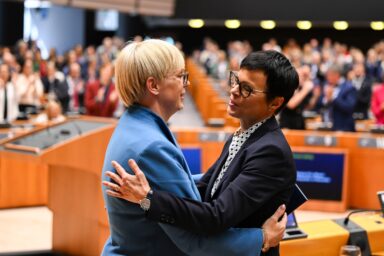
“The transformation led by bio-economy is already tangible across Europe, from everyday bio-based products such as beeswax lip balm and linen textiles to cutting-edge materials like car parts from olive tree waste,” said Maria Panayiotou, Cyprus’ minister for agriculture.
The conclusions applaud the Commission’s 2040 vision of widely deployed bio-based plastics, fertilisers, textiles and construction materials. They urge the executive to identify and nurture “lead markets” that can create predictable demand. Brussels’s draft list runs from bio-plastics to bio-fertilisers; ministers would like it widened to shoes, paper and the “blue” bio-economy of algae and sponges.
You might be interested
“With today’s Council conclusions, we say it loud and clear: competitiveness, sustainability and home-grown innovation must be at the core of the EU’s path toward a resilient bioeconomy by 2040 and Europe’s strategic autonomy,” Ms Panayiotou added.
Predictability matters because scale-up is costly. Demo plants for lignin-based chemicals or synthetic proteins face high capital costs and uncertain offtake. Without clear signals—carbon prices, procurement quotas, or label rules—banks price the risk brutally. The Council therefore highlights investment tools and calls for “faster approvals and simplified rules” so that start-ups do not bleed cash in permitting queues.
A strategy, not yet law
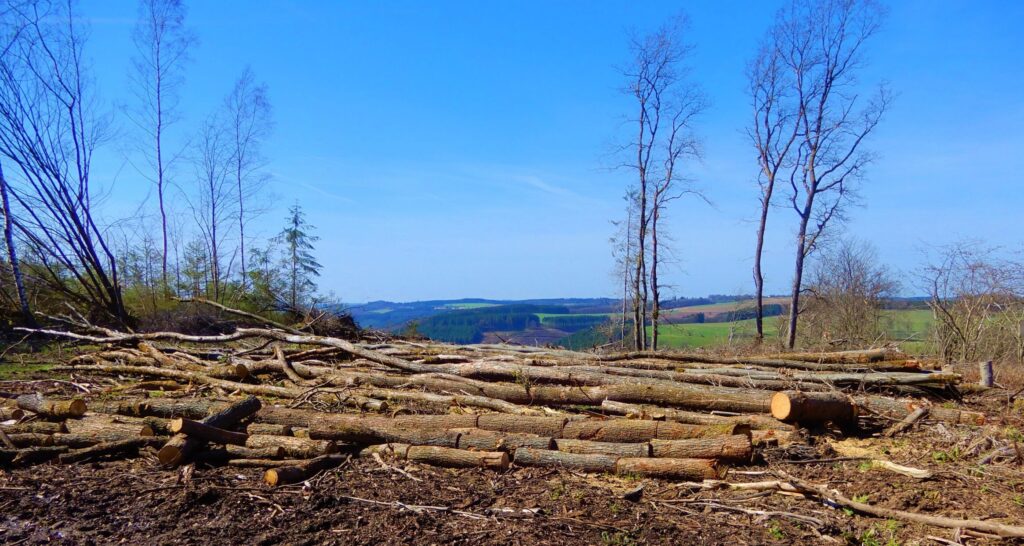
Ministers also press for a steady supply of sustainable biomass. The EU is about 90 per cent self-sufficient in feed-stock today; keeping that ratio while demand soars means wringing more value from residues, biowaste and secondary forestry rather than chopping new timber.
The legislative machinery lags the rhetoric. The umbrella Strategic Framework for a Competitive & Sustainable EU Bio-economy is only a November 2025 communication, instructing other departments to align policies and report progress by 2027.
Harder measures are coming piecemeal. Part I of the European Biotech Act, covering health applications, is in first reading; Part II, due in September, will tackle industrial and agri-biotech licences. A Carbon Removal Certification Framework became law last year, but methodologies for carbon farming and biogenic storage will not arrive until late 2026. A Circular Economy Act, set to propose nutrient-recovery targets, is still a concept note.
Opportunity or headache?
Next, the Commission wants to amend the Climate Law to lock in a 90 per cent emission-cut target by 2040. If Parliament’s environment committee votes in May to tighten the goal, demand for low-carbon alternatives—advanced biofuels, bioplastics, timber in high-rise buildings—will rise further.
The transformation led by bio-economy is already tangible across Europe, from beeswax lip balm to cutting-edge materials like car parts from olive tree waste. — Maria Panayiotou, Cyprus’ minister for agriculture
Green-claims legislation moving through trilogue talks will then police marketing hype, forcing makers of bio-based goods to back assertions with data. A cumulative effect is visible: each file alone looks technical, but together they line the runway for the 2040 vision.
For big companies the Council’s endorsement offers political certainty. Chemical multinationals can pencil in hedges against fossil bans; consumer-goods giants gain comfort that eco-labels will be harmonised. Yet a compliance gap looms. Firms will soon juggle two waves of biotech rules, life-cycle audits under the carbon-removal scheme and new disclosure duties once the Green-claims directive lands. Getting involved early in delegated-act drafting should lower surprises.
Homework for capitals
Investors sniff a subsidy window. Horizon Europe and the Circular Bio-based Europe Joint Undertaking will steer about €215m in 2026 to pilot plants and feed-stock mobilisation. The Innovation Fund’s next call, aligned with the bio-economy roadmap, promises grants for first-of-a-kind biorefineries. Such largesse may bridge the cost gap between corn-starch polymers and petrochemical incumbents, provided recipients can pass the inevitable ethics and biodiversity screens.
National governments now face homework. They must weave the EU blueprint into domestic bio-economy strategies by 2027, hook reporting systems to the new Knowledge Centre for Bio-economy and update permitting to cut lead times.
Regions rich in straw, manure or woody residues hope to lure investment away from coastal hydrogen hubs. That will require logistics corridors, skills programmes and planning one-stop shops. Delay could cost them cohesion-fund cash earmarked for bio-hubs.
Supply, security, and autonomy
NGOs, wary of greenwashing, have ammunition too. They fought the first Biotech Act draft for watering down the precautionary principle and have told the Commission to hard-wire biodiversity safeguards into Part II. The voluntary nature of carbon-removal certificates attracts scrutiny: if rules for soil carbon or timber buildings prove loose, campaigners will pounce. Ministers’ call for “robust traceability” of biomass suggests they share these worries.
We say it loud and clear: competitiveness, sustainability and home-grown innovation must be at the core of the EU’s path toward a resilient bioeconomy by 2040. — Maria Panayiotou
Even with safeguards, enough feed-stock must reach industry without draining soils or forests. By flagging 90 per cent self-sufficiency, the Council hints at energy-security ghosts: Europe imported Russian gas; it does not wish to swap that dependency for Asian starch or South-American sugar.
Diversifying raw materials—algae, municipal waste, straw—ought to cushion shocks. Whether farmers and foresters can supply at sustainable prices is another matter. Grain and milk lobbies already complain about land competition; a sudden surge in demand for cellulose could stir fresh rows.
From conclusions to consequences
Strategic autonomy lurks throughout the text. Brussels frets about battery metals from China; it also fears that petrochemicals giants in the Gulf will capture next-generation plastics. By scaling a home-grown bio-industry the EU hopes to keep value chains—and intellectual property—within its borders.
That ambition dovetails with broader industrial policy, which is channelling subsidies to semiconductors, defence and clean-tech through the new Competitiveness Fund. Bio-based innovation is presented as the rural chapter of that re-shoring push.
Council conclusions alone are not binding. Yet they steer committee agendas and embolden presidencies to insert favourite clauses into upcoming laws. Expect Cyprus and its successors to insist that the Biotech Act, the Circular Economy Act and the updated Climate Law all reference the bio-economy targets endorsed on 17 March.
Europe’s bio-economy, at least on paper, now enjoys the same long-term clarity batteries received in 2023 and hydrogen in 2024. Money, permitting and social licence must catch up.