
The debate over differentiated integration has shadowed the European Union for decades. Now, a hostile transatlantic climate and the rise of an ‘E6’—a Germany-led inner circle of six EU states pushing for tighter defense and economic integration—are turning long-running rhetoric into structural change. The wildcard: volatile political coalitions that could stall the project before it solidifies.
As the E6 grouping tests the boundaries between political signalling and structural cooperation, the question of pathways—enhanced cooperation within the treaties, intergovernmental arrangements outside them, or something new entirely—remains fiercely contested. The risk of an EU à la carte forces hollowing out the EU from within looms over every proposal.
In interview with EU Perspectives, Janis Emmanouilidis, the Deputy Chief Executive and Director of Studies at the European Policy Centre (EPC) and one of Europe’s leading experts on differentiated integration, explains why the choice of pathway is far more than a technical detail. And why the verdict is still out on whether this moment will be different from the ones that came before.
We have seen waves of political momentum around two-speed Europe before. Does this moment feel different? And what does the history of what has stuck versus what has fizzled tell us about where we are heading now?
First, differentiation is already a reality of the EU — just look at Schengen. Multiple speeds is something the EU has been operating with.
Discussions about differentiated integration have often been a pressure instrument — to ensure either a unanimous decision or a very large majority aligning with an objective. What often prevented differentiation from materialising was those arguing for moving ahead on Sunday did not have the political will to follow through on Monday. At the European Union level, in the end, they did not have the political leadership to push it through.
You might be interested

So what I see now being somewhat different is that—and I must shake my head while saying that, although we have been saying for a very long time that we’re living in a new world, a new era—there is a need to do things at the European level which needs to be much more ambitious than what we have seen thus far.
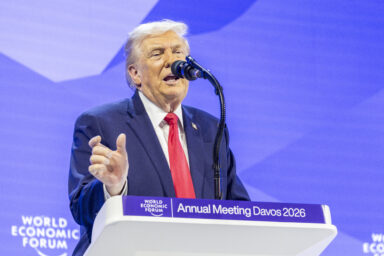
Now, especially because of developments in the US and the transatlantic relations, you see that there is an increasing awareness that we’re living in a different world. And that this different world requires a level of ambition which is higher than what we have been ready to do thus far. Because it is obvious in the public debate what (US President Donald) Trump is doing, there is more public awareness of the need to potentially do more at the European level — things which would have been unthinkable a year ago.
We might get to a point where unity is no longer an option. — Janis Emmanouilidis, European Policy Centre
I would have argued since at least 2022 that we need to be more ambitious and that member states do not live up to the needs of the day. But now there is increasing awareness among EU leaders that there is a need to go further. Greenland has helped in this context – though the US election campaign in 2024, the National Security Strategy, the (US Vice-President J. D.) Vance speech in Munich, none of this should have come as a surprise.
There is now more of a political drive, and potentially that might lead to a momentum of cooperation which might require groups of member states moving forward. But—and I’m using a lot of ‘might’ and ‘potentially’ because I’m still not sure we have understood the message—there is also the question of what exactly we mean.
Much of what you have described sounds like ad-hoc responses within existing structures rather than structural change. Is the E6 different, a genuine opportunity for structural reform, or are we still looking at loose, moment-to-moment groupings?
I think we need to differentiate between what you call structural and what are groupings of member states who align themselves to have a common and potentially stronger position in the European context. And that’s something we’re seeing all the time.
We have the frugals coming together when it comes to the EU budget. We’ve seen a lot of groupings which politically come together in order to push their position at the European Council level vis-à-vis other member states, which often do not lead to differentiated integration in the sense of them then actually taking a decision—we’re going to progress, we’re going to do that on our own—by using instruments already enshrined in the EU treaties or by doing it potentially outside the EU treaties.
So there is a difference between these groupings, which are political groupings trying to push their issue or the interests and common position they have in order to get a bigger group of member states behind them or to push the ones who are most obstructive to be less obstructive. But these are political pushes.
If you look now at the E6 as an example. The E6 for me is still very much a political grouping trying to push certain positions. We do not know whether that will then lead to something more substantial at the European level or outside of the EU.
And we do not know—and I would assume—how many member states would ultimately be part of it, and it would definitely be more than six. These are groupings, and that’s different from what you call structural cooperation.
This has been framed in context of enhanced cooperation with the E6, but it’s not enhanced cooperation yet. It could be, but by nature of the fact that it is only six, it is not. Where do you see that going?
To first step back, enhanced cooperation is an instrument that has appeared in the EU treaties. And once it has, there were a good number of people who said we will use enhanced cooperation in a very structural way to progress European integration among those who are willing and able.
But what we saw in practice was that it was either used in a relatively small number of cases and in small cases, meaning it was not used to do something big and major. I would now consider Ukraine, €90 billion, as big and major. And the instrument was used.
Using it à la carte—outside EU structures, without the involvement of the Commission, without the democratic scrutiny of the European Parliament, not adhering to the rule of law—they have bigger objective: to undermine the EU as we know it. — Janis Emmanouilidis
But thus far it had been rather either not used or used in very small cases. And the argument was always that it’s extremely complex and we’re not able to use it. For me, these were all political justifications for not using an instrument which was available. Because member states actually do not have the readiness to go much deeper in their level of integration or cooperation.
So what we’re now seeing is that there seems to be a momentum also to use enhanced cooperation. You could use it very fundamentally if there is an agreement. Yes, it has a whole bunch of legal constraints and institutional constraints attached to it. I think there are cases where it is difficult to use it because potentially it might undermine the single market. Which is something member states are very careful about — for good reasons.
And potentially you might also want to use an instrument where it’s about aligning non-EU countries to that kind of cooperation. And hence enhanced cooperation might not be the right thing to do. So there is a certain momentum, but thus far it always received a very, very defensive treatment.
The sovereigntist camp—increasingly vocal, particularly among the Visegrád countries—is pushing a vision of an essentially à la carte European Union: no binding structural obligations, member states taking what they want when they want it. As that vision grows, what does it mean for initiatives like the E6? Does it force proponents to push for something more binding and institutionalised to withstand that pressure? Or does it actually pull in the other direction, toward looser groupings that shift depending on who is in power?
Many of these interests actually have in mind trying to hollow out the EU from within. That’s the overall objective. You might even call it stronger than what I just called it: ideas of a Europe of fatherlands, of sovereignty, or whatever you want to call it. So they look for any opportunity available in order to hollow out the EU from within. To make it less of a coherent actor, because they have a different, bigger objective in mind in terms of what the future of European integration should look like.
So if you use it à la carte along the lines of doing whatever you want intergovernmentally, outside EU structures, without the involvement of the Commission, without the democratic scrutiny of the European Parliament, not adhering to the rule of law, no role for the European Court of Justice — I could go on. If that is what you have in mind… And I think it is. Tthey have that in mind because they actually have a bigger objective, and the objective being to undermine the EU as we know it.
I do not have that position. I see European integration moving forward as meaning to deepen it instead of hollowing it out. And that’s why, for example, enhanced cooperation as an instrument provides a lot of safeguards.
However, having said all that, I am aware of the limitations of enhanced cooperation. And I’m also aware of the fact that you have a political momentum even among pro-European forces to argue we need to do something which is more functional.
Some argue—and I mean not in the camp of those who want to hollow out, but those in the camp who say we need to cooperate further—let’s look for something which is more functional, which works more easily and also potentially involves non-EU countries, coalitions of the willing.
That’s why it’s important to ask: what kind of pathways are we talking about when it comes to differentiated integration? Is it a pathway within the EU treaties on the basis of the instruments the EU treaty construction provides, or is it something which is outside, intergovernmental?
But then I would argue it needs to be done in a way which is in line of the spirit of the EU treaties, even if it is intergovernmental. We’ve (The European Policy Centre) called it open supra-governmental avant-garde. Countries who organize themselves in an intergovernmental fashion while having the supranational notion and quality of the EU in mind. And also being open in terms of not creating closed groupings.
Because if you go very far back into history, into the 1990s, there was this idea of creating a core Europe. And that was something which was promoted by some influential politicians, including (Wolfgang) Schäuble, 13th president of the Bundestag in Germany.
They were having in mind a core Europe which is exclusive. Actually, they had in mind the founding fathers without Italy, which was a big blunder at the time. They had something in mind which created a very small group outside of the EU, progressing, making federal steps potentially, but doing that outside of the EU framework. We’re talking about an open avant-garde.
Failing to work more closely together plays into the hands of those who want to hollow out the EU from within — then we might face a severe problem at the European level. — Janis Emmanouilidis
So I think there’s a lot of thinking that needs to go into what intergovernmental cooperation should look like. And I’m saying all this because there are some who want to use intergovernmental cooperation to hollow out the EU or European integration. I think it should be used as an experiment field. Potentially also outside of the EU framework, involving EU institutions as much as possible. And trying to integrate that into the EU framework as quickly as possible. So if there are obstructing forces—governments in certain member states—if there’s a change of government, maybe you can then integrate more countries into it and eventually maybe all of it. It’s a different basic thinking from what you were describing.
So the verdict is still out. The momentum is real, but the end state has not been articulated yet. We are essentially in a waiting period before the actual pathways become clear?
I think we need to see how much political will and leadership they actually will have to make these kinds of moves, and how big of a group they would be when it becomes not political – in the sense of moving the debate, as the six are doing – but in the sense of actually doing the job. That is something we still need to wait to see how it will work out.
But we also need to think more creatively of doing it in a way which is something we’ve avoided thus far, along the lines of Open Supragovernmental Avant-Garde.
Let’s not forget we might also see a situation where in the upcoming years the election results in countries like France, Germany, Poland might lead us to a totally different new territory. When it comes to potential political developments, everything should be thought of even if it’s not materialised.
I’m even saying we might get to a moment—I’m not advocating for it—where we have an even more substantial differentiation among European countries outside of the EU framework, where we talk about something totally different. I think we need to think along those lines even if we want to avoid it. It’s like creating a new entity outside of the EU. It could even be necessary at some point.
When you are mapping out these policy pathways, how much of your thinking is shaped by the sovereigntist right — the Hungary’s PM Viktor Orbán camp and those moving in that direction? At what point does the goal shift from pushing for deeper integration to simply preserving what already exists?
I think we are already witnessing at the European Union strong forces trying to hollow out the EU from within, creating dividing lines. We see the outside—including Washington—actively working in that direction. And again, this should not have come as a surprise. I wrote about it in ’24 and talked about it before then. So it didn’t take me by surprise.
If certain elections strengthen those forces with a critical—or more than critical—view of the European Union, we might find ourselves in a situation where those who envision a totally different future for the EU become stronger.
If that becomes politically unmanageable, while at the same time external pressures demand more cooperation, and some member states understand that failing to work more closely together plays into the hands of those who want to hollow out the EU from within, then we might face a severe problem at the European level. This is something I hope we can still avoid and politically manage. But we cannot take it for granted.
We need to deal with this in a rather open way, rather than hiding behind debates which we’ve done in the past — ‘we need unity and unity is the most significant element’. Well, we might get to a point where unity is no longer an option. And we might also see that certain governments who already are in power, if their camp gets stronger, display a different policy when it comes to European Union affairs in future.
The Eurogroup president said that the E6 was basically going to be a temporary solution. Do you think that’s a realistic thing for him to say? Or is this going to be something that grows into a more cemented group going forward?
I think it is right to say that it should be temporary, and as open as possible — meaning whoever wants to join and is genuinely ready to join, not merely pretending to want to join, which we have also seen in the past.
Where it will develop—let’s take the concrete case, but also in general—if you have a group of 20, 22, 23 member states ready to do something, and two or three who obstruct and are not ready to move in this direction, this can become more permanent than originally envisaged. But as it involves almost all member states, this is not that much of a problem.
We’ve seen this before — in the context of the euro crisis in 2012, when agreement could not be found among all member states. We created the European Stability Mechanism. We said we would integrate it into the EU framework, and it proved more difficult than originally envisaged.
So the objective is the right one — the one the Eurogroup president has voiced, among others. Be open, try to get it integrated into the EU, try to have it be temporary. That’s the right objective. Whether it will work out depends on many different factors, and especially on politics in member states.