
Energy prices are soaring, and Europe’s carbon market has ended up in the crossfire. The European Parliament debated the future of the EU’s emissions trading system (ETS) on Wednesday, as right-leaning groups push for reform and centre-left MEPs urge Brussels to hold the line. At stake is whether the bloc’s flagship climate tool is part of the solution to the energy crisis—or part of the problem.
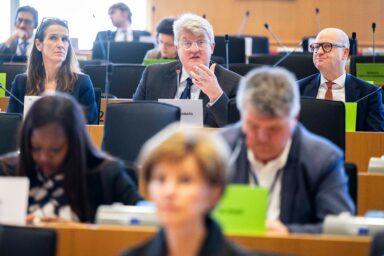
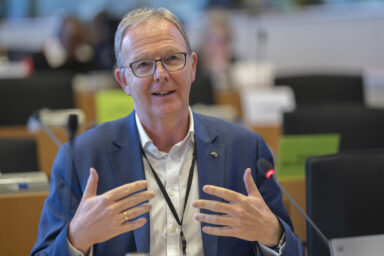
“The Emission Trading System has done the most in making us less dependent on gas – attacking this system is serving the fossil fuel autocrats of this world,” Bas Eickhout (Greens–EFA/NLD) said during a debate on Wednesday on the EU’s energy security in relation to the geopolitical crisis in the Middle East.
Mr Eickhout urged caution in reforming the system in response to high energy prices. Staying the course on climate policy, he argued, is the best protection against price shocks from the Middle East conflict—not weakening it.
“The only real course for freedom and independence has started in 2019 and is the European Green Deal,” Mr Eickhout said. “The Green Deal is our climate, economic and security agenda. We need to accelerate this agenda.” Otherwise, he warned, European citizens would ultimately bear the cost.
You might be interested

Protecting citizens from price shocks
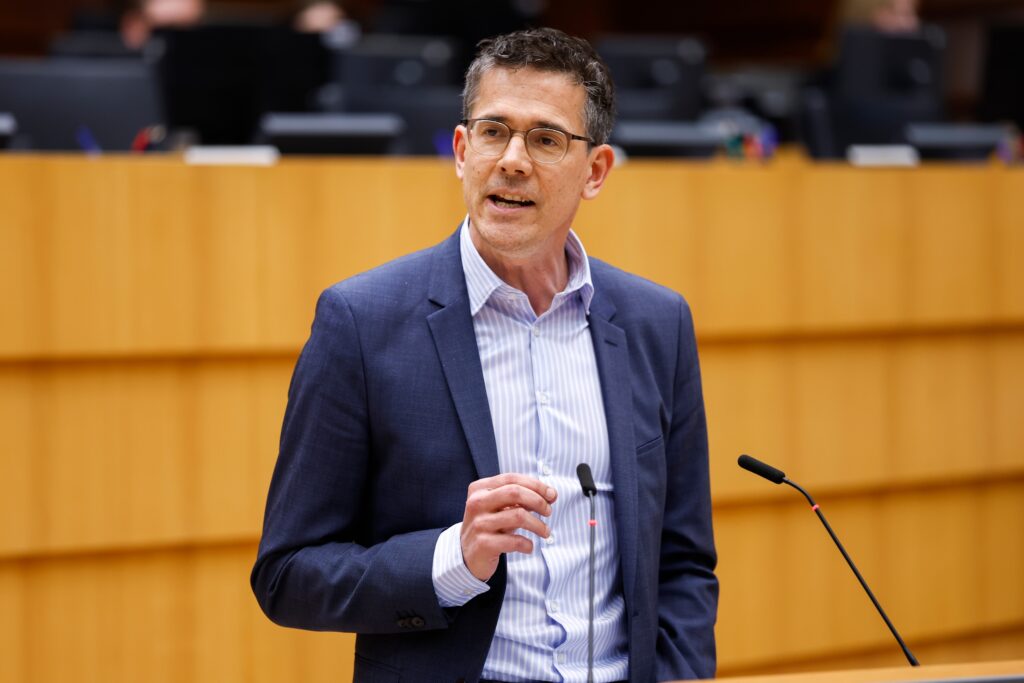
The impact of rising energy prices on citizens was also highlighted by Mohammed Chahim (S&D/NLD). “People who are protected are those with heat pumps, electric cars, and solar panels. But these are not accessible to everyone. Only when we have our own European system will we be protected from these shocks.”
Like Mr Eickhout, Mr Chahim strongly supports the Green Deal and ETS. He recently said that ‘those who are calling for weakening our EU carbon pricing system are sending the wrong signal: it cushions laggards instead of empowering innovators.’
Reform of the ETS
The debate followed the European Council meeting on 19 March. European leaders called on the Commission to present a review of the emissions trading system by July 2026 at the latest. They hope revising the system might help to contain soaring energy prices.
As the conflict in the Middle East has an immediate impact on energy prices for European citizens and businesses, the European Council underlines the need for a coordinated response—European Council
“As the conflict in the Middle East has an immediate impact on energy prices for European citizens and businesses, the European Council underlines the need for a coordinated response,” the Council conclusions read.
The EU launched the ETS in 2005 and later reinforced it through the European Green Deal. It requires companies to buy allowances corresponding to the greenhouse gases they produce. Gas providers include the cost of carbon allowances in their prices. This means the ETS could currently increase energy prices in the short term. In the long term, however, transitioning away from fossil fuels will help stabilise or lower energy prices.
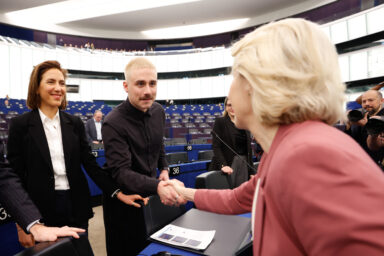
Following the European Council meeting, Commission President Ursula von der Leyen confirmed that work on a review of the system is ongoing. This is part of broader efforts to address energy price volatility. Ms von der Leyen, for example, proposed introducing an ‘ETS Investment Booster’: a fund of €30bn to finance decarbonisation projects, of which €400m should come from ETS profits.
‘More costs than benefits’
Energy prices continue to soar. Critics of the ETS say the system is exacerbating costs for businesses and weakening industrial competitiveness. Right-leaning groups in Parliament have also taken up this argument. Jordan Bardella (Patriots for Europe/FRA) warned against using the ETS to “penalise industry.” He pointed to rising energy costs linked to geopolitical instability.
Elena Donazzan (ECR/ITA) went further, arguing that the ETS is among the systems that produce more costs than benefits. “The Commission should put a stop to this system because it is expensive […] and damaging our businesses.”
From the centre-right, Massimiliano Salini (EPP/ITA) took a more cautious stance. “I don’t think the ETS should be abolished or suspended, but we do have a duty to neutralise the effect that ETS has on our energy prices,” he said. With the Commission’s ETS review due by July, the debate is far from over—and the pressure on Brussels to act is only growing.