
The European Commission is actively using new Digital Services Act safeguards and a voluntary rapid-response network to curb foreign interference ahead of Slovenia’s snap parliamentary election.
Brussels views Slovenia’s snap parliamentary election, now pencilled in for 22 March, as a laboratory for its new defences against electoral meddling. The country’s small size and lively social-media scene make it a tempting target for foreign information manipulation and interference. Russian agents and Iran-linked botnets haunted Slovenian feeds in 2025. Deep-fake audio alleging corruption in the ruling Freedom Movement surfaced on 9 March.
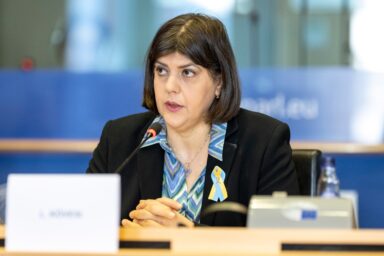
Thomas Regnier, the European Commission’s lead spokesman on digital policy, sketched Brussels’ approach at Thursday’s press briefing. “It’s important to recall elections are a national competence, and they should and will in Europe remain in the hands of our citizens,” he began.
Guardrails activated
Yet the Commission will not watch passively. “However, platforms today in Europe have a role to play to protect our democratic processes, our electoral processes, and to strengthen the resilience of our democracies,” Mr Regnier said. His words hint at the growing reach of the Digital Services Act (DSA), the EU’s flagship content-moderation law.
The Slovenian authorities, he noted, have already used one of the Act’s soft-power instruments. “I can confirm here to you that in the context of the DSA, DSA roundtable was organised by the Slovenian authorities.” These gatherings oblige big platforms to explain how they will handle deep-fakes, covert advertising and other electoral hazards. Only Romania and Poland have skipped the practice since the DSA came into force in 2024, according to Mr Regnier.
You might be interested
Roundtables are polite affairs; sterner tools exist. “I can also confirm to you, and this is another important reminder, that in the context of the Slovenian elections, the rapid response system was also activated by the signatories of the Code of Conduct against disinformation,” the spokesman said. The 44 signatories—tech giants, fact-checkers and civil-society groups—coordinate takedowns when viral falsehoods threaten the ballot.
Reporters pressed for timing. “So it was activated this month, earlier this month in March,” Mr Regnier replied. Why the alarm? Forensic analysts hired by the Freedom Movement say the damning wire-taps are AI-generated composites. One site pushing the clips is registered in North Macedonia. That is enough to trigger the EU’s early-warning dashboard, which links Brussels with all foreign ministries.
Beyond Slovenia
Platforms must now show they are throttling or labelling the fake audio. Failure risks fines of up to six per cent of global turnover under the DSA. Mr Regnier offered an upbeat verdict: “Both of them have been done, and this is very good for citizens in Slovenia ahead of a vote.”
Attention is already shifting to Hungary, which votes later in the year. Has its rapid-response mechanism been switched on? “Not yet,” Mr Regnier said. He quickly added: “So that’s where we are today, not officially, but no indications that it will not be the case in the future.” Budapest’s record on media freedom makes that assurance worth noting.
In the context of the Slovenian elections, the rapid response system was also activated by the signatories of the Code of Conduct against disinformation. — Thomas Regnier, European Commission digital policy spokesperson
Brussels believes it now possesses a full armoury. “We have many tools,” the spokesman told a persistent questioner repeatedly. He listed the new European Democracy Shield, the external-action service’s rapid-alert system and a Centre for Democratic Resilience that trains national officials. “So yes, we have a structure in place to make sure that, again, the votes remain in the hands of our citizens,” he concluded.
Track record
Do these gadgets work? Mr Regnier dipped into memory. “From memory, with all the elections that we had, over the last two and a half years since the DSA entered into force, only two countries decided not to organise roundtable, if I’m not mistaken.” He ventured an evaluation: “How effective are they? They are very effective.” Croatia’s 2025 presidential poll, which saw a short-lived deep-fake video of the incumbent, is cited within the Commission as proof.
Slovenia provides fresh test cases. Under domestic law the distribution of illicit wire-taps invites prison terms of up to two years, doubled when media amplify them. Prosecutors can act; the electoral commission can warn; Brussels can lean on platforms. If investigators trace the recordings to a foreign service, the Council may impose sanctions on the operators—just as it blacklisted Russian outlets after 2022.
For now the Commission prefers persuasion. The DSA demands that very-large online platforms run annual audits of systemic risks. Those audits now loom. X (formerly Twitter) already faces a €120m penalty for failing to curb deep-fakes in Spain’s election last year, a cautionary tale for tech executives eyeing Ljubljana.
Steady hands
Slovenia’s campaign will stretch the machinery further. The European Centre for Democratic Resilience will monitor the bot traffic that flooded Prime Minister Robert Golob’s Instagram followers in February. The foreign-ministry node on the rapid-alert network has filed two notices on deep-fake audio so far, according to diplomats. If volume grows, the Commission can trigger the DSA’s crisis protocol, forcing platforms to act within 24 hours.
EU officials stress that none of this meddles with how Slovenians mark their ballots. The aim, they say, is to stop covert manipulation by outsiders. The mantra remains sovereignty through transparency. Yet such interventions carry their own risks. Zealous takedowns could feed claims of censorship, especially from political forces that thrive on anti-EU rhetoric.
Mr Regnier, though, sounded unruffled. “Both of them have been done,” he repeated, referring to the roundtable and the rapid-response switch. Brussels will hope that is enough. If not, its shiny new toolkit may need another wrench.