
EU negotiators have a plan for talks on the Critical Medicines Act: agree on the ‘easy stuff’ first. Scope and definitions are being hashed out before the real battles begin — joint procurement, redistribution, and European preference remain untouched for now. The sequencing is deliberate, and the hard fights are coming.
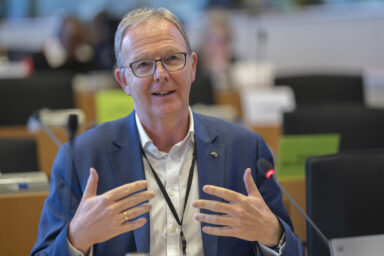
During the second trilogue on 16 March, discussions on scope and definitions made limited progress, with unresolved questions pushed to the technical level. The legislation’s lead MEP, Tomislav Sokol (EPP/HRV), told the public health committee (SANT) that “before we get to the most contentious issues like joint procurement, redistribution, and European preference, the question of the scope and definitions needs to be solved.”
The definition of ‘medicines of common interest’ remains a central issue in the negotiations, as it will determine the scope of several provisions of the regulation. Discussions between Parliament and Council have not yet led to agreement. The European Parliament supports a broader scope, including medicines with availability or access issues in at least three member states, as well as orphan medicines (medicines developed to treat rare diseases).
Scope discussions remain unresolved
Mr Sokol said discussions on medicinal products of common interest made “encouraging but still limited progress”. The Council showed “a degree of flexibility” on including orphan medicines and on permit procedures, while Parliament showed “some openness to narrowing the scope”, though it remained “united” with “a very strong mandate”.
The Critical Medicines Act aims to strengthen supply security and reduce dependencies on third countries. It includes measures to support manufacturing capacity, diversify supply chains, and improve coordination between member states.
You might be interested

Negotiators also discussed timelines for strategic project designation and environmental assessments. Mr Sokol said both sides agreed to shorten these deadlines “as much as possible”. Further technical work is needed to find “a suitable and balanced solution”.
Co-legislators also provisionally agreed on Article 4, which sets out the Union’s strategic objectives. Mr Sokol said they will retain the provision and revise its title to include “an explicit reference to patient safety”. Paragraphs 2 and 3 remain as the Commission proposed, focusing on cooperation, information sharing, and reducing dependencies on third countries.
Geopolitics and supply dependencies
Mr Sokol linked the legislation to broader geopolitical developments. Current global dynamics, he said, show “the importance of being less dependent on imports of medicines from third countries, both generic medicines and innovative ones”.
What we have and what we propose in this legislation is of crucial importance to protect European industry, to maintain pharmaceutical industry in Europe, but also to achieve equality of access under the same conditions to medicines for all European citizens. — MEP Tomislav Sokol (EPP/HRV)
He added that “what we have and what we propose in this legislation is of crucial importance to protect European industry, to maintain pharmaceutical industry in Europe, but also to achieve equality of access under the same conditions to medicines for all European citizens.” The Commission proposal similarly identifies supply chain vulnerabilities and external dependencies as key drivers behind medicine shortages.
The most politically sensitive elements have not yet been addressed. These include joint procurement, redistribution of medicines between member states, and provisions related to European preference in procurement.
Next steps
In a separate intervention, Mr Sokol outlined Parliament’s broader position to European pharmacists. This includes support for stronger criteria linked to production in Europe and voluntary joint procurement mechanisms. He also noted opposition among some member states to redistribution measures.
Mr Sokol said that “While progress was made on several fronts, further technical work will be necessary to bridge remaining gaps,” particularly on scope and definitions.
The outcome of scope discussions will determine how broadly the regulation applies — and shape the remaining political battles. The next trilogue takes place on 11 May.