When national capacities are stretched, the EU steps in. For the first time in its history, it deployed its own repatriation aircraft, bringing hundreds of Europeans home from the Middle East as they were stranded there by the US-Israeli war against Iran.
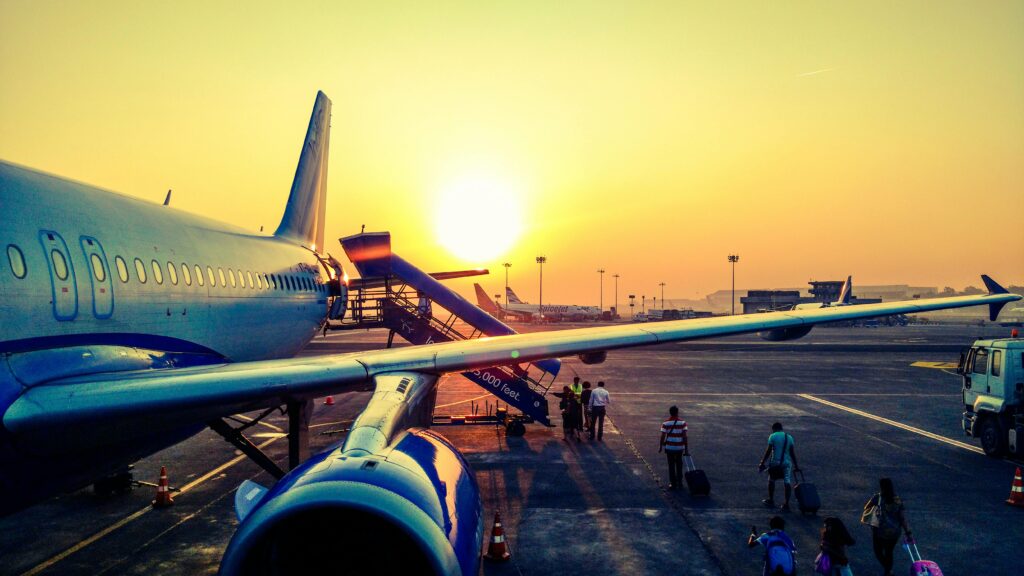
The European Union has, for the first time, used its rescEU air resources to evacuate citizens from a crisis zone. Two special flights chartered directly by the European Commission landed safely in Romania, transporting 356 Europeans from Oman.
This marks a significant milestone for Europe’s crisis response system. RescEU’s special capacities activate when member states do not have sufficient national resources – for instance, transport aircraft – to evacuate their citizens from crisis areas.
Escalating conflict with Iran
The aircraft were deployed under the EU Civil Protection Mechanism (UCPM). The EU Emergency Response Coordination Centre (ERCC) coordinated the deployment.
Hadja Lahbib, Commissioner for Crisis Management, described the operation as proof of the EU’s ability to act swiftly in emergencies. “When crisis strikes, Europe is there for its people. When national capacities reach their limits, the EU steps in with strong support. (…) Our Civil Protection Mechanism is working day and night to bring European citizens home,“ she said.
You might be interested

Over the past days, the security situation in the Middle East has deteriorated sharply amid the escalating conflict between Iran and a US- and Israel-led coalition. Extensive airstrikes and retaliatory missile and drone attacks have forced the closure of the region’s airspace, causing widespread flight cancellations. Thousands of foreign tourists and workers found themselves unable to return via regular commercial routes.
When crisis strikes, Europe is there for its people. Our Civil Protection Mechanism is working day and night to bring European citizens home. — Hadja Lahbib, Commissioner for Equality, Preparedness and Crisis Management
In response, several member states requested assistance from the EU to bring citizens safely home. Besides the rescEU mechanism, the Union has so far helped organise 42 flights, returning more than 4,100 Europeans to safety, including to the Czech Republic, Italy, Austria, and Sweden.
New to the team
A total of 23 countries have sought repatriation support, with further flights planned in the coming days. The EU is working closely with the European External Action Service, its delegations in the region, and the consular offices of the member states involved.
Passenger aircraft only joined the rescEU system in September 2025. The Commission can cover up to 100 per cent of transport costs when these resources are deployed. Other modes repatriation support may, under certain conditions, cover up to 75 per cent.
The consular aspects of repatriation—including passenger lists and communication with citizens—remain the responsibility of the individual member states.