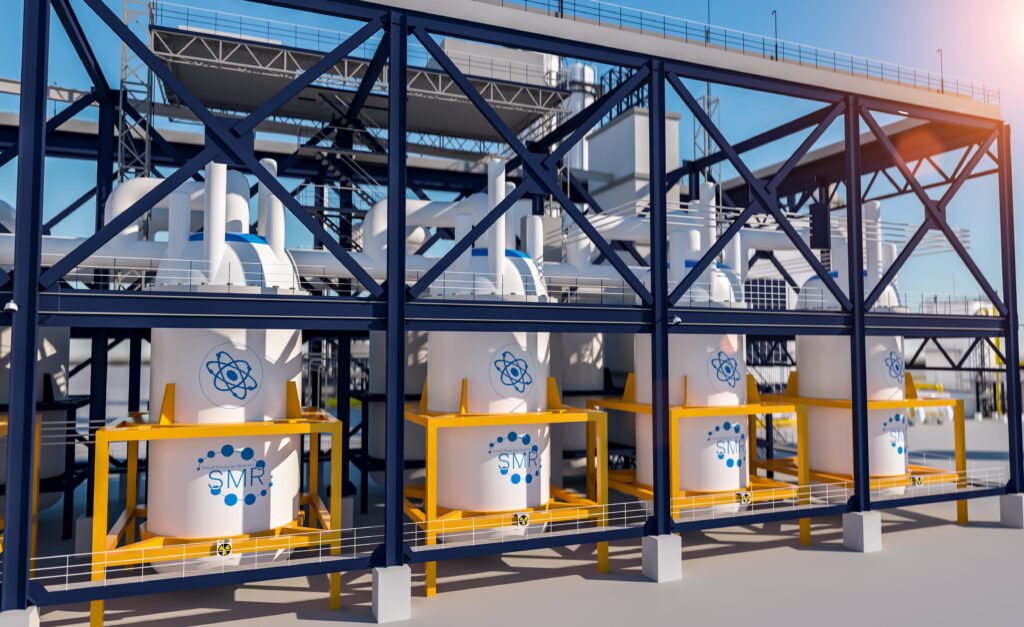


Europe is in a nuclear race — and Brussels just raised the stakes. The Commission put €200m behind SMR construction and committed a further €330m to nuclear research under a new Euratom programme. Speed is the priority; the only open question is how much of the technology Europe will build itself.
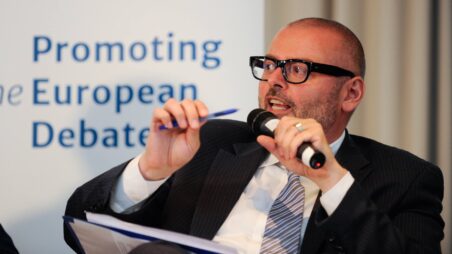
“There is a wind of change due to the geopolitical crisis we are facing,” said Domenico Rosetti di Valdabero, deputy head of the Commission’s research and innovation directorate (DG RTD) during an event at one of Brussels’ leading think tanks. “We will continue working together with the US,” he added, despite acknowledging “tension at EU level” over the decision. Internally, the debate centred on a choice: build entirely homegrown small modular reactors (SMRs), or prioritise rapid deployment using existing American designs?
The EU’s proposed Industrial Accelerator Act (IAA) calls for strengthening domestic manufacturing of strategic technologies, SMRs included. On reactors specifically, the text says the EU will prioritise Union-sourced technologies and components as much as possible. Which parts may still come from the US is a question for forthcoming discussions.
“The idea is that we should not build 100 per cent US manufactured SMRs in Europe,” Mr Rosetti said. “The first priority is fast deployment, but we do want key components made in the EU.” Tensions between the EU and the US have been palpable since Trump’s reelection, with the war in Iran further straining the transatlantic relationship. “The nuclear tech race is on. But we know that Europe has everything it needs to lead. We have half a million highly skilled workers in nuclear — far more than the US and China. We lead global innovation in modular reactors,” Commission President Ursula von der Leyen said at the Nuclear Energy Summit in Paris on 10 March.
You might be interested
Private investment in focus
During the Nuclear Energy Summit, the European Commission revealed its strategy to bring Europe’s first SMRs online by the early 2030s. Ms von der Leyen announced €200m in public funding for SMR construction in Europe, designed to leverage private investment in innovative nuclear technologies.
The following week, the Commission committed a further €330m through the Euratom Research and Training Programme 2026–2027. Of that, €108m goes to fission research — covering SMR safety, advanced reactor development, and nuclear fuels. The remaining €222m targets fusion energy, with the aim of connecting Europe’s first commercial fusion plant to the grid.
Member states follow suit
Several EU countries, including Finland, Sweden, and France, had already cleared funding for SMR construction before the announcement — and it did not take long for others to follow. The Dutch parliament hosted a roundtable into the research and funding of new forms of nuclear energy, including SMRs. And Belgium is going even further: the Flemish government is actively looking for four sites to build the small reactors, Belgian newspaper de Tijd reported on Wednesday.
“The war in Iran is once again painfully reminding us of how dependent we are on fossil fuels and underscoring the need for alternative, stable energy sources,” Flemish PM Matthias Diependaele told de Tijd. “Flanders must take a stand on this issue and look to the future: access to reliable, affordable, and sustainable energy is crucial for our industry and our prosperity,” he added.
Pro-nuclear majority
Ms von der Leyen described Europe’s earlier retreat from nuclear power as a “strategic mistake”, pointing to geopolitical instability and volatile energy prices as key drivers. The war in Iran has only sharpened that urgency.
In 2018, it was almost blasphemy to talk about nuclear — Matej Tonin, MEP (EPP/SVN)
Slovenian MEP Matej Tonin (EPP/SVN) noted the shift at the roundtable event, describing how political attitudes toward nuclear have changed dramatically. The Commission’s €530m commitment within a week says it all.
“In 2018, it was almost blasphemy to talk about nuclear,” he recalled, contrasting that with today’s pro-nuclear majority in the European Parliament. “I think a strategy on SMRs is quite an achievement,” he said. “We’re moving in the right direction.”