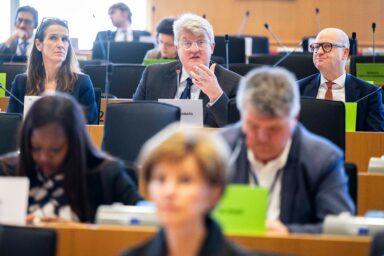
Rising fertilizer costs and geopolitical unrest will increasingly threaten Europe’s food security․ At a meeting of the Council of the European Union, ministers urged the European Commission to act. They called for steps to stabilize fertilizer markets and reduce the bloc’s reliance on imports.
“Availability and affordability should be our guiding principles,” the Commission told ministers, noting that a fertilizer action plan is in the pipeline. The need is growing more urgent as tensions in the Middle East and disruptions to global trade routes push up the cost of ammonia- and urea-based nitrogen inputs.
At the ministerial level, there was broad support for the plan, but calls for faster delivery.
France advocates for immediate intervention
France described the situation for farmers as dire, citing falling crop prices and rising production costs. In this context, the French minister called on the EU to immediately reduce tariffs on fertilizer inputs and suspend parts of the bloc’s carbon border mechanism. If a suspension is not possible, France said the EU should introduce compensation to offset the additional costs for farmers.
Across Eastern Europe, governments voiced similar concerns. Romania and Lithuania backed France’s call, warning that higher fertilizer prices already threaten farm viability and food production. Hungary, speaking on behalf of a joint declaration with regional partners, stressed that any long-term strategy must be backed by adequate funding and effective implementation tools.
You might be interested

Spain also warned that a lack of EU action could disrupt its national agricultural programmes. Portugal called for a coordinated European response to rising fertilizer prices and cautioned against national measures that could fragment the internal market. Both countries stressed the need to swiftly implement the fertilizer action plan.
Germany and Denmark endorse a compromise
Germany acknowledged pressure on fertilizer and energy prices but warned against measures that could undermine long-term climate policies, including the EU’s carbon border adjustment. Denmark was also reluctant to pause existing measures, arguing that a more structural approach is needed to improve sustainability and drive innovation in the sector.
Ministers said the crisis has exposed deeper structural weaknesses. The EU’s heavy reliance on imported fertilizers leaves it vulnerable to geopolitical shocks and supply disruptions.
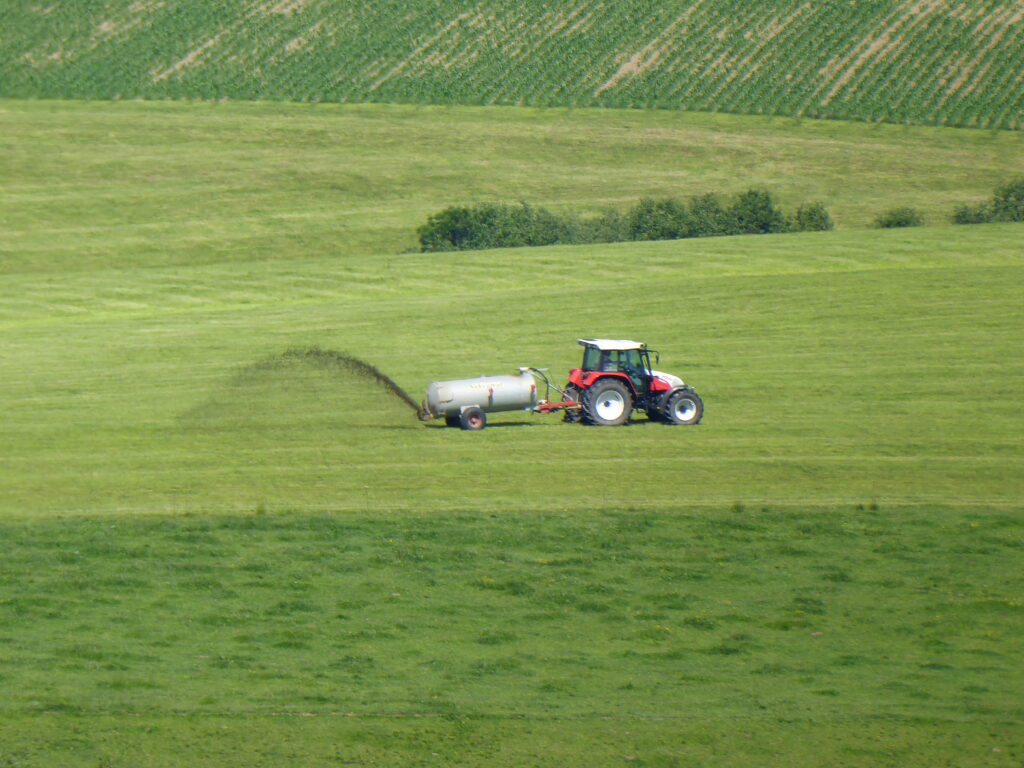
The Commission is expected to respond by boosting domestic production, improving market transparency, promoting bio-based fertilizers, and supporting low-carbon alternatives. Other countries, including the Netherlands and Slovenia, also backed the development of circular solutions such as manure and digestate.
Food security becomes a calculated priority
Fertilizers are increasingly seen by ministers as a matter of food security and European sovereignty. Greece and Ireland stressed the need to safeguard agricultural production amid geopolitical tensions. Poland called for stronger crisis management tools and greater flexibility in EU support measures.
The forthcoming fertilizer action plan will be an early test of the EU’s ability to address both immediate pressures and deeper structural challenges. While ministers broadly agree on the direction, differences remain over how to balance short-term support with long-term sustainability.
The EU’s response to these geopolitical pressures will be decisive—not only for farmers, but also for Europe’s economy and its security.