
Once again, Europe finds itself on the verge of a war it did not start and did little to prevent. Tehran’s proxy drones and 2,000-km missiles now threaten pipelines, ports, and parliaments from Cyprus to Bucharest. What is the proper response?
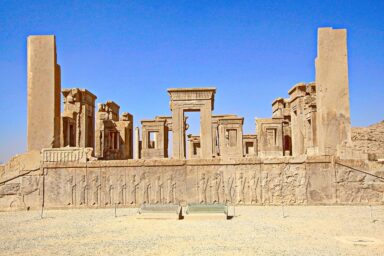
The blast that ripped through Tehran on 28 February recalled an older conflagration. When Alexander the Great torched Persepolis in 330 BC, he laid waste to the Achaemenid court and, with it, the political glue of his growing, ambitious empire. The modern bombing struck another Persian capital and exposed the fragility of the region’s order. Then, Europe looked on from a distance; now, it sits inside the blast radius of events with many potential avenues of spill-over.
As in antiquity, the destruction of a symbolic centre foretells wider turmoil. Persepolis’s ashes signalled that rule would rest on force, not legitimacy. The latest attack showed that the United States and Iran have moved beyond covert sparring to open war. Iran’s leaders know that stretching the battlefield serves their purpose of deterring Washington.
Heat on the continent
Europe therefore faces several simultaneous dangers rather than discrete sequenced crises. Retired US general David Petraeus, who commanded US forces in both Aghanistan and Iraq before heading the CIA, knows a thing or two about this. He speaks plainly: “Iran is not going to limit its targets to just US bases and Israel,” he told the US news outlet Stars & Stripes, pointing to strikes on civilian infrastructure, airfields and ports in neighbouring Gulf states, and even reaching as far as UK bases in Cyprus.
His warning echoed in defence ministries from Lisbon to Tallinn. Heiko Teggatz, head of the German Federal Police Union, said it “cannot be ruled out that Iran will send people all over the world to carry out terrorist attacks on Israeli and American facilities”. Such a move would draw Berlin into conflict whether or not federal troops fired a shot.
You might be interested
Germany’s Federal Ministry of the Interior said all security authorities are “continuously assessing the threat situation” and are “on high alert”. Similar alerts have gone out in Paris, Madrid and Warsaw. The tempo of counter-terror patrols now resembles the worst days of Islamic State bombings. The Bundespolizei’s 2 March 2026 situation update states that around 2,500 officers are on visible patrol every 24 hours at airports, main rail hubs and federal buildings. These daily figures pretty much equal those cited after the December 2016 Berlin Christmas-market attack. Mobile rapid-response units (the BFE+) have been surged from four to six platoons (roughly 180 officers) on constant standby, matching the 2017 high.
Heightened vigilance
Colin P. Clarke of the Soufan Center voiced out loud what many spooks whisper. “For Iran, this war is existential,” Clarke said in a statement. “And because it is, I would fully expect Tehran to activate any sleeper cell capacity it has in the West to make this painful for the US and Israel. Hezbollah and other assets could very well seek to conduct attacks in Europe, North America, etc.”
Nicolas Stockhammer, director of the Austrian research cluster Counter-Terrorism, Countering Violent Extremism, and Intelligence at Danube-University Krems warned the fatwa acts as “an accelerant for possible attacks in Europe”, affecting “existing networks, sympathisers and hybrid actors” aimed at a “diffuse, transnational support base”.
The emphasis on diffusion matters. Threats may spring from lone actors, established cells or loosely linked online fans, complicating surveillance. This is not limited to Europe. US authorities as well are warning of increased threats from “lone wolf” attacks and sleeper cell activation. Two attacks occurred in North America on Sunday, though exact motives remain under investigation. European counterparts assume copy-cats will follow.
NATO’s uneasy front-line
Leaders prefer caution, yet the Alliance may have little choice. Speaking in Skopje last week, NATO chief Mark Rutte acknowleged the threat. “NATO is not itself involved,” he said, responding to a question on recent developments in the Middle East.
The risk of spontaneous single offence attacks and the activation of sleeper cells to be relatively high. — Heiko Heinisch, Austrian terrorism expert
“But let’s be absolutely clear … Iran is close to getting his hands on a nuclear capability and on a ballistic missile capability, which is posing a threat, not only to the region the Middle East, including posing an existential threat to Israel, it is also posing a use threat to us here in Europe,” Mr Rutte added. Europe cannot bank on distance.
Turkey anchors NATO’s south-eastern flank. Iran’s Shahab-3 missiles and newer drones can already hit eastern Anatolia. The Kürecik radar station watches every launch; crews at Incirlik air base run drills for incoming fire. A fatal strike would impel Ankara to seek Article 4 consultations and perhaps Article 5 responses.
On the map
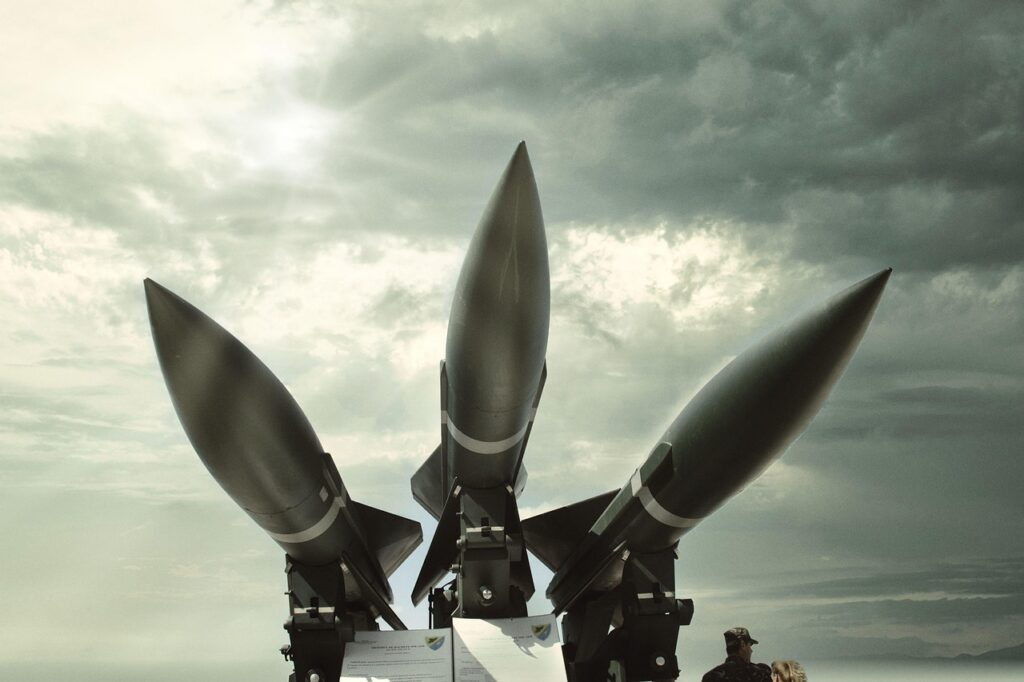
The reach of Iran’s arsenal is well-known. NATO’s Deputy Assistant Secretary General for Defence Investment Angus Lapsley told a Brussels Integrated Air & Missile Defence (IAMD) Committee briefing in 2024 that “With 2,000-kilometre LACMs entering the Iranian inventory, portions of Greece, Bulgaria, Romania and Cyprus fall inside a theoretical strike ring.”
Lt-Gen Thomas Wasson, director of NATO Air Command in Germany’s Ramstein, responded in a similar vein to a question by the International Institute of Security Studies on Iranian capability last year. “Any missile—ballistic or cruise—above roughly 1,500 kilometres puts the south-eastern flank on our planning map,” he said.
The facts are available. Soumar (Land-Attack Cruise Missile, or LACM, unveiled 2015 demonstrated a reach of 1,350 km in 2015; Western intelligence estimates range up to 2,000 km. The Hoveyzeh LACM, test-fired on 2 Feb 2019, is shown in an Iranian MOD video as flying 1,200 km. Tehran claims a 1,350 km operational range. The Paveh, also marketed as Quds-3, was on display in 2024. Iranian Defence Ministry said that the missile “flies beyond 1,650 km”. US 2024 review of Iran military power lists 1,500–1,700 km. The Abu Mahdi (anti-ship/land-attack misssile) reaches up to 1,200km, IISS assesses.
An edgy continent
Now compare it to the distances from likely launch zones to NATO territory. Khuzestan in western Iran is some 1,550 km from Alexandroupolis, Greece. A distabce of some 100km more divides Kermanshah and the Bulgarian Black Sea city of Varna. A missile fired from Tabriz in Iran’s north-west has about 1,720km to travel to Romanian Constanţa. It takes a mere 1,200km from Shiraz in south-west Iran to reach the Cypriot city of Larnaca.
Iran is not going to limit its targets to just US bases and Israel. — US Gen. David Petraeus, ex-commander of US missions to Afghanistan, Iraq
No wonder, then, that civil-defence drills are under way in Athens and Rome. Air-raid sirens, long silent, wail in test runs. Populations unused to such sounds find nerves fraying. Politicians fear that prolonged alerts could erode support for Ukraine just as Russian pressure grows.
Missile defence costs dear money. Germany hopes to anchor a European Sky Shield; Poland fields Patriots; France touts Aster systems. Yet procurement cycles are slow. Iran’s drones cost a fraction and arrive faster. That economic asymmetry tilts the strategic balance.
A powder keg in the Caucasus
Iran, however, also has nearer targets in sight. Tehran mistrusts Azerbaijan’s quiet partnership with Israel. Analysts cite the 5 March drone strike on Nakhchivan airport as proof that Baku lies within Tehran’s cross-hairs. Retaliation might spill across the Zangezur corridor into Armenia and Georgia, endangering the Baku–Tbilisi–Ceyhan pipeline.
Any disruption to that pipeline would slash crude flows to the Turkish coast and force refiners in the Mediterranean to source dearer barrels. Hedging markets price such a shock in dollars, but the political cost would land in euros. European energy policy counts on multiple sources; a pinch at one node tightens the whole system.
Conflict in the Caucasus would also creep into the Black Sea. NATO navies from Romania and Bulgaria escort commercial shipping as a matter of routine. An Iranian drone over those waters would quickly escalate patrols to combat readiness, heightening the risk of miscalculation.
Mediterranean shadows
Hezbollah carries the Iranian banner on the Levantine coast. Its arsenal of precision rockets threatens not just Israel but RAF Akrotiri and Greek Cypriot airfields. Analysts at the Middle East Forum predict proxy strikes on NATO installations in Cyprus or Crete if the war deepens. A successful hit would elicit air strikes against launch sites in Syria or Lebanon—steps that could entangle Italy’s bases at Sigonella and Aviano.
Because this war is existential for Iran, I would fully expect Tehran to activate any sleeper cell capacity it has in the West. (…) Hezbollah and other assets could very well seek to conduct attacks in Europe, North America, etc. — Colin P. Clarke, Soufan Center
Think-tanks forecast that Hezbollah, the IRGC Qods Force and allied Shia militias will activate cells in Europe. Targets may include synagogues, US consulates, data centres and oil depots. Intelligence services try to map these nodes, but the task resembles whack-a-mole across twenty-seven jurisdictions.
Austrian historian-turned-extremism expert Heiko Heinisch says he estimates “the risk of spontaneous single offence attacks and the activation of sleeper cells to be relatively high”. Police chiefs in Vienna and Berlin share that assessment. Stadiums, airports and synagogues now sit under heavier guard.
Cyber battlespace
Iran’s early ripostes often unfold in cyberspace. Eurasia Review notes Tehran’s first responses focus on “political and psychological retaliation”, including cyber-attacks on energy, finance and transport nodes that are easier to stage from afar. Malware slipped into a maritime-traffic server could idle Mediterranean ports. A brief outage at Rotterdam in March, though denied publicly, unnerved shippers.
The European Network and Information Security Agency calls for joint cyber exercises. So far, only half the Union’s members conduct red-team drills against electric-grid operators. A coordinated attack on smart-meter systems could black out cities without firing a round.
Attribution complicates deterrence. European leaders might suspect Iranian authorship yet lack proof suitable for public release. That grey zone favours Tehran’s playbook of deniable nibbling. (The economic fallout of Iran’s playing by that book will be the subject of another text.)
The Russian factor
Moscow smells opportunity. Russia is providing Iran with targeting information to attack American forces in the Middle East, the first indication that another major U.S. adversary is participating—albeit indirectly so far—in the war, according to three officials familiar with the intelligence who spoke to The Washington Post. “It does seem like it’s a pretty comprehensive effort,” one of them told the newspaper. The report unsettled Baltic states already nervous about Russian drones probing offshore cables.
Eurasia Group lists a second-front gambit by the Kremlin as a top European risk for 2026. Analyses by Belfer Center for Science and International Affairs, a research institute within Harvard University’s John F. Kennedy School of Government model limited incursions around Narva or the Suwałki Gap. Such feints would test NATO’s will while Washington’s attention fixes on Iran.
Any missile—ballistic or cruise—above roughly 1,500 kilometres puts the south-eastern flank on our planning map. — Lt-Gen Thomas Wasson, Director, NATO Air Command Ramstein
The International Institute for Strategic Studies records a jump in Russian sabotage against Baltic infrastructure. Oil terminals at Ventspils and Klaipėda now guard against both underwater drones and software hacks. Doubled vigilance costs money that smaller allies lack.
Multiple fronts
The Council on Foreign Relations ranks heightened US–Iran hostilities and Russian provocations among 2026’s gravest hazards. It claims, among other things, that Europe cannot afford to face all this one military crisis at a time (not to mention other potential flashpoints). The continent must guard airspace, cyberspace and ports while cushioning energy markets and managing borders. Every theatre influences the next.
History teaches that empires collapse when they treat shocks as sequential. Tehran’s bombing, like Alexander’s fire at Persepolis, warns rulers that revenge creates long debts. Whether Europe pays that bill in blood or treasure depends on how swiftly it adapts to simultaneous threats. Deterrence, resilience and unity will cost billions. Delay could cost far more. Neither Tehran nor Moscow—nor Washington, for that matter—will wait politely in a queue of crises.