
NATO countries collectively spent almost three per cent of their GDP on defence — a record increase that shows both Europe’s rapid military buildup and the still wide gap with the United States. As the alliance heads into the Ankara summit, all eyes are on whether members can maintain momentum toward the ambitious five per cent target by 2035.
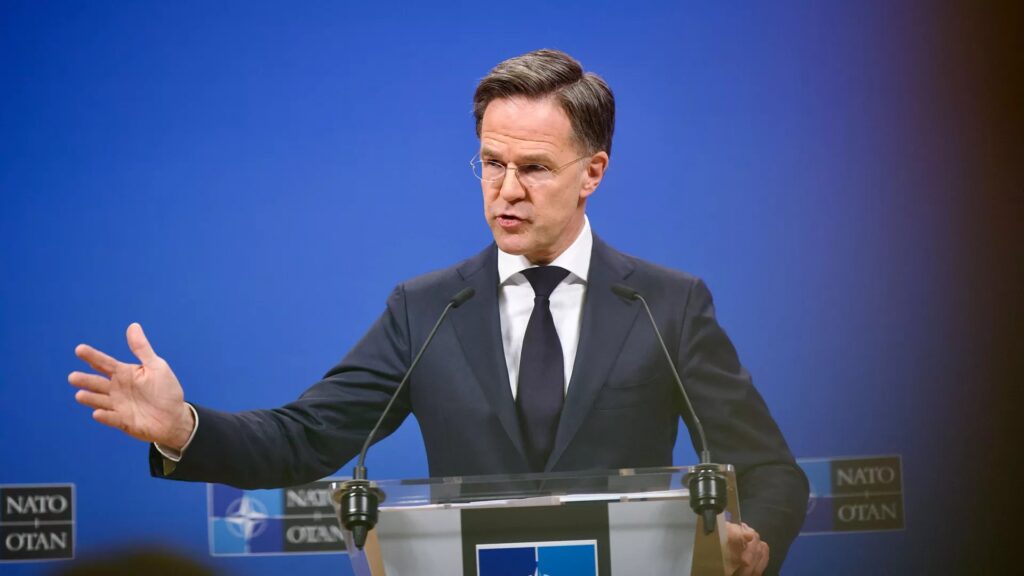
NATO allies increased defence spending again in 2025, reaching 2.77% of the alliance’s total GDP, according to the annual report by Secretary General Mark Rutte released on Thursday. The data highlight a familiar pattern: the United States still spends significantly more on defence than its European allies, but Europe and Canada are now increasing their military budgets much faster.
While the US spent 3.19% of its GDP on defence, Europe and Canada reached 2.33%. However, European and Canadian defence spending grew by 19.6% compared to 2024, whereas US spending slightly declined by 1.38%. Overall, NATO’s total defence spending increased by 6.19% in 2025.
Congratulations to Sanchez
Rutte praised Spain for reaching the 2% GDP defence target by 2025. At the beginning of last year, Spanish defence spending was around 1.3 or 1.4%, he recalled. “In April, I received a phone call from Pedro Sanchez, the prime minister, who said, ‘We will reach two per cent,’ and they have achieved it.”
The country, however, will need to further increase its investments to meet the capability objectives agreed at the 2025 Hague Summit, the Alliance leader stated.
You might be interested

Other countries that reached the 2% target include Albania, Belgium, Canada, Portugal, Italy, the Czech Republic, and France.
Moving towards 5%
Mr Rutte expects NATO allies, at the next summit in Ankara in July, to show a clear and credible path towards the 5% target. “We have committed to investing 5% of GDP annually in defence by 2035, including 3.5% to finance core defence and achieve the ambitious new NATO capability goals agreed in 2025. An additional 1.5% will be allocated to defence and security-related investments, such as civil preparedness and resilience, promoting innovation, protecting critical infrastructure, and strengthening defence industries,” he explained.
Between 2014 and 2025, Europe and Canada more than doubled their annual defence spending, with a real increase of 106%. In 2025 alone, they invested a total of $574 billion (€498 billion) in defence, a real increase of 20% compared to 2024.
All allies reported spending that met or exceeded the 2% target initially set in 2014, with many recording significant increases and three allies already reaching the new 3.5% target for 2025. “This shows that NATO allies recognise the changed security environment and the need to fulfill our collective obligations,” said Mr Rutte, reminding allies to maintain ‘momentum’.
Iran cannot have nuclear weapons
Regarding Iran, following the combined US-Israeli attack in the region, Rutte left no room for doubt. “Iran must not have nuclear capability, and what the United States is currently doing is degrading both nuclear and missile capabilities,” he said.
He also mentioned the United Kingdom’s Diego Garcia base, “targeted by a missile that could then reach 4,000 kilometers”. In this sense, Iran “now has capabilities that are increasingly dangerous for its allies.”
Securing the Strait of Hormuz
Mr Rutte reiterated that NATO is bringing together a “global community” to ensure ships can navigate near the Strait of Hormuz. “We now have 30 countries coming together, many from NATO, but also Japan and South Korea, Australia and New Zealand, Bahrain and the United Arab Emirates, to discuss and then implement measures to monitor and ensure that the sea lanes remain open,” he explained.
Rutte also addressed approach of the US President Donald Trump, criticising the EU’s slow response to the Iranian attack. “What I’ve noticed is Trump’s frustration that Europeans are taking their time to respond to his requests for a mission to ensure the opening of sea lanes,” he said.
One of the reasons for the reluctant European stance was that the american president did not inform his allies in advance about the military action against Iran. However, there’s a reason Trump acted this way, Rutte noted.
“The United States couldn’t consult with its allies beforehand because it wanted to keep the military action against Iran secret. There’s always the risk that if you inform too much, it could lead to a potential disaster or leaks. But the disadvantage is that it takes time for Europeans to organise themselves,” he concluded.