
The European Union’s flagship law holding companies accountable for abuses in global supply chains has been gutted. European firms now face uncertainty, potential lawsuits from multiple jurisdictions, and a patchwork of rules. Experts warn that this move may create more problems than it solves.
The European Commission’s Omnibus I package has dramatically reduced the scope of the EU’s corporate sustainability laws. Roughly 70 per cent of the Corporate Sustainability Due Diligence Directive (CSDDD) has been removed.
The original CSDDD rules required large companies to actively check their entire supply chains for abuses such as child labor, unsafe working conditions, or environmental damage. They could be legally held accountable if problems were found anywhere.
After the Omnibus I changes, many of these obligations have been removed or weakened. Firms now face fewer mandatory checks, the law applies to fewer companies, and liability largely depends on national rules rather than a single EU framework.
You might be interested

“By taking it away, what you are effectively doing is reinstating the situation as it used to exist before the CSDDD—leaving it up to member states to decide what kind of liability there is,” said Geert Van Calster, full professor of law at KU Leuven.
Uncertainty is back
Before the CSDDD, companies faced a patchwork of national liability regimes with no common standard. A business operating across multiple jurisdictions could be sued under German law in one case, Dutch law in another, and the law of a Global South country in a third. Each applied different standards of duty of care.
It is a Pyrrhic victory—uncertainty is very negative for business. — Geert Van Calster, KU Leuven
The directive had resolved that by establishing a single civil liability floor across the EU. That gave both plaintiffs and defendants a predictable legal basis when supply chain cases reached European courts.
“For the vast majority of corporations, that is what they dislike much more than being subject to a law where they might disagree with some details, but where they at least know the common ground,” Mr Van Calster added.
CSDDD on the chopping block
The CSDDD had already survived a bruising legislative journey to reach the statute book—including two attempts by industry lobbyists to kill it before it even became a formal proposal. It came within a hair of collapse twice in early 2024, and was twice hobbled by industry lobbyists.
It finally passed in May 2024, after Germany forced a last-minute reduction in scope. It’s all the more striking that the directive has been substantially dismantled before most member states have even transposed it. Mr Van Calster argues the reason for targeting the CSDDD was partly one of convenience. “It is one of those aspects of the CSDDD that is easily deleted,” he said.
The removal creates a legal landscape that may cost businesses more than the original compliance burden. “A corporation may be sued from all sorts of directions. The law that would apply to each claim would be the laws of all those various jurisdictions. The corporation therefore has far less certainty,” the law professor said.
Increasing supply chain litigation
Supply chain litigation in European courts has accelerated markedly. France has become a litigation hub under its Duty of Vigilance law. The Netherlands and England and Wales are increasingly active jurisdictions.
The message we are sending to the rest of the world is that we went too far and now we need to backtrack. — Judith Arnal, CEPS
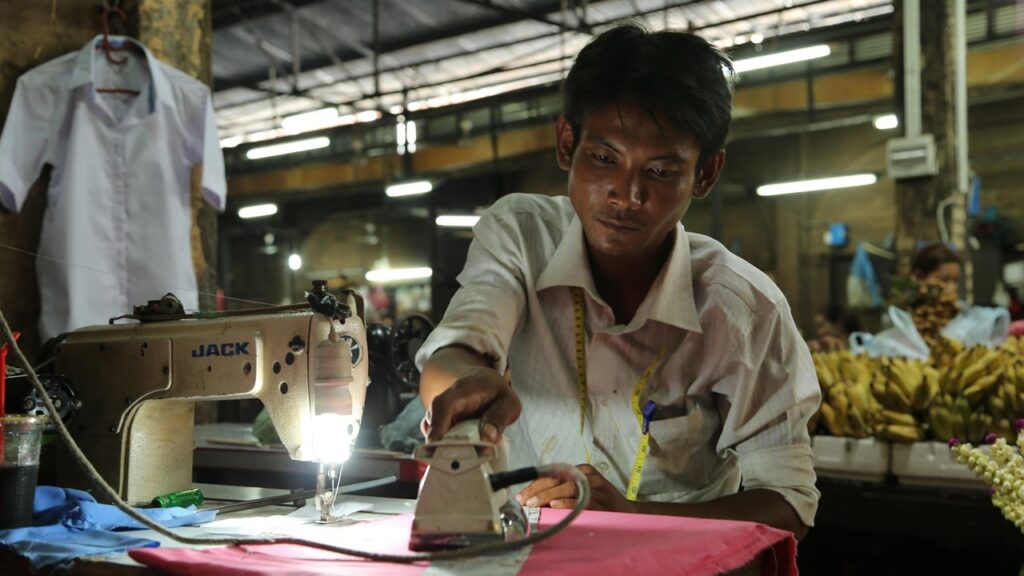
Cases involving cocoa, garments, minerals, and oil have all reached European courts in the past decade. With the CSDDD’s civil liability framework removed, the range of legal standards that could apply to future cases widens considerably. The compliance strategies companies had built around the directive’s certainty are now effectively obsolete.
“It is a Pyrrhic victory—uncertainty is very negative for business. And it does give claimants, in quite a few circumstances, a way to engineer their way into a law that is actually more attractive to them than even the CSDDD,” Mr Van Calster said.
Brussels effect in decline
Beyond the immediate legal uncertainty, the rollback also threatens the EU’s broader ability to set global standards. “The Brussels effect is waning very rapidly,” said Judith Arnal, Associate Senior Research Fellow at Centre for European Policy Studies (CEPS) and Senior Research Fellow at the Elcano Royal Institute. “The message we are sending to the rest of the world is that we went too far and now we need to backtrack. That creates a confidence problem around our regulatory framework.”
For Ms Arnal, that confidence problem has concrete consequences. The EU’s ability to shape regulatory norms beyond its borders has historically rested on the consistency and ambition of its legislative framework. When political pressure makes the framework appear reversible, other jurisdictions have little incentive to align with it.
“They are creating inter-institutional fights within the EU, and the rest of the world is watching. If a piece of EU legislation is seen to create uncertainty, other jurisdictions will simply not follow the same path,” the researcher said.
Omnibus I will enter into force on 18 March, following final Council approval four days earlier. Member states have until 26 July 2028 to transpose the amended CSDDD into national law. The new rules will apply from July 2029.
In place of the civil liability framework, is a Commission review clause, with any reassessment not due until 2031—by which point, another political cycle will have turned.