
Growing food has never been easy – long hours, early mornings, and unpredictable weather. Now, European farmers face another storm: new rules that could make their work even harder, cutting incomes, shaking rural communities, and threatening the EU’s ability to feed itself.
The European Commission has proposed a new Common Agricultural Policy (CAP) for after 2027. The plan promises modernization and simplification. But it would ultimately jeopardize food security, the incomes of farmers and the development of European rural areas, according to the European Economic and Social Committee (EESC).
At the heart of the problem is money – who gets it, how much, and under what rules. The proposal introduces targeted support for young and new farmers. That sounds fair in theory, but for many established farmers, it could mean less predictable income than before. Smaller farms would be also able to get smaller payments (up to €3,000) while facing less paperwork and on-farm controls.
At the same time, programmes that help farms invest in new machinery, sustainable practices, or environmental improvements could be less stable because the Commission wants to merge direct payments with broader rural development funding. In short, the familiar two-pillar system – one for direct income support and one for rural development – might disappear, leaving farmers uncertain about how and when they can access money to run and modernize their farms.
You might be interested

The changes also give more flexibility to national governments. Each member state will decide how to distribute the funds and implement the rules. While this may sound helpful, it could also create different rules in every country, and more paperwork. All while farmers are expected to keep their fields planted, animals fed, and businesses running.
Overwhelming rejection
Farmers are the backbone of Europe’s food supply. Experts warn that asking them to “do more with less” could undermine viable farms and discourage the next generation. Europe is facing rising global food demand, expected to grow by 70 per cent by 2050, and shrinking budgets and unclear rules make meeting that demand even harder.
The EESC has voiced strong criticism. Rapporteur Joe Healy told MEPs that even the EESC plenary overwhelmingly rejected the Commission’s proposals as too weak. He claimed that, despite their failings, the CAP reforms at least had an internal logic, while the Commission’s proposal provided no calculated direction at a time when the EU should be planning how to ensure the food supply for the future.
Funding cuts under fire
Criticism was most intense over the funding. The EESC calls for a stand-alone CAP budget for 2028–2034, properly adjusted for inflation, and for agricultural spending to rise to 0.5 per cent of the EU’s GDP. The committee stresses that support should focus on active farmers producing agricultural products, without discrimination by age or pension status.
In Mr Healy’s view, the proposal is completely inadequate. The Parliament’s agriculture committee echoed that opinion. Norbert Lins (EPP/DEU) emphasized the post-2027 CAP proposal needs “substantial changes, not cosmetic tweaks”. He defended the two-pillar CAP structure, including rural development and environmental measures.
Similarly, Barry Cowen (Renew/IRL) stressed that agriculture is not a classical policy area. Regulatory and budgetary powers must remain with CAP, not be transferred to the Commission for the Environment.
More bureaucracy, not less
Mr Healy also warned that merging CAP too closely with other national or regional policies could weaken its common EU character. Martin Häusling (Green/DEU) agreed, saying that letting member states go their own way would create more bureaucracy, not less.
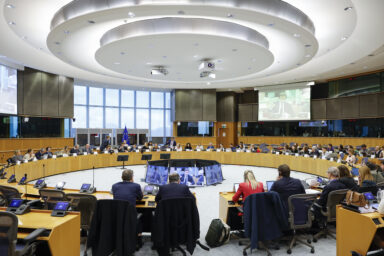
Although opinions differ on the particulars of support, the hearing highlighted broad concern about the Commission’s approach. According to the Patriots, criticism of the CAP proposal is coming from so many directions that it’s clear it is not a partisan affair.
Environmental and climate policies also feature in the debate. Mr Healy argues these policies should be based on scientific evidence and should not hamper sustainable food production. He warns that poorly designed EU reforms could result in lower EU production, higher imports, and cause emissions leakage. Mr Häusling, however, argued that CAP still needs strong common environmental standards.
The European Parliament’s agriculture committee is preparing for a major battle over CAP’s future. Many MEPs insist that the key messages – preserving the two-pillar structure, safeguarding a dedicated CAP budget, strengthening rural development, and keeping agriculture a truly common European policy – must be respected.
Mr Healy is clear: if Europe is to have secure food supplies, viable rural areas, and a next generation willing to farm, CAP must not ask farmers to do more with less.