The war in Iran is accelerating a quiet but consequential transformation: the global race for dominance in clean energy technology. According to economist and Nobel Prize winner Paul Krugman, the real winner of the current crisis may not be any nation directly involved in conflict, but rather China’s rapidly expanding electrotech sector.
The electrotech sector is an umbrella term for industries such as solar panels, wind turbines, batteries and electric vehicles. Mr Krugman recently argued that surging oil and gas prices are reinforcing a long-term trend: the global shift away from fossil fuels. As energy-importing nations confront the risks of supply disruptions and price volatility, renewable energy is becoming not just an environmental priority but an economic necessity.
China is at the centre of this transition. The country already dominates much of the global supply chain for renewable-energy infrastructure, accounting for a substantial share of production in key sectors. Mr Krugman describes China as “utterly dominant” in electrotech, with industrial capabilities to manufacture, deploy and export green technology.
China’s long-term green investment strategy resulted in a powerful feedback loop: large-scale adoption at home drives innovation and cost reductions, which in turn strengthen Chinese firms’ competitiveness abroad. “The speed with which the Chinese themselves have been adopting renewable energy” is a key advantage, Mr Krugman noted, allowing firms to gain experience and efficiency that rivals struggle to match.
Geopolitical dependencies
For Europe, soaring oil and gas prices have underscored the importance of becoming independent of fossil fuels. Countries such as France and Spain benefit from a diversified energy mix with a high share of renewables. These countries have proven less vulnerable to the price shocks than countries reliant on gas, such as Italy.
A world that relies on China for solar panels and batteries isn’t necessarily a bad thing.
– Paul Krugman, economist and Nobel Prize laureate
European countries are therefore accelerating investments in electrification and renewable infrastructure. China, already the leading supplier, is well-positioned to meet that demand, according to Mr Krugman.
“Now, a world that relies on China for solar panels and batteries isn’t necessarily a bad thing. It’s certainly less risky for most nations, politically and economically, than relying on LNG imports from Qatar — or, at this point, the United States.”
This warning has also been uttered by the Institute for Energy Economics and Financial Analysis (IEEFA) earlier this year. A continued reliance on liquefied natural gas (LNG) from the US could create “a potentially high-risk new geopolitical dependency”. According to IEEFA, EU imports of US LNG could increase to around 115bcm annually by 2030, “meaning 75–80 per cent of the bloc’s LNG imports would be from the US”.
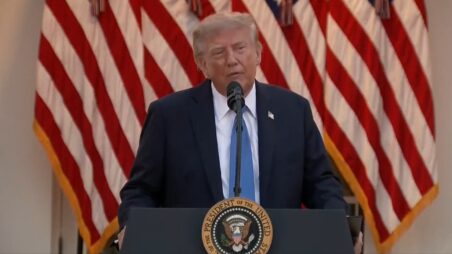
Although the EU’s decision to phase out Russian oil and gas through its REPowerEU Plan might become a blessing for the US, Mr Krugman argued that the country risks falling behind China. “By the time America frees itself from Trump’s fossil fuel obsession, if it ever does, China’s lead in the manufacture of renewables will probably be insurmountable.”
Industrial transformation
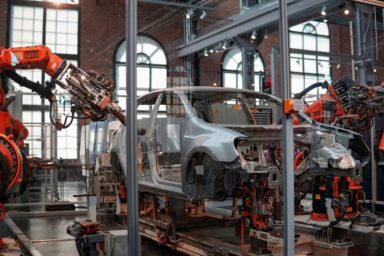
The United States has historically been China’s biggest rival on technological innovation and industrial leadership. From semiconductors to advanced manufacturing, Washington long set the pace. But in the race to scale clean energy technologies, that leadership is increasingly under pressure.
Currently, China accounts for “more than 80 percent” of global production in electrotech industries with the exception of wind turbines, Mr Krugman noted. In the wind turbine sector, “China’s share is ‘only’ 60 percent because Europe retains a significant role,” according to the Nobel Prize winner.
Additionally, China’s share of global clean energy patents stands at around 75 per cent. The country also controls the supply chain for the critical minerals needed for many green technologies.
While acknowledging China’s achievements, Mr Krugman is sharply critical of the choices the U.S. made, particularly under President Donald Trump. He argued that opposition to renewable energy in favor of fossil fuels risks sidelining the United States in favour of China, in what he sees as the defining industrial transformation of the 21st century.