
The European Union faces a historic challenge: how to stay competitive, slash emissions, and keep its industrial heartland thriving. The Clean Industrial Transition Monitor, an independent assessment, offers a snapshot of Europe’s progress towards a low-carbon industrial future.
According to the analysis by the European Climate Neutrality Observatory (ECNO), the EU has made real strides in recent years. Especially through market regulation under the Emissions Trading System (ETS). The idea is simple but powerful: make carbon emissions expensive enough that investing in low-emission production pays off.
Europe’s approach stands out globally. The US relies on subsidies, China on state policy and cheap energy, but the EU puts its faith in the market and the carbon price.
And it appears to be working. In 2025, wind and solar plants outproduced fossil fuels for the first time. Half of Europe’s electricity now comes from renewables—up from just 15 per cent twenty years ago—driven in large part by rising carbon prices.
You might be interested

Carbon allowances currently trade at €60–70 per tonne of CO₂, slightly below recent averages. But they spiked close to €100 in early 2023. Since the launch of the EU ETS in 2005, original prices in the single to lower double-digit euro have risen roughly tenfold, surging especially during the COVID-19 pandemic.
But regulation alone won’t do it
Yet regulation is only part of the story. Industry—including manufacturing and construction—makes up around 20 per cent of EU’s GDP. Transforming it is expensive and complex, requiring long-term investments in energy, grids, hydrogen, batteries, and carbon capture.
Landmark legislation like the Industrial Accelerator Act and the Emissions Trading System are too important to fail, but they are at risk of being delayed or diluted in the name of short-term competitiveness gains. — Corinna Fürst, author of the report
Financing remains Europe’s Achilles’ heel, the analysis points out. Companies face uncertainty over energy prices, regulations, and raw material supply, which often delays major investments. Every year, the EU falls €344 billion short of the funds needed for industrial decarbonisation.
The new Clean Industrial State Aid Framework (CISAF), introduced in June 2025, aims to fill the gap. By allowing governments to co-finance major green projects, it reduces risk and encourages private investment.
Raw materials: Europe’s weak spot
Clean energy and industry depend on lithium, cobalt, nickel, and rare earths. Europe has identified 34 critical materials, but China dominates their extraction and processing, leaving the EU reliant on imports. This is why circular economy strategies, recycling, and partnerships with resource-rich nations are growing priorities.
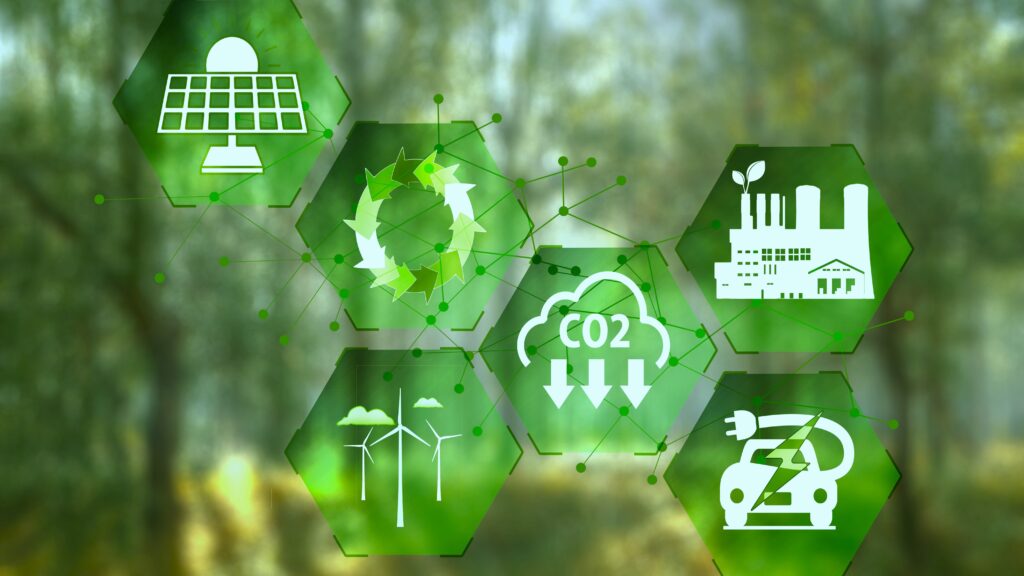
Europe’s industrial transformation relies on a mix of legislation and economic tools — some to create demand for low-emission products, others to fund infrastructure or level the playing field with carbon border adjustments.
- Industrial Accelerator Act – building markets for clean materials and tech
- Corporate Fleets Act – public and corporate fleets as a demand driver
- Public Procurement Act – boosting sustainable public contracts
- EU ETS + Carbon Border Adjustment Mechanism – carbon pricing
- Grids Package – modernising and expanding electricity networks
- Clean Industrial State Aid Framework – state support for industrial projects
- Circular Economy Act – improving material efficiency and recycling
Yet the Clean Industrial Transition Monitor warns that Europe’s plan may falter. Political short-termism—energy prices, inflation, industrial competitiveness—risks delaying, weakening, or diluting key measures. Long-term stability is essential.
“Landmark legislation like the Industrial Accelerator Act and the Emissions Trading System are too important to fail, but they are at risk of being delayed or diluted in the name of short-term competitiveness gains and reducing costs,” Corinna Fürst, industry expert at ECNO and author of the report, said.
A global race
The stakes are geopolitical too. Industrial decarbonisation is now a competition between Europe, the US, and China. The American Inflation Reduction Act has drawn massive investment into batteries, electric vehicles, and clean technologies. China controls much of the supply chain for renewables and batteries. Europe is carving its own path, blending market rules, investment support, protection for domestic industry, and infrastructure upgrades.
The monitor’s authors argue this combination—carbon pricing, border adjustments, state-backed investment, modernised grids, circular economy policies, and demand stimulation—is Europe’s best shot at keeping industry at home while cutting emissions. Success won’t hinge on one law or fund, but on maintaining direction for a decade or more without political U-turns.