
EU lawmakers arrived in Beijing with burner phones and left with polite reassurances, and seemingly no real answers. Meanwhile, China keeps flooding European markets with cheap goods, creating mounting pressure on consumer safety and local manufacturers alike.
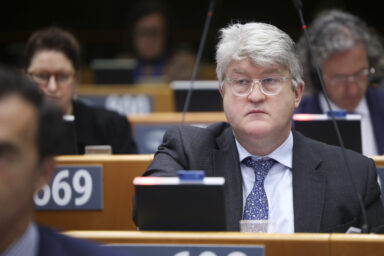
When nine members of the Parliament landed in Beijing last week for talks on digital trade and e-commerce enforcement, they carried burner phones, leaving their personal devices at home. Future trips will require constantly updated security measures, MEP Engin Eroglu (Renew/DEU) noted.
Eight years had passed since any parliamentary delegation had made the trip, and while new dialogue reflects a hopeful relationship, trust is anything but certain.
For Eroglu, chair of the Delegation for relations with the People’s Republic of China, the visit confirmed a diagnosis Europe has been reluctant to act on. China’s overproduction is a long-term problem, not a temporary blip, and the EU hasn’t yet figured out how to respond.
You might be interested
“The discussions confirmed that there is currently no short-term solution to the issue of overcapacity,” Eroglu told EU Perspectives after returning from Beijing and Shanghai. “The structural pressure remains for China to stabilise its domestic economy and move out of its deflationary trajectory.”
Temu and the others
The backdrop to the visit is a trade relationship that has tilted ever further in China’s favour. The EU’s goods trade deficit with China hit €305.8 billion in 2024, up from already historic levels. It was driven by surging imports of machinery, vehicles, and manufactured goods.
Consumers should have access to affordable products, but they should not have to worry about their health and safety. — Anna Cavazzini (Greens/EFA/DEU)
But the primary focus of this delegation is the explosion of low-cost e-commerce. Some 4.6 billion small packages entered the EU from China last year. Platforms such as Temu, Shein, and Alibaba accounted for a growing share of that volume. The EU’s Safety Gate system recorded 2,006 dangerous product alerts for Chinese-origin goods in 2025 alone.
Friendly and constructive?
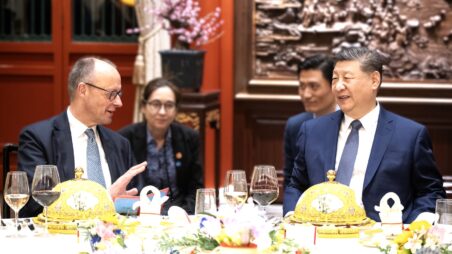
The delegation met with senior Chinese officials in Beijing. These included Shen Chunyao, chair of the Legislative Affairs Commission of the National People’s Congress, and Luo Wen, the minister responsible for market regulation. In Shanghai, MEPs held talks with Temu’s compliance teams and toured operations at Pudong International Airport alongside the China Customs Administration. The meetings were, by all accounts, cordial.
Eroglu describes the tone as “consistently friendly”, with his Chinese counterparts framing the visit internally as an “icebreaker mission”. But friendliness had limits that left structural concerns unanswered. “Particularly critical questions or clear demands from the EU side were often not substantively addressed,” Eroglu said. “This suggests a strategic approach focused on maintaining dialogue without making far-reaching substantive concessions.”
China faces deep structural incentives to keep exports high: domestic consumption remains weak, the property sector is still deflating, and the manufacturing base built up over two decades of export-led growth cannot be retooled overnight. Asking Beijing to voluntarily constrain that output is, as Eroglu puts it, a question without a short-term answer.
The parcel problem and the limits of enforcement
The delegation was also focused on a more immediate regulatory challenge: how to police the torrent of small consignments flowing into the EU single market, many of them undervalued or non-compliant with safety standards
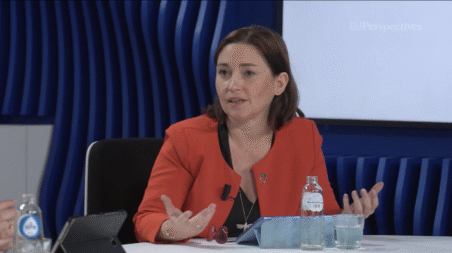
“We have seen the e-commerce model shifting dramatically in recent years. It is a new reality but not a sustainable one if the rules are not enforced. While all consumers should have access to affordable products, they should not have to worry about their health and safety when shopping,” said Anna Cavazzini (Greens/EFA/DEU), chair of the Internal Market and Consumer Protection Committee and delegation head.
France’s introduction of per-parcel fees appears to have contributed to a decline in order volumes. The key question is whether a coordinated European approach can achieve similar results. — Engin Eroglu (Renew/DEU)
China processes over 200 billion shipments annually. Eroglu is direct about what that means for oversight. “China is structurally limited in its ability to effectively monitor the sheer volume,” he said. “This creates a systemic risk, particularly for consumers in third countries, which must be clearly recognised.”
There are early signs that targeted national measures can dent the flow. France’s introduction of per-parcel fees appears to have contributed to a reported decline in order volumes, Eroglu noted. This is a proof that economic friction can work where regulatory compliance has failed.
“The key question will be whether a coordinated European approach can achieve similar results,” Eroglu said. “Moving forward, it will be crucial to advance concrete and coordinated measures at the EU level without delay.”