
Europe wants its trains to run seamlessly across borders — for travellers, for freight, and increasingly for troops. But the digital system meant to make that possible is falling behind schedule, with coordinators warning MEPs that only half the EU’s core rail network will be ready by 2030. At stake is not just convenience, but European security.
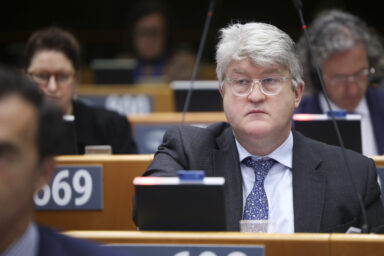
Matthias Ruete, the EU’s coordinator for the European Rail Traffic Management System (ERTMS), told MEPs the rollout is finally moving — backed by new Trans-European Transport Network (TEN-T) rules that set firm deadlines for the first time. But the numbers he presented told a sobering story: by 2030, only half the core network will be equipped, and just 40 per cent of trains.
Uneven progress across Europe
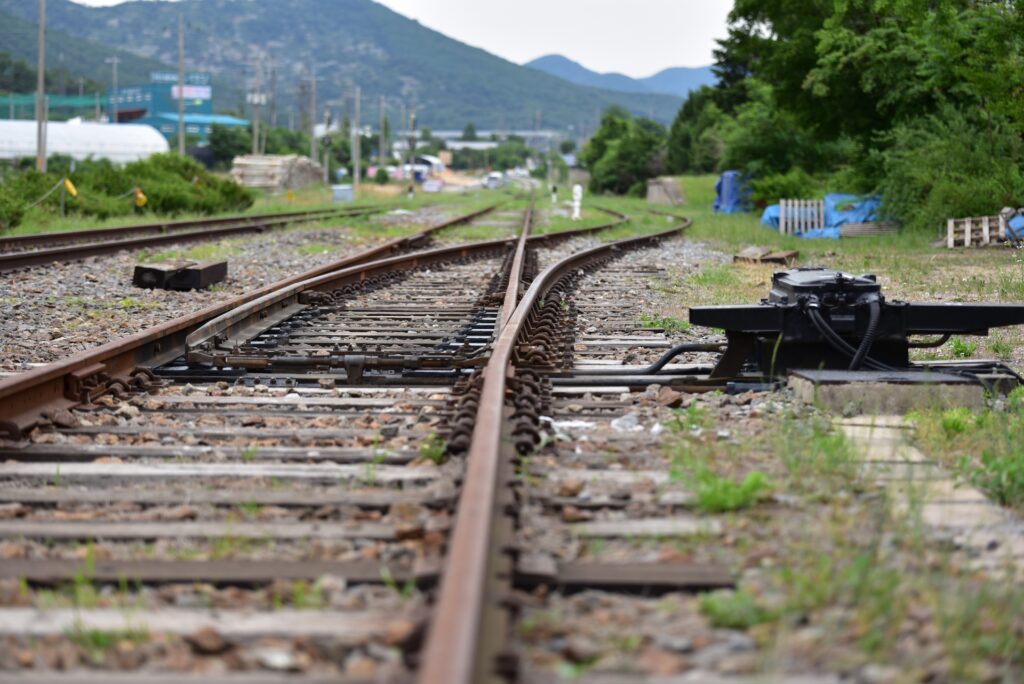
The biggest problem is not political will but coordination. Ruete said the largest gaps are on cross-border sections, where one country deploys ERTMS and its neighbour does not — undermining the very purpose of a system designed to erase national borders.
Ruete contrasted fast movers with laggards such as Luxembourg, Belgium, Slovenia, Czechia, Denmark and Austria — and pointed to serious weaknesses in France and Germany too. That prompted incredulous questions from MEPs asking why two of the EU’s largest economies were falling behind on something so central to interoperability, resilience and competitiveness.
For too long, Europe tolerated the coexistence of national signalling systems alongside a single EU-wide standard. Only the 2024 TEN-T regulation, Ruete said, finally introduced clear deadlines and principles to phase out national systems.
You might be interested
The cost of fragmentation
The clearest message from the hearing was that ERTMS has become more expensive and slower to deploy because it was never properly standardised. Ruete argued that “each and every” country, and often every operator, imposes specific technical requirements. This forces manufacturers to redesign equipment repeatedly. He estimated that 30 per cent of onboard costs come from building prototypes, 40 per cent from commissioning, and 30 per cent from authorisation.
His prescription: standardise, freeze, debureaucratise. Fewer changes to technical standards, more stability for industry, simpler approval procedures. Without that, Europe will struggle to scale up deployment or bring down costs.
Rail Baltica and the security imperative
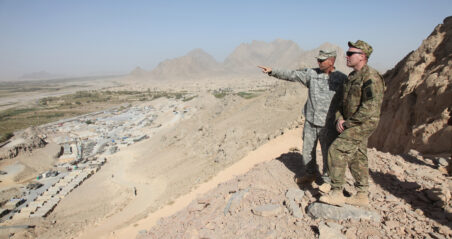
ERTMS is only part of a bigger puzzle. Catherine Trautmann, European coordinator for the North Sea-Baltic corridor, said Rail Baltica has been transformed by Russia’s invasion of Ukraine. What was once an infrastructure project has become a strategic imperative — essential for both economic integration and military mobility on the EU’s eastern border.
The Baltic states and Poland need to speed up construction. And with the next long-term EU budget approaching, Trautmann warned that Rail Baltica is no longer just a transport project — it is about connecting the Baltic states to the rest of Europe in terms of security.
Pawel Wojciechowski, coordinator for the North Sea-Rhine-Mediterranean corridor, noted that even one of Europe’s most economically productive corridors remains congested and full of bottlenecks. Cross-border infrastructure, inland waterways and rail capacity all need further work.
Military mobility on the agenda
Infrastructure security has moved to the centre of EU policy debates. Trautmann argued that corridors linking ports, railways and eastern borders should increasingly be built to dual-use standards, serving both civilian and military transport.
The North Sea-Baltic corridor, she said, is vital for moving troops and equipment swiftly to the EU’s eastern edge. She also called for more EU funding for military transport. Speakers stressed that interoperability is not only about speed but also about resilience. A rail network that still relies on fragmented national systems, they warned, is more vulnerable in times of crisis.
The political test ahead
The hearing confirmed that technology is not the real obstacle — political will is. MEPs asked whether the EU should pressure slow-moving member states. Ruete acknowledged that ERTMS has been treated for too long as a technical file buried in administrations, rather than a political priority. “The glass is filling, but it’s not filling as quickly as it should,” he said.
The glass is filling, but it’s not filling as quickly as it should.
—Matthias Ruete, European coordinator of ERTMS
That may now be changing. But Europe will need more than money to achieve one rail system rather than 27 partial ones. Governments will have to abandon national exceptions and harmonise across borders. As Ruete put it, the choice is simple — standardise, or fall further behind.