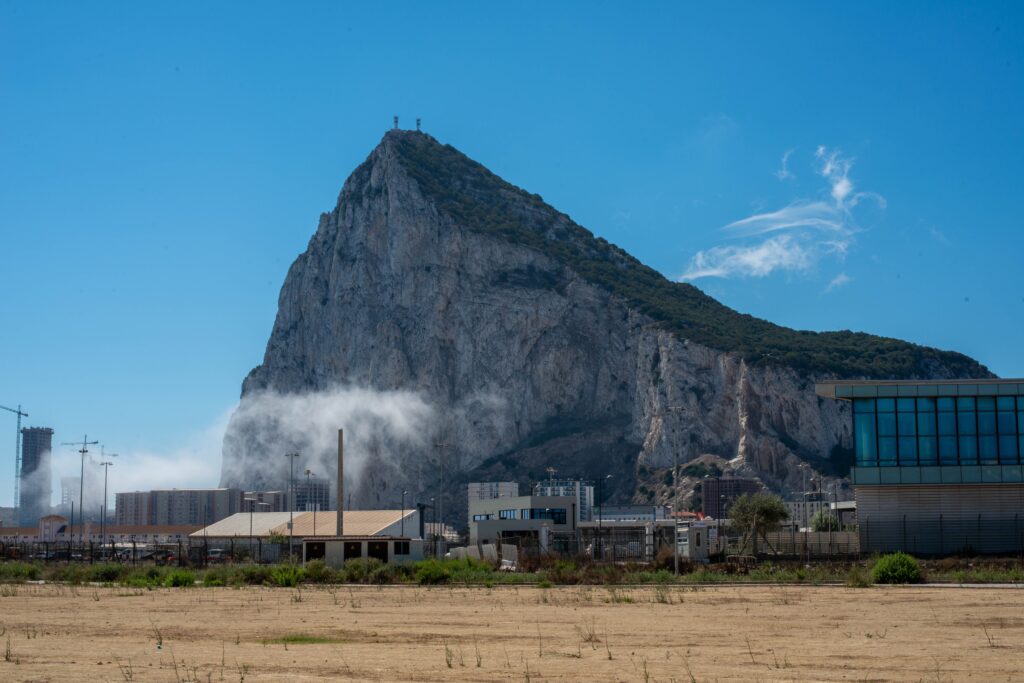

One of the most complex chapters of Brexit is nearing its end. EU member states gave a green light to a landmark agreement with the United Kingdom on Gibraltar on 1 April, clearing the way to remove all physical barriers at its land border with Spain. The territory’s sovereignty remains untouched—but the daily reality of thousands of cross-border workers is set to change fundamentally.
The Committee of Permanent Representatives (COREPER) gave its green light today. The Council will formally adopt the texts once its lawyer-linguists complete their checks. Provisional application begins on 15 July.
Gibraltar was excluded from the EU–UK Trade and Cooperation Agreement when it was signed in December 2020. Its land border with Spain—and by extension with the Schengen zone—made a separate deal necessary. The agreement opens the La Línea crossing. Nevertheless, Gibraltar stays outside Schengen, the EU single market, and the customs union.
Sovereignty untouched
The agreement’s main practical effect is the removal of all routine controls on people and goods at La Línea. Physical barriers, including fencing, will come down. Schengen checks will instead move to Gibraltar’s airport and port, conducted by Spain in cooperation with local Gibraltarian and British authorities.
Chief Minister Fabian Picardo backed the deal and stressed what negotiators call the “double lock”—a guarantee that nothing in the agreement touches British sovereignty over the Rock. “I’m delighted we have finalised a conclusive political agreement which will bring legal certainty to the people of Gibraltar, its businesses and to those across the region who rely on stability at the frontier,” he said after the political breakthrough in June 2025. “I have worked hand in glove with the UK government throughout this negotiation to deliver the deal Gibraltar wants and needs—one that will protect future generations of British Gibraltarians and does not in any way affect our British sovereignty.”
You might be interested

Four and a half years in the making
The Council authorised negotiations in October 2021, nearly a year after the TCA came into force. Progress was, however, slow. The key political breakthrough came at a Brussels summit in June 2025, attended by the UK, EU, Spain, and Gibraltar. Eventually, the final text was agreed in December 2025. The Gibraltar Parliament called for ratification in February 2026. Today’s COREPER approval marks the penultimate step before formal Council adoption.
Cyprus holds the current Council presidency and steered the deal through to approval.
This is a milestone for EU–UK relations and it paves the way for a stronger, mutually beneficial, and forward-looking partnership.
—Christina Rafti, Permanent Representative of Cyprus to the EU
The country’s Permanent Representative Christina Rafti called the result a milestone for EU–UK relations. “This is a milestone for EU–UK relations and it paves the way for a stronger, mutually beneficial, and forward-looking partnership,” she said. An open border is expected to benefit the many cross-border workers and businesses on both sides of La Línea, who have long faced delays and uncertainty at the crossing. For the people of La Línea, the wait is nearly over.