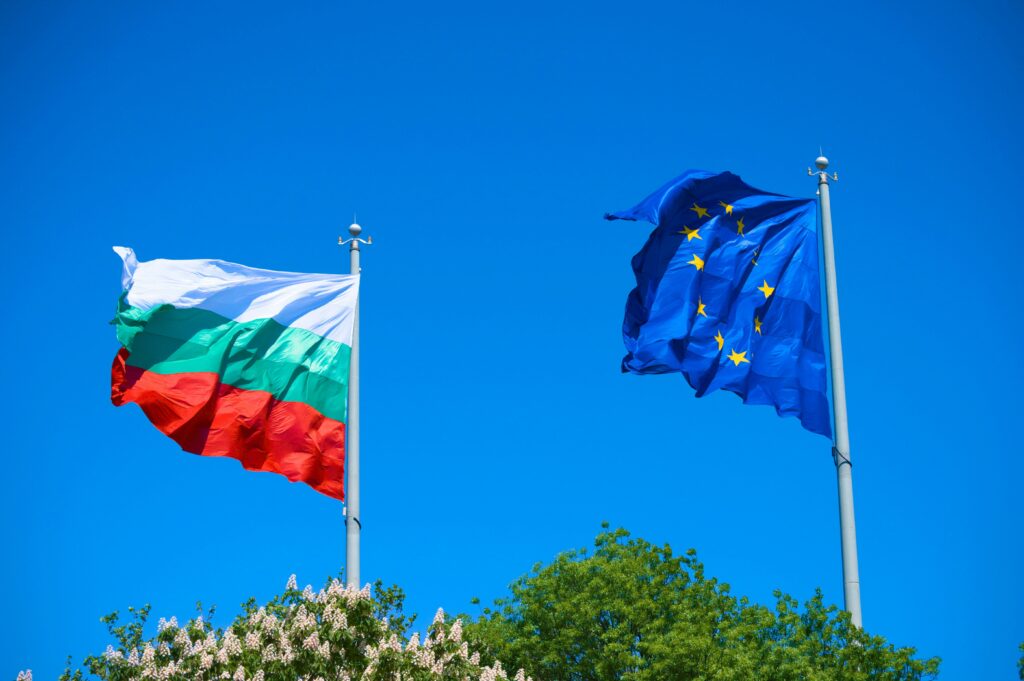

Bulgaria heads to the polls on 19 April with its information space already under attack. Former president Rumen Radev, now leading the centre-left Progressive Bulgaria coalition, tops the polls, but foreign interference is flooding social media ahead of the vote. Sofia has turned to the EU for help, as the country navigates its eighth election in five years under a caretaker government.
“The Bulgarian authorities are in contact with the relevant EU institutions and have requested support and cooperation to address potential risks related to information manipulation and foreign interference in the context of the upcoming elections,” an EU diplomatic source told EU Perspectives. “This includes the involvement of the European Commission and the European External Action Service (EEAS), particularly through existing EU-level instruments such as the FIMI Toolbox and the Code of Conduct on Disinformation,” the source said.
Bulgaria’s disinformation battle
The request forms part of the government’s broader effort to strengthen its response to external interference, both Chinese and Russian. At the national level, the Ministry of Foreign Affairs in Sofia has set up a dedicated interinstitutional working group. “This temporary unit brings together the relevant national authorities and serves as a coordination centre for monitoring potential threats, facilitating the exchange of information with European partners, and ensuring a coherent response to the risks of disinformation and interference during the election period,” the source said.
Sofia has also requested the activation of the rapid response system provided for by the Digital Services Act. This would open consultations with Meta, Google, and TikTok to identify and stop disinformation campaigns. The move highlights a stark gap. Traditional media face strict rules during campaigns. Digital news media remain a legislative wild west. “The group works closely with EU counterparts and stakeholders, including online platforms, to strengthen situational awareness and help safeguard the integrity of the electoral process,” the source said.
The vote will pit former president Rumen Radev (Progressive Bulgaria/BGR) against centre-right leader Boyko Borissov (GERB/BGR). Radev now leads the centre-left Progressive Bulgaria coalition and currently tops the polls. He has built his profile as a left-wing, anti-establishment figure, often critical of corruption but broadly sympathetic to Russia. Borissov is a pro-European establishment politician whose time in power drew persistent corruption allegations.
You might be interested
Flooded feeds
Bulgaria is heading into its eighth election in five years against a backdrop unusually conducive to manipulation. “The anti-corruption protests of 2025 toppled a government without resolving the grievances behind it, and the transition to the euro at the start of 2026 has added fresh economic anxiety,” the latest “TikTokracy Tracker” report published by the Balkan Free Media Initiative (BFMI) and Sensika said.
Manipulation is sophisticated enough to be difficult to distinguish from genuine public sentiment
—Balkan Free Media Initiative
The report’s findings on Radev are stark. Content linked to the former president overwhelmingly dominates social media, especially on Facebook and TikTok. It outperforms all other political actors in both reach and growth, even before the campaign officially began. On Facebook, the 30 largest pro-Radev groups have over 1.3 million memberships—roughly 400,000–600,000 unique users. On TikTok, the hashtag #rumenradev exceeds 90 million views across thousands of videos, growing much faster than competing political hashtags. Disinformation networks are deeply embedded too, with ‘mushroom websites’ and cross-platform amplification spreading misleading or polarising content. By the end of 2025, Facebook reached around 65 per cent of Bulgarian adults, while TikTok reached 2.63 million, or 47.6 per cent.
Bulgaria goes to the polls under a caretaker government that has been in place since February. The country’s political crisis deepened in March, when it emerged that Tehran had sent Sofia a diplomatic warning over US military aircraft at its airport—and the government had tried to keep it secret.