
Which of Viktor Orbán’s policies will go quickly, and which will linger? On the campaign trail, Hungary’s incoming prime minister Péter Magyar promised “regime change”. Now that he is about to able to deliver, expect gradual softening rather than sharp U-turns.
If the Tisza-led government follows through on its campaign programme, the EU’s legislative machinery will speed up across migration, environmental, economic, rule-of-law and foreign-policy files during the next year. The ‘if’ might be bigger than the Sunday night outpouring of enthusiasm—from Budapest to Brussels—suggests.
Mr Orbán’s defeat will surely reverberate beyond Hungary. For western liberals and pro-Europeans, it is a moment to cherish amid pervasive gloom about the continent’s drift towards nationalist populism. Mr Orbán, a standard-bearer for illiberal democracy, has been felled and a roadblock to EU decision-making has been removed.
An ally re-discovered?
Because many high-profile EU files in 2026 require either unanimity—some foreign-policy, own-resources and tax matters—or a reinforced qualified majority, Hungary’s shift from veto-player to constructive partner would immediately change several legislative trajectories during the next 12 months.
As Mr Magyar told a crowd of jubilant supporters across the Danube from Hungary’s parliament on Sunday night: “This mandate makes possible a transition that is efficient, just and peaceful.” In a sign of his intent Mr Magyar called on Hungary’s president, a Fidesz appointee, to allow him to form a government and then for the president to stand down, along with Orbán-apppointed prosecutors.
You might be interested

Mr Magyar sometimes sounds like a nationalist. He is anti-immigration and refuses to arm Ukraine. But he has pledged to restore co-operation with the EU, not least to secure €18bn in EU funds that Brussels had frozen over rule of law shortcomings. He has also pledged to allow the EU to proceed with its €90bn loan to Ukraine.
Hungary is expected to move from the ‘blocking minority’ camp to the pro-integration camp. The population-weighted threshold—65 per cent of EU population—thus should tilt decisively toward legislation aligned with Commission proposals.
The new arithmetic
Kyiv is the biggest winner outside Hungary of this election, while Moscow is the biggest loser. Mr Orbán was the Kremlin’s most useful asset inside the EU, bringing delay, division and paralysis.
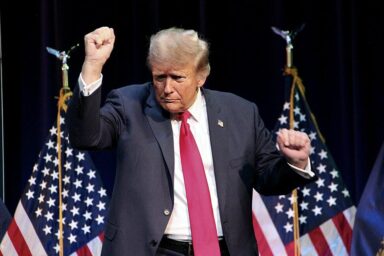
US President Donald Trump, too, has lost a valuable ideological ally, fellow Christian nationalist and source of inspiration for his Maga movement. Mr Trump multiplied his messages of support for Mr Orbán and dispatched US Vice-President JD Vance to Budapest last week for a two-day visit despite the Iran crisis, a measure of the Hungarian leader’s totemic importance.
During the Orbán era, Hungary made frequent threats to block secondary legislation. It refused to participate in the ‘voluntary solidarity’ scheme within the EU’s Migration and Asylum Pact and used ad-hoc vetoes as leverage on unrelated budget files. The Tisza pledges include keeping the border fence and opposing mandatory quotas. Crucially, however, Mr Magyar says he will accept the migration pact as EU law. His focus shifts to external-border protection and funding instead of obstruction.
The great unblocking
The implementation of the Migration and Asylum Pact may well mark the first major shift. Ten regulations and directives were adopted in 2024, with full application scheduled for 12 June 2026. Several delegated and implementing acts still need Council approval by qualified majority in 2026-27. These include Eurodac technical standards and solidarity mechanism templates.
The Council will attain an easier reinforced qualified majority on all implementing acts. This will accelerate the roll-out of the Eurodac Regulation and screening procedures by the end of 2026. The voluntary solidarity pool could reach the 30,000-person target for 2026 because Hungary will no longer sit out. This reduces pressure on Italy, Greece, Spain and Cyprus.
Smaller central-European states lose a de-facto shield. Slovakia and Czechia may face greater pressure to enrol in the solidarity mechanism. The shift in Hungarian policy isolates those who relied on Budapest to water down EU rules. These states must now adapt rapidly to the new consensus.
Nature of law, law of nature
Environmental policy enters a new phase with the Nature Restoration Law. It was adopted in June 2024, and national restoration plans are due by 1 September 2026. Outstanding files include secondary metrics methodology and peatland rewetting guidelines. Under Mr Orbán, Hungary voted against the final law and signalled it might join legal challenges. This emboldened Sweden, Italy and the Netherlands in negotiations.
The Tisza programme pledges to double the renewables share and phase out Russian energy by 2035. It aims to improve Hungary’s pro-green image and records no hostility to the restoration rules. The blocking minority against implementing acts disappears. The Council is likely to approve harmonised peatland targets and biodiversity spending rules before December 2026.
This creates a precedent that forces opponents to seek new allies to dilute targets. Ireland, Denmark and Finland will gain clarity for rewetted-peat subsidy schemes. Poland and Romania will receive stronger Commission scrutiny because the overall Council stance becomes greener. The Netherlands faces faster obligations on intensive-agriculture habitats once the minority collapses.
Economic governance
Economic governance also undergoes a transformation. The Commission tabled the 2028-2034 Multiannual Financial Framework proposal lest year; some fierce battles lie ahead. A €20bn top-up of Ukraine Facility bonds and new own resources still require unanimity in late 2026.
This mandate makes possible a transition that is efficient, just and peaceful. — Péter Magyar, Hungary’s incoming prime minister
Mr Orbán also used unanimity to threaten vetoes of the new EU taxes (as leverage to release frozen cohesion funds). Mr Magyar intends to unlock €16bn to €17bn in frozen money. He will do this by meeting ‘super-milestones’ on anti-corruption and the judiciary by a 31 August 2026 deadline. Council unanimity on new EU taxes becomes a trifle more realistic.
The delay premium on Ukraine aid should disappear. Hungary’s swift compliance may then provide a template for residual Article 7 concerns about Poland and Slovakia. Budgetary negotiations will start in a less hostage-prone atmosphere. Net recipients gain financial-planning certainty. Net contributors like Germany and Sweden will see a smoother passage of new revenue streams.
A shift in the rule of law
Rule-of-law instruments will see a renewed focus. The Article 7 procedure against Hungary is dormant. The 2026 annual Rule-of-Law cycle will be the first after the resolution of issues in Poland. Secondary standards for the European Media Freedom Act need adoption. The anti-SLAPP Directive awaits full member-state implementation.
During the Orbán era, systemic non-compliance triggered the conditionality regulation and funds freeze. The Tisza programme pledges to join the European Public Prosecutor’s Office. It will strengthen judicial independence and introduce a two-term limit for the prime minister. It also promises to widen media freedoms. Formal suspension of the Article 7 procedure is likely by the end of 2026.
The Media Freedom Act code of conduct could be adopted by simple majority because Hungary’s opposition ends. This isolates remaining sceptics in Greece and Czechia. Precedent pressures the government of Robert Fico in Slovakia over its own media-law rollback. Slovakia faces heightened scrutiny once Hungary no longer acts as a shield. Bulgaria and Croatia will observe new standards while finalising their own accession to the prosecutor’s office.
Foreign policy, sanctions regime
Foreign-policy and sanctions voting will become more efficient. Russia sanctions require unanimity. Mr Orbán consistently extracted energy-exemption clauses or delayed adoption. Mr Magyar promises energy diversification from Russia and stronger NATO alignment.
Unanimity, again, becomes easier to achieve without carve-outs. This may shorten adoption cycles from weeks to just days. It sets a precedent reducing the leverage of remaining hold-outs, be it in Cyprus or Austria. Poland and the Baltic states will benefit from faster adoption. This strengthens the regional security stance. Germany and France will see increased legal certainty for companies.
Businesses across the EU gain greater predictability on green-transition timetables and migration-compliance costs. The resolution of rule-of-law disputes removes a major narrative used by eurosceptic parties ahead of the 2027 European elections. This influences domestic politics in Italy and the Netherlands.
Orbán’s top ten vetoes
Here are ten of the most impactful Hungarian vetoes under Viktor Orbán (out of the total of 21) that caused significant delays or blocks to EU legislation and funding (2010–2026).
- Hungary vetoed the €90 billion loan package to Ukraine (Ukraine Facility top-up), freezing critical military and economic support.
- Hungary blocked the 20th sanctions package against Russia, delaying implementation of new measures; it also obstructed all 19 previous Russia sanctions packages.
- Hungary vetoed European Council conclusions on Ukraine aid and peace negotiations twice in March 2026, requiring 26-member approval instead.
- Hungary obstructed the Global Minimum Corporate Tax (Pillar Two) for over 6 months in 2022 before lifting its veto after securing EU fund releases.
- Hungary blocked EU military aid packages to Ukraine multiple times, holding foreign policy hostage via CFSP unanimity requirement.
- Hungary repeatedly stalled the Financial Transaction Tax (FTT) proposals since 2011, preventing levy on financial trades.
- Hungary vetoed Common Consolidated Corporate Tax Base (CCCTB) reforms (2011 and 2016 proposals), delaying corporate tax harmonisation.
- Hungary blocked Business in Europe: Framework for Income Taxation (BEFIT) since 2023, stalling single EU corporate tax rulebook.
- Hungary delayed rule-of-law conditionality enforcement.
- Hungary vetoed Article 7 progress against itself.
The incoming Péter Magyar-led Tisza government is unlikely to abandon all of Hungary’s previous veto positions immediately or completely. EU diplomats anticipate a “cautious reset” rather than wholesale abandonment, with a narrow victory likely producing pragmatic shifts rather than radical reversals.
Several types of obstacles apply here. Some of them are structural: Orbán-appointed president, Fidesz-packed Constitutional Court, and Budget Council retain veto power over legislation and budgets. Political strategy is another matter. Tisza skipped Ukraine accession votes to avoid a ‘pro-Ukraine’ label; Fidesz sources say red lines like unanimity remain non-negotiable regardless of who is at the helm.
Caution warranted
Despite these hurdles, cautious optimism sets the tone. Some of the vetoes are likely to go soon, such as the Ukraine loan, European Peace Facility lethal aid, satellite image sharing, and EU missions (EUAM/EUMAM) mandates. Similar fate likely awaits Russia sanctions (including the 20th package), nuclear energy sanctions, and blacklists on Patriarch Kirill/Russian sports figures. The Magyar government is also likely to end blocks on Global Minimum Tax, FTT, CCCTB, and BEFIT to access frozen about €20 billion in EU cohesion/recovery funds.
Other issues are less clear-cut. Mr Magyar will face pressure to repeal the Child Protection Law, widely seen as anti-gay, if ECJ rules against it. He may resist, though, to avoid domestic backlash. On Israeli alignment, he may soften but not reverse pro-Israel vetoes on EU sanctions, aligning closer to Germany/Italy than Spain/Ireland.
Overall, Brussels hopes for cooperation on security and funding vetoes. At the same time, expect nuanced continuity on sovereignty issues like tax and unanimity.