
European energy ministers met repeatedly this week—and left with little to show for it. Oil and gas prices keep climbing, while a coordinated EU response remains out of reach. The European Commission has promised a package of measures, but the details have yet to emerge.
The week kicked off with a G7 gathering of energy and finance ministers in Paris. Energy and finance ministers and central bankers from France, Germany, Italy, the UK, Canada, the US, and Japan hoped to find answers to the crisis in the Middle East.
The ministers’ strongest language targeted export restrictions, calling on all countries to “refrain from imposing unjustified export restrictions on hydrocarbons and related products.” They also “took note” of the International Energy Agency’s proposals to curb demand, smooth market conditions, and limit excessive volatility.
Not over soon
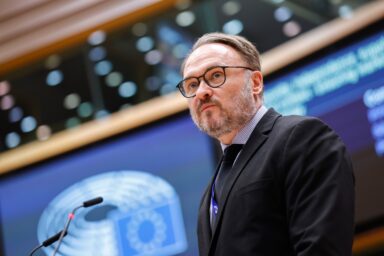
European Commissioner for Energy Dan Jørgensen echoed the G7 call in a letter to EU capitals on Monday. “To avoid compounding supply constraints, member states should refrain from taking measures that may increase fuel consumption, limit the free flow of petroleum products, or disincentivize EU refinery output,” Mr Jørgensen wrote.
The letter struck a balance between reassurance and alarm. Mr Jørgensen stressed that the EU is only partially dependent on imports through the Strait of Hormuz. However, the behaviour of other countries could still threaten price levels in the EU. “Intensifying global competition for available supply is likely to introduce heightened volatility into European markets,” he warned.
You might be interested

Mr Jørgensen therefore repeated the need for member states to “make timely preparations in anticipation of a potentially prolonged disruption.” The Commissioner had earlier called upon member states to start refilling their gas reserves as soon as possible. This could help prepare for the coming winter.
Even if peace were restored tomorrow, we will not go back to normal in the foreseeable future
—Dan Jørgensen, Energy Commissioner
The European Commission is unequivocal: the energy crisis will not be over soon. “Even if peace were restored tomorrow, we will not go back to normal in the foreseeable future,” Mr Jørgensen said following a meeting of the EU’s 27 energy ministers on Tuesday. “As the crisis in the Middle East enters its second month, it is clear that we are facing a very serious situation.”
Shielding families and businesses
The Commission therefore said on Tuesday it is preparing a toolbox of measures that the EU executive will “present soon to support member states in shielding families and businesses.” It remains unclear what the toolbox will look like exactly, but at the press conference Mr Jørgensen said these might include energy-saving measures. “It is clear that the more you can do to save oil, especially diesel, especially jet fuel, the better off we are.”
It is clear that the more you can do to save oil, especially diesel, especially jet fuel, the better off we are
—Dan Jørgensen, Commissioner for Energy and Housing
Such measures resemble those proposed by the International Energy Agency in March. These included reducing speed limits, promoting remote working, encouraging car-free Sundays, increasing public transport use, and improving energy efficiency in industry.
Many EU member states have already taken matters into their own hands. Governments are introducing temporary tax cuts on fuel, providing targeted subsidies to households, and in some cases reintroducing energy-saving campaigns. Some countries, such as the Netherlands, are still waiting for the situation to develop.
Prices at the pump
One thing is clear: Europeans are already noticing the effects. According to data from the European Commission, the price per litre of Euro-super 95 petrol rose from €1.54 to €1.80 in Belgium. Other European countries are experiencing similar trends.
Since the start of the conflict, gas prices have risen by 70 per cent, while oil prices have climbed by 60 per cent, Mr Jørgensen said during the press conference. So far, the EU has had to spend an additional €14bn on fossil fuel imports. Even if the war were to end tomorrow, the fallout would still keep prices at the pump elevated, Mr Jørgensen warned.
The European Commission on Friday already warned of a “stagflationary shock” if the war continues. Stagflation describes slow economic growth alongside high prices. Eurostat marked inflation in the eurozone at 2.5 per cent in March, up from 1.9 per cent in February. Even short-lived supply disruptions could push inflation higher, the Commission cautioned.
Outside advice
Not all advice points in the same direction, however. Bruegel, a Brussels-based think tank, warns against some of the measures governments may be tempted to reach for. Suppressing gas prices could weaken investment and efficiency in the long run. Returning to Russian gas imports, the think tank argues, would merely reopen dependencies the EU has spent years dismantling.
Instead, Bruegel urges member states to coordinate their gas purchases to avoid bidding wars that would push prices even higher. It also calls on the EU to accelerate its electrification agenda—arguing that the current crisis is an opportunity, not a reason to slow down the green transition.
Valdis Dombrovskis, Commissioner for Economy and Productivity, outlined further steps on Friday. “The Commission will present proposals to mandate lower tax rates on electricity, improve the productivity of grid infrastructure, and modernise the Emissions Trading System,” he said. For Mr Dombrovskis, the direction is clear: “Our first priority now must be to put in place a coherent set of policy measures that address the spikes in the prices of imported fossil fuels and that are consistent with our goal to reduce reliance on such fuels.”