
Hungary has chosen Europe, European Commission President Ursula von der Leyen wrote, as long-time Prime Minister Viktor Orbán admitted defeat in parliamentary elections.
“Hungary has chosen Europe. Europe has always chosen Hungary. A country reclaims its European path. The Union grows stronger,” Ursula von der Leyen wrote on X on Sunday evening.
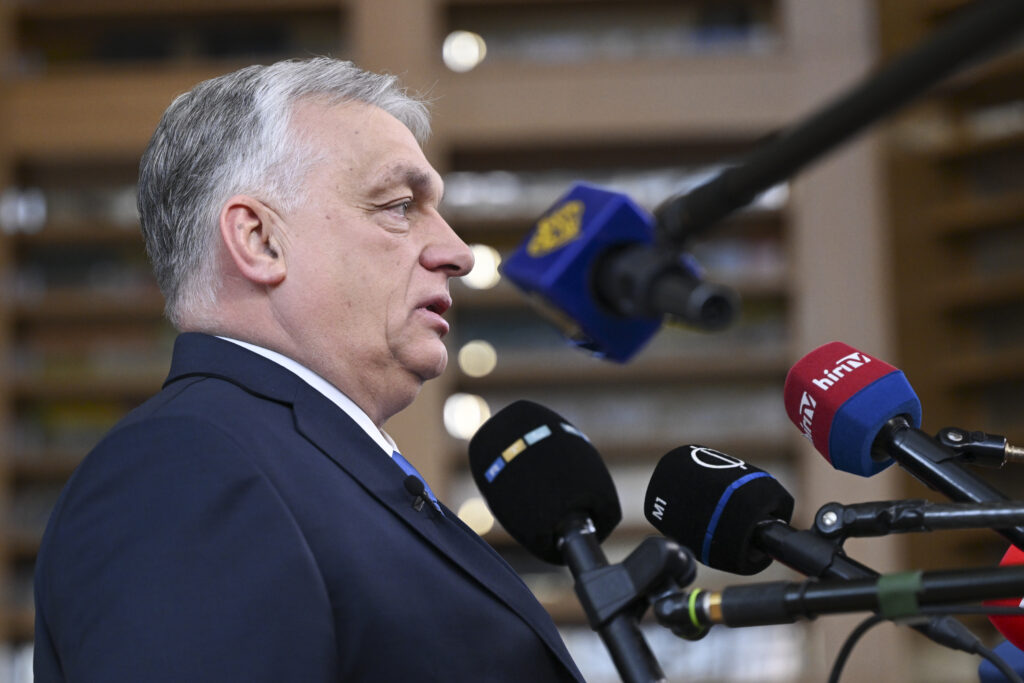
The words came amid news that Viktor Orbán, who has been serving as a prime minister of the European country for sixteen years, admitted defeat and congratulated his opponent Peter Magyar for his victory in the parliamentary elections.
As of Sunday, 10PM, with around 80% of votes counted, Magyar looked set to win 137 seats in the 199-seat parliament, while Orbán’s Fidesz party was on track to get only 55 seats.
You might be interested

French President Emmanuel Macron joined in on the congratulations, sharing just before 10 that he already spoke with Magyar. “France welcomes the victory of democratic participation, the Hungarian people’s commitment to the values of the European Union, and Hungary’s commitment to Europe. Let us move forward together towards a more sovereign Europe, for the security of our continent, our competitiveness, and our democracy,” he later wrote on X.
“My warmest congratulations on your victorious election, dear Péter Magyar,” wrote German Chancellor Friedrich Merz, adding he looks forward to “working together for a stronger, safer and, above all, a united Europe”.
EU-wide implications
The 2026 Hungarian parliamentary elections took place against a backdrop of prolonged tension between European Union institutions and Orbán’s government.
In the years leading up to the vote, Hungary had repeatedly used its veto power to delay or block key EU initiatives, particularly those related to financial support for Ukraine, joint defence efforts, and broader integration measures. This created growing frustration in Brussels, as several major funding and security packages—worth tens of billions of euros—became entangled in political disputes with Budapest.
As a result, Hungary’s domestic election came to be seen not just as a national contest, but as a decision point with significant consequences for the EU’s ability to act collectively.
At the same time, Hungary’s internal political landscape was marked by increasing polarization. The opposition, including Magyar, framed the election as an opportunity to reset relations with European partners and restore Hungary’s influence within the bloc. He argued that a change in leadership could unlock frozen EU funds, improve economic prospects, and end Hungary’s isolation on key geopolitical issues.
Meanwhile, Orbán and his allies positioned themselves as defenders of national sovereignty, emphasizing resistance to external pressure from Brussels and maintaining an independent foreign policy stance.
Against this backdrop, the victory of Magyar signals a potentially significant shift in both Hungary’s domestic direction and its role within Europe. The result raises expectations that long-standing deadlocks between Budapest and the EU could be resolved, paving the way for renewed cooperation on defence, financial support mechanisms, and collective decision-making.