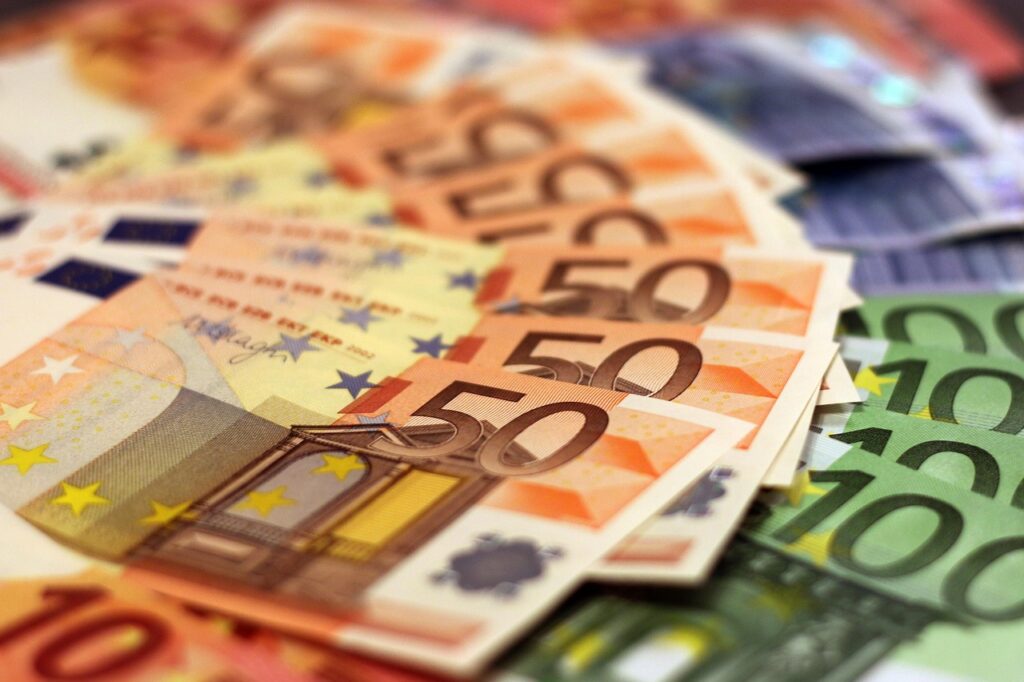
Europeans want the EU to do more, but the money to pay for it is shrinking. On the eve of a budget summit, lawmakers in Strasbourg fought €204bn in proposed cuts and split over who should foot the bill.
Nearly three in four Europeans believe their country has benefited from EU membership. Two-thirds want Europe to play a greater role in addressing security threats and crises, while 86 per cent want a stronger European voice on the international stage. Yet the latest proposal for the EU’s 2028–2034 budget would cut €204bn from the European Commission’s original plan. Security, innovation, and regional development are among the areas set to lose out.
MEP Terry Reintke (Greens/EFA/DEU), co-president of the Greens/EFA group, highlighted these figures during today’s plenary debate. She argued that Europeans clearly want the EU to do more. “But none of this will be possible if the Council continues to suffocate the EU budget,” she said.
MEP Siegfried Mureșan (EPP/ROU), Parliament’s budget co-rapporteur, accused the Council of cutting funding in precisely those areas it identifies as priorities, including security and competitiveness. “It is a weaker position for a weaker European Union and the European Parliament cannot support it,” Mr Mureșan said.
You might be interested

Billionaires in the spotlight
Elon Musk, Mark Zuckerberg, and Jeff Bezos all came under scrutiny as Parliament’s budget negotiators called for the debate to shift from spending cuts to generating new revenue. While opposing the cuts, they welcomed European Council President António Costa’s inclusion of a digital levy among potential new ‘own resources’. These are revenues that flow directly into the EU budget rather than through national contributions.
Mr Mureșan raised the point at a press conference ahead of the debate. He questioned why European farmers and regions should lose funding while some of the world’s richest entrepreneurs benefit from access to the EU’s single market.
If Elon Musk can afford to spend millions on political campaigns in the US, surely he can afford to pay his fair share in Europe. — Danuše Nerudová (EPP/CZE), co-rapporteur on own resources
MEP Danuše Nerudová (EPP/CZE), Parliament’s co-rapporteur on own resources, called for broadening the scope of the proposed digital levy. “If Elon Musk can afford to spend millions on political campaigns in the US, surely he can afford to pay his fair share in Europe,” she said.
Ms Nerudová also estimated that new revenue sources could generate €50–60bn. The money could help finance European priorities and repay the debt the EU took on to recover from the COVID-19 pandemic.
MEP Sandra Gómez López (S&D/ESP), Ms Nerudová’s fellow co-rapporteur, echoed her calls. She argued that those making a profit in Europe should also contribute to its finances.
‘We can’t do more with less’
The message that Europe cannot deliver on its growing ambitions with fewer resources was a recurring theme throughout the debate. MEP Fabienne Keller (Renew/FRA) highlighted the gap between Parliament’s demand for a budget equivalent to 1.27 per cent of the EU’s gross national income (GNI) and the latest proposal of just over one per cent.
MEP Leire Pajín (S&D/ESP) pointed to the importance of adequate funding in the face of climate-related disasters. “In the summer, we had heatwaves, fires and floods with hundreds of victims. We need to have the right funding to be able to respond to those crises, but also to be able to prevent those crises,” Ms Pajín said.
MEP Carla Tavares (S&D/PRT), Parliament’s other budget co-rapporteur, warned that a compromise must not come at the expense of Europe’s ambitions. “Europe’s ambition is not measured by the promises it makes but by the resources it is prepared to mobilise to fulfil them. The next budget must live up to Europe’s ambitions, values and responsibilities. We can’t do more with less,” she said.
Critics on both flanks
Not all lawmakers agreed that Europe needs new taxes or greater spending. MEP Patryk Jaki (ECR/POL) argued that the EU should focus on lower taxes, innovation, and affordable energy.
Every euro in this budget was earned by someone else – a nurse, a truck driver, a small business owner in Sweden who has never once been asked if he wants to pay more to Brussels. — Charlie Weimers (ECR/SWE), MEP
His group colleague MEP Charlie Weimers (ECR/SWE) questioned the burden placed on European taxpayers. “Every euro in this budget was earned by someone else – a nurse, a truck driver, a small business owner in Sweden who has never once been asked if he wants to pay more to Brussels,” he said. He also warned against making joint European borrowing permanent, arguing that it would leave future generations to repay the debt.
Patriots for Europe representatives opposed cuts to agricultural and regional funding. At the same time, they voiced concerns about rising national contributions.
Criticism also came from the opposite end of the political spectrum, but for different reasons. MEP João Oliveira (The Left/PRT) accused the Council of prioritising military spending and corporate interests over agriculture, fisheries, and efforts to combat poverty.
High time to end ‘obsessive cuts’
Responding to lawmakers, European Commissioner for Budget Piotr Serafin urged member states to move beyond their national positions. “It’s high time to move from national positions to European solutions. It’s high time to move from obsessive cuts to addressing real challenges of Europe,” he said. “This debate has proved that without adequate funding, including new own resources, it will not be a good next long-term budget,” Mr Serafin concluded.
The latest compromise proposal, presented by Mr Costa on 21 November, would shrink the planned budget to €1.78tn. That is around 10 per cent below the Commission’s initial proposal. EU leaders will discuss it at a special summit in Brussels starting tomorrow.
Parliament adopted its negotiating position in April 2026, calling for a budget equivalent to 1.27 per cent of the EU’s GNI. The next long-term budget, known as the multiannual financial framework, requires unanimous approval from member states in the Council and the consent of an absolute majority of MEPs.