Half of all tourist nights in Europe fall in just 13 per cent of its regions. A new EU strategy wants to spread visitors more evenly and ease the strain on residents and workers. Lawmakers back the goal but doubt Brussels has the money or the tools to deliver it.
Working conditions, housing, and small businesses dominated the debate in Strasbourg on 23 November. Members of the European Parliament’s Committee on Transport and Tourism grilled the Commission over its new sustainable tourism strategy. Many questioned whether the plan goes far enough.
The Commission adopted the EU’s first tourism strategy on 4 November. It aims to make tourism more competitive and to limit its impact on local communities. According to the Commission, tourism accounts for 10 per cent of the European economy and provides jobs for more than 20 million people. However, the sector struggles with staff shortages, climate change, and residents’ concerns about tourism.
Crowded hotspots, empty regions
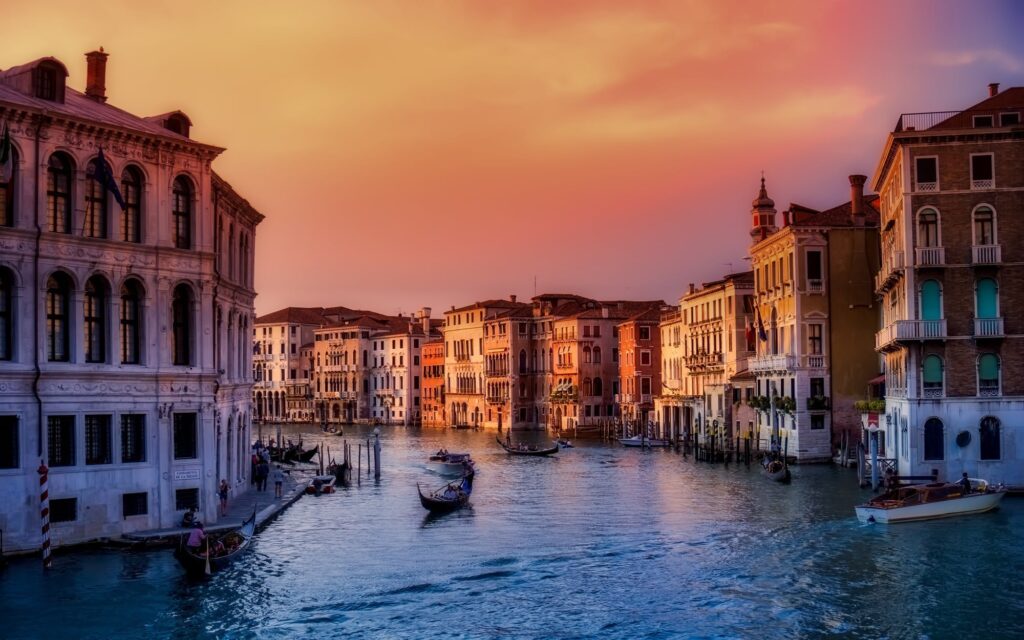
One of the aims of the strategy is to distribute visitors more evenly throughout Europe. Apostolos Tzitzikostas, Commissioner for Sustainable Transport and Tourism, spelled out the problem. Just 13 per cent of European regions account for half of all tourist nights spent in Europe, he reminded MEPs. That is why Brussels wants to encourage people to travel outside the peak season and to discover less popular destinations.
You might be interested
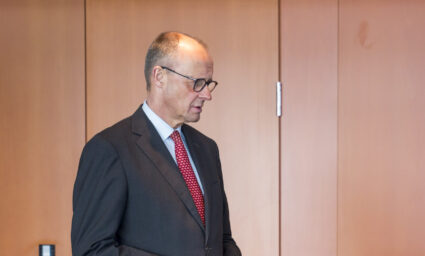
The Commission will propose a Council recommendation on balanced tourism. Before summer 2027, it will also present an EU toolbox with practical guidance for local authorities. The Commissioner also called for a new way of measuring success, summed up as “value over volume”. Visitor numbers alone should not be the yardstick, Mr Tzitzikostas explained. What counts is the value tourism creates for local communities.
But some lawmakers were not convinced. They doubted that the proposed measures would solve overcrowding and ease the pressure on residents.
Teachers in caravans
The debate highlighted worries about residents and workers in popular destinations. Vicent Marzà Ibáñez (Greens/EFA/ESP) pointed to housing pressures in tourism-dependent areas. Workers and residents there struggle to afford a home. Housing is the main problem in his home region, he said. “We have teachers living in caravans because they cannot afford rent,” Mr Marzà Ibáñez told the committee.
Johan Danielsson (S&D/SWE) welcomed the Commission’s plan to study working conditions in the tourism sector. He noted that the sector often means low pay and precarious jobs. A study is a first step, but research alone cannot fix that. “We also need concrete measures to improve working conditions,” Mr Danielsson said.
Mr Danielsson also asked whether companies receiving EU money should have to respect basic working conditions. He suggested the same social conditions that already apply to EU farm subsidies. Finally, he asked what the EU would do, beyond the upcoming Quality Jobs Act, to improve job security for tourism workers.
Mr Tzitzikostas replied that labour and skills shortages were the number one issue in the public consultation. The Commission is already conducting a study on working conditions in tourism and transport. Trade unions and employers will have their say. A workshop on working conditions in tourism will follow in April 2027.
Strategy without a dedicated budget
Funding was another major topic. Parliament has long called for a dedicated budget line for tourism in the EU’s next long-term budget, the Multiannual Financial Framework (MFF). In its April resolution, it also asked for clear funding mechanisms for the sector. Mr Tzitzikostas sided with lawmakers.
I know that you have asked for a budget line for tourism in the next MFF, and I fully agree with you. But we are not yet there. — Apostolos Tzitzikostas, Commissioner for Sustainable Transport and Tourism
“I know that you have asked for a budget line for tourism in the next MFF, and I fully agree with you. But we are not yet there,” he acknowledged. The MFF negotiations are very challenging, he added. He is counting on lawmakers’ support to secure the funding tourism needs.
The Commission estimates that €18bn in EU funding has gone to tourism during the current budget period (2021–2027). In the next MFF, the money should flow through national and regional partnership plans. The Commission will help member states and regions design them.
Some MEPs, however, remain worried. Their main concern is smaller businesses and regions that rely heavily on tourism revenue.
Fear of more red tape
The Commission has pledged to make life easier for tourism operators. It will launch an EU simplification initiative for tourism to map the administrative burden that businesses face. An EU Tourism Academy will help workers gain new skills. A new EU Tourism Observatory will gather data to help businesses and authorities make better decisions.
Some MEPs feared the new initiatives would add red tape rather than cut it. Julien Leonardelli (PfE/FRA) asked what new environmental standards would cost an operator in a rural area. He also criticised the new European structures. “You promise simplification, but you create an alliance, an observatory, an academy, a crisis coordination network,” he argued.
Volker Schnurrbusch (ESN/DEU) shared these concerns. Climate rules would drive up costs for family-owned guesthouses and transport operators, he warned. That would make holidays and travel even less affordable for families on low and middle incomes.
Off the beaten track
Transport connections are another key element of the strategy. The Commission wants to make islands, coastal areas, and remote regions easier to reach. Lawmakers agreed that a place people cannot get to will see little tourism. Carlo Ciccioli (ECR/ITA) pointed to mountain regions that high-speed trains do not serve. Jan-Christoph Oetjen (Renew/DEU) noted that Germany has lost 473 direct flight connections since 2019.
Mr Tzitzikostas also pointed to the proposed passenger package. It should make it easier to book trips that combine different rail operators and modes of transport. If one leg is a flight and another a train, “it will be booked and bought as one ticket”, he explained. Passengers would then enjoy passenger rights for the whole journey.
Better connections could bring tourists to less visited places. Local businesses there would benefit too.
Can Brussels deliver on its promises?
Sophia Kircher (EPP/AUT) welcomed the strategy’s focus on competitiveness and simplification. But she wanted to know how the Commission would judge its success. “How will you measure if it is successful? Which KPIs will be used?” Ms Kircher asked.
Mr Tzitzikostas replied that the new Tourism Observatory would track indicators at European, national, regional, and local level. Progress could show, for example, in more overnight stays outside peak season and in less-visited destinations. Another indicator is the number of workers who gain new skills, including through the Tourism Academy. Still, the debate showed that political agreement on the strategy’s goals does not guarantee they will be met.
I want citizens and people of the destination feeling well, safe, and secure in their homes, and happy for what tourism brings to their lives. — Apostolos Tzitzikostas
Mr Tzitzikostas also acknowledged that overcrowded destinations struggle with housing, affordability, and residents’ quality of life. He pointed to the Affordable Housing Act, which the Commission proposed in September. “I want citizens and people of the destination feeling well, safe, and secure in their homes, and happy for what tourism brings to their lives,” he told MEPs.
Brussels wants to draw tourists to new areas, protect local communities, and support the tourism sector. But without clear funding and more action for workers and residents, those ambitions will be hard to deliver, MEPs warned.