It took the European Union no less than 45 months of brutal war at its doorstep to come up with meaningful defence. It is arriving now: most Russian gas is to disappear from Europe for good, Council and Parliament have agreed.
Brussels has discovered that nothing concentrates the political mind like gas prices multiplied by seven. On the night of 2 December negotiators from the European Parliament and the Council struck an informal deal to outlaw almost every cubic metre of Russian gas entering the bloc.
Spot-market shipments of liquefied natural gas will vanish once the regulation enters force early next year; pipeline flows must cease by September 30th 2027. The ban, devised by the industry, research and energy committee and the trade committee under Denmark’s Council presidency, is Europe’s boldest attempt yet to stop the Kremlin turning hydrocarbons into havoc.
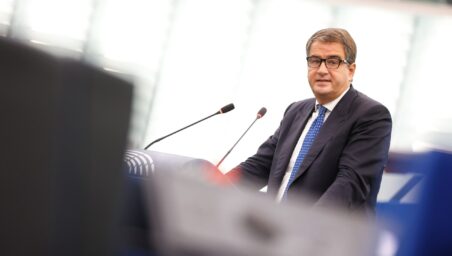
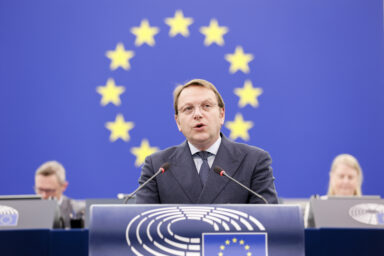
MEP Ville Niinistö (Greens-AFE/FIN), a co-rapporteur, called the accord “a robust piece of legislation to end the dependency and the imports of Russian gas to Europe for good”. He rejoiced that the timetable is “more than three months earlier than the Commission’s original proposal”. His fellow co-rapporteur, Inese Vaidere (EPP/LAT) sounded the same note: “Tonight’s agreement sends a clear and powerful message: Europe will never again be dependent on Russian gas.”
Banished barrels
The text goes further than gas. MEPs won a pledge from the Commission to craft a legal ban on Russian oil, to enter force no later than the end of 2027. Mr Niinistö crowed that this “remarkable achievement” turns a loose promise of diversification into hard law. A draft is due in early 2026; few expect it to languish.
The regulation also introduces a ceiling on penalties. Member states must set maximum fines high enough to deter operators tempted to defy the embargo. Ms Vaidere said the harmonised approach ends “shopping of penalties among countries” and ensures “strong enforcement in relation to companies”. Non-compliant firms will know the cost in advance and cannot exploit lenient jurisdictions.
Parliament hardened the clause that allows temporary suspensions of the ban in emergencies. Ms Vaidere described the result as a “never again” safeguard. “I don’t know what kind of catastrophe could happen to get again to Russian gas,” she told reporters. The wording was designed to calm capitals fearful of winter shortages while blocking any political back-sliding once memories of energy blackmail fade.
Mind the loopholes
Gazprom’s underfilling of storage sites in 2021 taught lawmakers that a ban means little if cargoes change flags en route. Under the deal, importers must present customs with detailed proof of origin before gas enters the EU or its storage facilities. The aim is to stop traders laundering Russian molecules through intermediaries. Border guards short of expertise may curse the paperwork; politicians insist it is vital.
Another sticking point was diversification plans, meant to show how each capital will replace Russian volumes. The Parliament wanted every country, even those no longer buying Russian gas, to submit a blueprint. Mr Niinistö said that demand survived the talks: “All member states will do the diversification plan to exit gas.” Those plans must align with EU targets for efficiency, renewables and energy sovereignty, lest LNG imports simply shift dependence from Moscow to Doha.
Landlocked Slovakia worried about time to renegotiate long-term deals. Article 4.2, retained in the final text, grants limited flexibility until the pipeline deadline. In exchange the Council accepted Parliament’s earlier cutoff. Ms Vaidere confirmed the compromise: “The deadline is the same September 30th in 2027. All imports of Russian gas have to be finalised and stopped.”
Counting down the contracts
The measure phases out links methodically. Spot LNG ends at entry into force—likely March 2026 if the co-legislators move briskly. New long-term LNG contracts are barred immediately, existing ones must lapse by December 31st 2026 and pipeline deals close nine months later. Mr Niinistö argued that front-loading the squeeze deprives Moscow of revenue: “Russia will not get our money to continue the war in Ukraine.”
MEPs won the timetable by sheer persistence. After a second trilogue they feared Council foot-dragging. Ms Vaidere admitted her gloom: “I wasn’t very optimistic because we just saw that Council member states are not wishing to move ahead.” Overnight bargaining reversed expectations. Emboldened by public outrage at the Kremlin’s tactics—and perhaps by relief that gas prices have retreated since 2022—ministers inched beyond Parliament’s stance.
Russia will not get our money to continue the war in Ukraine. — MEP Ville Niinistö (Greens/EFA/FIN)
The informal deal must now clear the Industry and Trade committees on December 11th and the full Parliament a week later. Council diplomats expect rapid endorsement: no capital wants to be seen shielding Gazprom. Once adopted the regulation will slot alongside sanctions, storage-fill obligations and demand-reduction targets in the EU’s energy-security armoury.
Harvesting the windfall
Yet implementation may prove harder than passage. Customs officers must verify origin certificates; regulators must watch shadow traders; governments must rewrite contracts without triggering force-majeure lawsuits. Penalties, capped but not standardised, still depend on national legislatures. Energy firms grumble privately that Europe risks paying higher prices for American or Qatari LNG while China scoops up discounted Russian cargoes. Lawmakers reply that freedom is worth the premium.
Commission officials also spy opportunity. Diversification plans could channel investment into hydrogen corridors, offshore grids and efficiency retrofits. Mr Niinistö insisted that cutting dependence must “increase energy sovereignty” and accelerate climate goals. By 2027 Europe may burn less gas overall, not just less Russian gas. Whether voters credit Brussels for cheaper bills or blame it for dearer ones will shape the next political cycle.
For now, MEPs bask in rare harmony. The weaponisation of energy—evident in Gazprom’s storage stunts and pipeline shutdowns—has forged unity from quarrelsome institutions. Ms Vaidere thanked her counterpart and “a wonderful team of shadows… only being united we can achieve such a result.” In Strasbourg that sentiment is seldom voiced without irony; this time it sounded almost sincere.
Signals to the Kremlin
The ban will not stop the war in Ukraine, but it erodes one revenue stream Russia once assumed inviolate. Brussels calculates that by announcing the end of purchases years in advance it depresses the asset value of pipelines like Nord Stream 1, already crippled. Investors may doubt the wisdom of financing future links to Europe—an insurance policy against back-sliding that no “suspension clause” could match.
The regulation also instructs EU energy diplomacy. Countries eager to sell LNG will note that Brussels frowns on contracts running beyond 2049. That aligns with climate law yet compounds the task of lining up alternative suppliers. The tension between security and decarbonisation remains; legislators have merely adjusted the dials.
Tonight’s agreement sends a clear and powerful message: Europe will never again be dependent on Russian gas. — MEP Inese Vaidere (EPP/LAT)
Oil will be the sequel. Parliament secured the Commission’s promise, but details—tariffs on refined products, carve-outs for aviation fuel, transitional storage—will generate new trench warfare. MEPs know that Russian crude still finds buyers via India and Turkey; closing those routes may exceed Brussels’s reach.
From dependence to deterrence
Nor is the immediate crisis over. Should a hard winter hit before new terminals and interconnectors are ready, ministers could invoke the suspension clause. Its threshold is high, yet politics trumps drafting. The real deterrent is public opinion: few leaders wish to explain on prime-time television why they reopened taps to a belligerent in Mariupol.
Europe has threatened for two decades to cut the gas umbilical. Vladimir Putin’s invasion finally forced action. The draft regulation converts rhetorical resolve into legal obligation, complete with fines and deadlines. Once it passes, lobbyists will scramble to soften implementation, but the direction of travel is fixed.
Mr Niinistö called the deal “a clear permanent ban”; Ms Vaidere labelled it “a historical decision”. Hyperbole perhaps—yet a continent that once fretted over a single winter without Siberian methane now plans to forgo it for good. In EU legislative terms that counts as a revolution, even if executed, as revolutions here often are, in the bland language of recital 14 and article 4.2.