Almost 90 percent of businesses say the EU’s Single Market remains insufficiently integrated. These numbers, presented by newly-elected Eurochambres president Vladimír Dlouhý, show long-standing frustrations from Europe’s 20 million companies facing “invisible borders”.
Close to 50 years after Europeans first went to the polls, the Single Market stands at a crossroads. It remains the EU’s biggest achievement: a 450-million-person economy with a shared rulebook and a common currency. But it is also a system under pressure from border politics, uneven enforcement, administrative complexity and global competition.
Lawmakers, former commissioners, business representatives and consumer advocates sketched different, sometimes competing, visions of what “finishing” the Single Market should mean in 2025, in a conference held in the European Parliament on “The Single Market: Delivering for Citizens, Boosting our Economy, Forging Links”.
A market built for another era
The Single Market was designed in the 1980s for an open global economy, stable geopolitics and predictable economic cycles. None of those conditions holds today.
Former EU Commissioner Yves-Thibault de Silguy, who oversaw the launch of the euro, reminded the audience that the internal market was constructed in three deliberate steps. First, the customs union, then rule harmonisation, and finally the single currency to eliminate destabilising exchange-rate variations.
“But the challenge today is very different”, he warned. “We face war on our borders, a loss of competitiveness and rising geopolitical tensions. The challenge now is not to find a new big idea, but to save what we have created”.
We face war on our borders, a loss of competitiveness and rising geopolitical tensions. The challenge now is not to find a new big idea, but to save what we have created – Yves-Thibault de Silguy, former commissioner
The debate comes as the EU prepares to pick up the recommendations of the Letta report. The review warned that the Single Market is fragmented by design, and urged the EU to consider bold options such as an optional 28th regulatory regime for companies operating across borders. The idea, long discussed in Brussels, would allow firms to opt into a single EU-level rulebook rather than navigate 27 different national systems.
The return of internal borders
Few issues demonstrate the Single Market’s fragility more clearly than the return of internal border controls. Originally reintroduced as temporary responses to migration pressures or security threats, these checks have become almost permanent in parts of the Schengen area.
MEP Anna Cavazzini, chair of the Parliament’s Internal Market Committee, said border controls have become a silent but mounting economic risk. Coming from the German–Czech border region, she cited daily complaints from businesses and cross-border workers facing delays and unpredictability. “I have to remind young people that roaming or freedom of movement did not fall from the sky. It was politicians with a vision fighting for it”, she said.
Not so single market
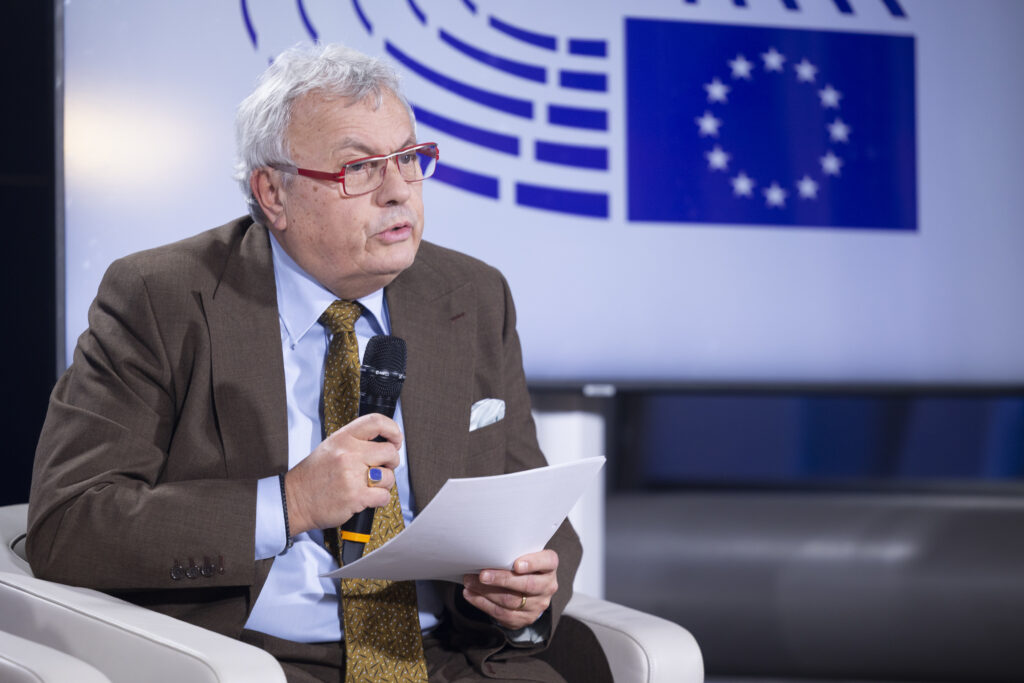
For business, the problem is operational, as the Single Market no longer feels single. Vladimír Dlouhý, the newly elected president of Eurochambres, used the event to voice long-standing frustrations from Europe’s 20 million companies.
He argued that the persistence of barriers reported by businesses, many unchanged for two decades, signals deeper structural problems in how the Single Market functions. “Europe must be close to the pocket and to the welfare and to the well-being of its citizens, including the business people”.
Europe must be close to the pocket and to the welfare and to the well-being of its citizens, including business people – Vladimír Dlouhý, President of Eurochambres
Dlouhý pointed to Eurochambres’ latest survey, where 88 per cent of businesses said the Single Market remains insufficiently integrated, while 98 per cent reported no reduction in administrative burdens. For SMEs, national reporting requirements, differing interpretations of EU law and fragmented services markets still act as invisible borders. This frustration echoes one of the Letta report’s core findings and the proposal of the 28th regulatory regime.
€10 trillion in bank accounts
Another of the Single Market’s challenges is Europe’s failure to convert household savings into productive investment. Agustín Reyna, Director General of BEUC, highlighted the EU’s enormous pool of idle capital and pointed to cultural motives. Around €10 trillion in bank accounts across the bloc. Yet Europeans invest far less in equity or long-term products than Americans, leaving European companies dependent on bank lending or foreign capital markets.
“Why should citizens invest if something doesn’t give a proper return?” Reyna asked. Many savers who do invest choose U.S. exchange-traded funds, effectively exporting European savings abroad.
Next challenges: digital Euro
If the Single Market’s first decades were about removing internal barriers, the next will be about withstanding external pressures. Former ECON chair Pervenche Berès argued that industrial policy, currency power and standard-setting are now inseparable from geopolitics.
Debates about a digital euro, stablecoins or the Euro’s role as a reserve currency are no longer “technical”. They define Europe’s bargaining position in a world where the U.S. uses industrial subsidies as a competitive tool, and China can scale entire industries at strategic speed.
A digital euro, in the ECB’s view, would create a common European payment layer that supports integration, reduces dependence on foreign infrastructures, and ensures citizens can access secure payments anywhere in the EU, even during crises.