On 10 December, the World Health Organization (WHO) and the European Commission’s Health Emergency Preparedness and Response Authority (HERA) have signed a €3.5m agreement. They aim to expand their partnership against antimicrobial resistance (AMR). This was just hours before EU negotiators were to enter what is hoped to be the final trilogue on the pharmaceutical package.
The timing is striking. By early Thursday morning 11 December, it will become clear whether the European Parliament and Council can agree on reforms to confront challenges such as AMR. It’s a threat called by the WHO as “one of the most urgent” facing global health.
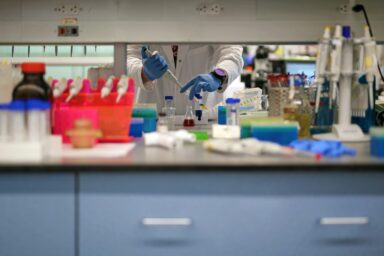
The new EU4Health-supported funding will allow WHO to accelerate work on new antibiotics, antifungals and non-traditional therapies such as bacteriophages. At the same time it will reinforce SECURE, the WHO–GARDP initiative aimed at ensuring sustainable access to both new and existing antibiotics worldwide.
As HERA and WHO deepen AMR partnership, Brussels faces decisive night in pharma package trilogue.
“Antimicrobial resistance is one of the most urgent threats to global health and security,” said Dr Yvan Hutin, WHO’s Director of AMR in a press release. “WHO welcomes this renewed partnership with the European Commission to accelerate efforts to fight AMR by ensuring equitable access to life-saving antimicrobials and diagnostics for people everywhere.”
Pressure on EU lawmakers to deliver
The pharma package trilogue comes amid rising concern that Europe’s policy response remains outpaced by the scale of the crisis. WHO and HERA have cooperated since 2022 on the development of new medical countermeasures and on ensuring equitable access to them. With HERA funding, WHO has recently updated its Bacterial Priority Pathogens List. In addition, it advanced implementation of the first Fungal Priority Pathogens List. It also expanded global consultations meant to steer R&D and guide national antibiotic-introduction strategies.
But even these advances, experts warn, cannot compensate for a deteriorating innovation ecosystem.
A collapsing pipeline, and a shrinking workforce
Data from the AMR Industry Alliance paints a stark picture. The latest data emphasise how fragile the antibiotic pipeline has become, and why fixing it is a public-health imperative. The Alliance describes a dual crisis in which developing new antibiotics remains scientifically complex and expensive. At the same time the market for them is structurally broken. As a result there is little commercial incentive even when drugs successfully reach approval.
The report shows that the AMR research workforce has been steadily eroding for more than two decades. There are only around 3,000 researchers still active globally, compared with up to 46,000 in cancer research. This shrinking talent base is accompanied by a sharp decline in scientific output. AMR publications have fallen by more than half since the mid-1990s. And patent activity has stagnated, reflecting waning innovation across the field.
At the same time, major pharmaceutical companies have dismantled or exited their antimicrobial R&D programmes entirely. They are leaving the burden to smaller firms that often operate with precarious finances. Many of them have less than a year of cash on hand. The consequences are visible in the product pipeline itself: in most recent years, only one new antibiotic has been approved, a stark contrast with the 1980s and early 1990s when multiple launches occurred annually.
Taken together, this combination of dwindling expertise, collapsing commercial viability and a vanishing innovation pipeline underscores why the AMR Industry Alliance warns that, without decisive action, the world risks sliding back toward a pre-antibiotic era.
Europe’s legislative stress test
As negotiators meet tonight, the question is whether the pharma package contains measures strong enough to reverse these trends, from incentives for novel antibiotics to clearer provisions ensuring uptake, stewardship, and sustainable supply.
For WHO and HERA, the partnership expansion aims to strengthen global R&D and ensure access. But in Brussels, the long night ahead will determine whether Europe’s own regulatory overhaul rises to the scale of the threat.
By Thursday morning, the EU will know whether it has agreed to confront AMR, or postponed the problem yet again.