Europe’s long-overlooked electricity grids have suddenly moved to the centre of debates on competitiveness, climate policy and energy security. The European Commission’s EU Grids Package, unveiled last week, has prompted swift reactions from MEPs, industry groups and environmental organisations. While many welcome proposals for faster permitting and smarter planning, environmental concerns and political sensitivities remain.
“Europe’s energy transition is running into physical limits,” MEP Dan Nica (S&D/ROU) remarked, calling the package a “major step toward a more secure, integrated and competitive EU energy system.” Industry groups echoed that sense of urgency. WindEurope warned that Europe risks missing its energy security and competitiveness goals without decisive action on grids, while BusinessEurope welcomed the recognition of grids as a matter of overriding public interest.
Environmental organisations also see opportunities, but with caveats. Climate Action Network Europe welcomed stronger rules on public participation and community benefit-sharing, while cautioning against weakening environmental protections.
Against that backdrop, the Commission’s Grids Package aims to strengthen cross-border cooperation, modernise ageing infrastructure and lay the groundwork for a fully integrated European Energy Union—an effort Brussels sees as essential to bringing down energy prices that remain two to three times higher than those in the United States and China.
The reforms seek to connect national energy networks more closely and allow member states to share electricity more efficiently, lowering costs and improving security of supply. European consumers already benefit from around €34bn each year thanks to the EU’s internal energy market, according to the Commission—a figure Brussels hopes to increase significantly through deeper integration.
High prices, weak connections
In the current setup, insufficient interconnection between national grids prevents cheap electricity from flowing freely across borders. This not only hampers the energy transition, it also keeps energy prices higher than necessary, hurting Europe’s competitiveness. The Commission estimates that better-integrated grids could save up to €40bn per year across the EU by reducing congestion, limiting renewable curtailment and lowering reliance on fossil fuel imports.
Weakening environmental rules risks eroding public trust and could ultimately delay projects even more. – Chiara Martinelli, director of Climate Action Network Europe
Addressing the energy transition more broadly, the package also includes measures for hydrogen infrastructure. Hydrogen Europe welcomed the emphasis on system integration, but warned that hydrogen infrastructure is not yet receiving the same level of support as electricity grids—particularly when it comes to storage and accelerated permitting.
“With the right infrastructure in place, hydrogen will help reduce renewable curtailment and manage variable demand,” said Hydrogen Europe CEO Jorgo Chatzimarkakis. “But that flexibility can only be unlocked once hydrogen grids and storage are available to the market.”
From national to European planning
Presenting the package, Energy Commissioner Dan Jørgensen acknowledged that the plan marks a shift of authority from national capitals to Brussels—a traditionally sensitive topic among member states.
“Yes, this does mean a transfer of competences,” Mr Jørgensen said. “But member states will benefit from it. It enables them to do what is necessary.”
Some interconnections remain particularly politically sensitive. The electricity link between France and Spain, for example, is among the most cited cases of underperformance and was partially blamed for a slow blackout recovery in the two countries earlier this year.
Interconnection levels between the two countries fall well short of EU targets, set at 10 per cent by 2020 and at least 15 per cent by 2030. At the start of 2025, as many as eight countries—including Spain—had yet to reach the 10 per cent target. Earlier this year, France and Spain announced a new electricity link through the Bay of Biscay, which will nearly double interconnection capacity from 2,800 MW to 5,000 MW.
However, France has long feared that importing cheaper Spanish solar power could undermine the profitability of its nuclear fleet and has generally remained reluctant to expand energy interconnections.
“I’m probably not offending anybody by saying that sometimes France has been somewhat reluctant to have more interconnections,” MEP Jørgensen explained.
Permits: the main bottleneck
Beyond planning, the Commission argues that permitting procedures are the single biggest obstacle to grid expansion. Approval processes for major infrastructure projects can currently take up to ten years.
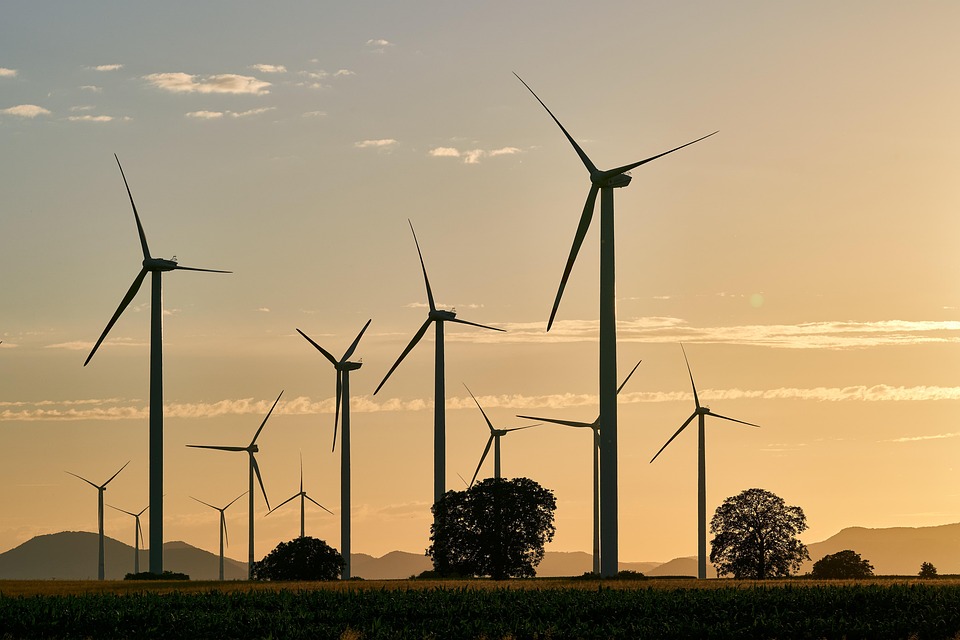
The package therefore proposes to grant grids the status of “overriding public interest” and significantly streamline environmental and administrative procedures. Smaller energy storage projects would be exempted from certain environmental permits, while the replacement of wind parks would be simplified as long as capacity and surface area remain unchanged.
Europe’s energy security and competitiveness require strong electricity grids; without decisive action on grids, Europe risks missing its energy security and competitiveness goals. – Giles Dickson, WindEurope CEO
BusinessEurope welcomed the approach. “Permitting now accounts for over half of the implementation time of energy infrastructure projects,” the organisation said, adding that the new measures could “unlock deployment across Europe.”
Nitrogen
The plans also include an easing of nitrogen rules. Temporary increases in nitrogen emissions during construction would no longer be grounds to block projects, based on the logic that long-term emissions reductions are expected to outweigh short-term impacts.
In countries such as the Netherlands, nitrogen rules have delayed many infrastructure projects in recent years, prompting the Dutch government to ask the Commission for nitrogen exemptions for electricity infrastructure earlier this year. Through the Grid Package, this request has now been granted.
The Dutch Association for Sustainable Energy (NVDE) has welcomed the development. “This is very good news. It is such a shame that the construction of urgently needed renewable energy projects stalled because of minor nitrogen emissions. Now hundreds of energy projects can move forward, which the Netherlands urgently needs,” NVDE chairman Olof van der Gaag said.
Industry and NGO reactions
Grid operators and industry groups broadly welcomed the Commission’s proposals, while stressing that implementation will be decisive. The Renewables Grid Initiative (RGI) said the package contains “many strong elements”, but warned that European-level planning must reflect national realities.
“Any top-down plan must build on national and regional policies, since its delivery depends on those who will finance and host the infrastructure,” RGI said, adding that streamlined procedures and reduced bureaucracy are necessary—but that climate and biodiversity risks must not be overlooked.
Manon van Beek, CEO of Dutch grid operator TenneT, said the package should “mark a shift from ambition to action”, pointing to faster grid expansion, simplified permitting and improved financing tools as critical elements.
WindEurope also underlined the competitiveness angle. “Europe’s energy security and competitiveness require strong electricity grids,” said CEO Giles Dickson. “Without decisive action on grids, Europe risks missing its energy security and competitiveness goals.”
Environmental groups struck a more cautious note. Chiara Martinelli, director of Climate Action Network Europe, welcomed stronger rules on public participation and community benefit-sharing, but warned against weakening environmental protections. “Weakening environmental rules risks eroding public trust and could ultimately delay projects even more,” she said.
Energy security and geopolitics
The plans are also intended to bolster Europe’s energy independence. In 2024 alone, the EU spent €375bn importing coal, oil and gas. “That means €43m leaving the EU every single hour,” said MEP Sean Kelly (EPP/IRL). “This is a problem both economically and geopolitically. The package sends a clear signal that Europe is finally treating the electricity grid with the level of importance it deserves.”
Expanding grids should also make the continent more resilient against physical and cyber threats. In a single year, Europe’s energy networks suffered 48 successful attacks.
Political hurdles ahead
The package now moves to the European Parliament and the Council, where member states will scrutinise the proposed shift toward European-level planning. While there is broad agreement that the current system is inefficient, national governments retain the right to veto infrastructure projects on their territory.
And although there is consensus that the status quo no longer works, implementation of the plans will ultimately depend on whether member states are willing to allow a greater transfer of competences to the European level.