The ReArm Europe legislation, adopted on 16 December 2025 with 519 votes in favour, 119 against, and 25 abstentions, and already agreed with member states, will allow the EU to allocate increased funding to numerous defence-related projects. The legislation modifies funding criteria for existing EU programmes, including the Strategic Technologies Platform for Europe (STEP), Horizon Europe, the European Defence Fund, Digital Europe, and the Connecting Europe Facility (CEF).
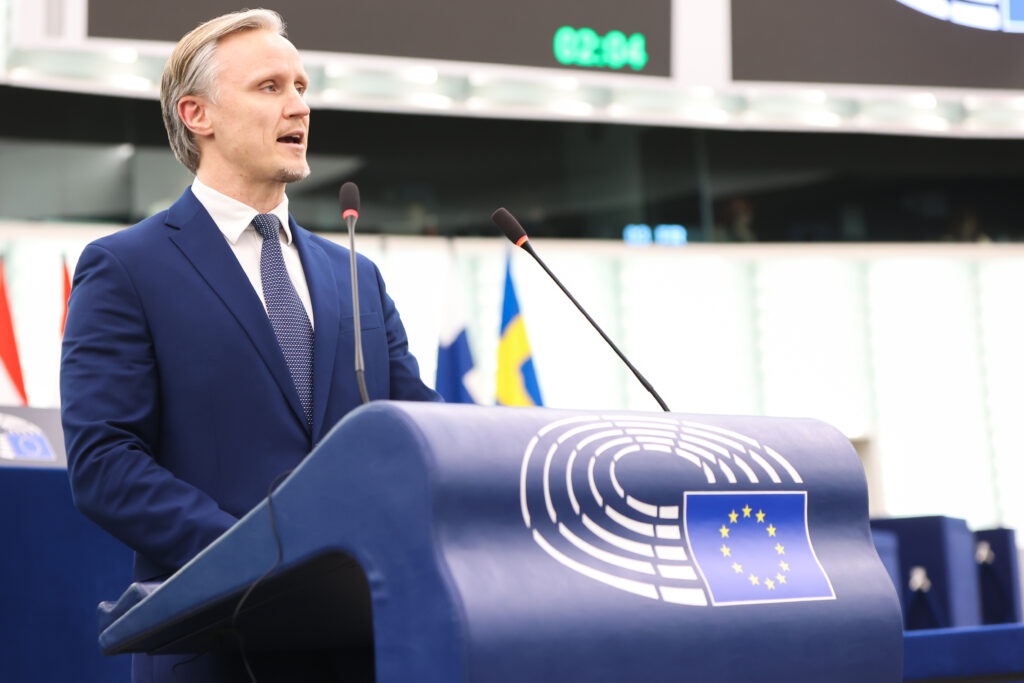
“This is not about new budgets, but about using existing programs more intelligently and strategically. Parliament has secured key priorities including Ukraine’s participation in the European Defence Fund and increased support for defense-relevant innovation while safeguarding fundamental principles,” rapporteur Rihard Kols (ECR/LVA) said.
Expanding funding tools to counter hybrid threats
During negotiations with the Council, Parliament broadened the scope of the measures to strengthen resilience against ongoing hybrid attacks and foreign interference. MEPs also secured greater support for the Ukrainian defense industry, ensuring the country’s participation in the European Defence Fund.
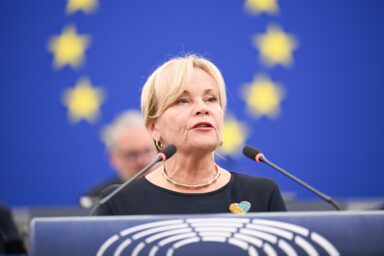
“We have lived too long in a superficial pacifism, thinking that Europe no longer needed to worry about being ready. Today, external threats, hybrid warfare, and terrorism in Europe require us to face reality,” MEP Elena Donazzan (ECR/ITA), shadow rapporteur for EDIP, said during the debate in the Strasbourg chamber.
Strengthening technological and industrial bases
The European Commission’s proposal, presented on 22 April 2025 and designated as a “mini-omnibus,” aims to strengthen defense-related investments within the EU budget. The text responds to worsening geopolitical threats and seeks to reinforce the technological and industrial base of European defense using existing budgets. The proposal followed the White Paper European Defence – Readiness 2030, which focuses on enhancing the EU’s strategic autonomy and competitiveness in the defense sector.
The Horizon Europe research programme will support civilian applications with potential military uses (dual-use). “Defense technologies” will become the fourth strategic area of STEP, with funding extended to small and medium-sized enterprises, including start-ups and small mid-cap enterprises that would otherwise struggle to access resources. “However, beyond the issue of resources and governance, the key point remains, in my opinion, a change in European mentality,” MEP Donazzan emphasised.
The legislation also allows EU funding for dual-use transport infrastructure under the Connecting Europe Facility, including military mobility corridors, with conditions set by the Commission regarding the country of origin of equipment, goods, supplies, or services used. “The tools are there. Now we need to move to the implementation phase,” said MEP Kols.
Balancing security and avoiding escalation
“Politics is not the art of preparing for war. It is the art of preventing it. And Europe exists because it has learned, the hard way, that force, without dialogue, only brings ruin. This arms race does not strengthen the Union: it divides it,” said MEP Pasquale Tridico (The Left/ITA).
“With the 2025 revision, the Security and Defence component of the European budget has increased by more than 10 per cent, compounded by asymmetric national programs and internal competition based on competing industrial interests. We are rewriting European spending: the EIB, the Cohesion Fund, and InvestEU, created to reduce inequalities and strengthen European unity, are being converted into instruments of militarization, guaranteeing private profits and shifting risks to taxpayers,” MEP Tridico explained.
On the other hand, MEP Donazzan argued that member states’ experiences demonstrate the need for a different mindset suited to contemporary geopolitical realities. “In Italy, we refer to the training camps of the National Alpine Association, in Lithuania, we resort to voluntary and compulsory recruitment, while Germany and France are already changing their approach.” She added that the EU also needs to build a European reference model.