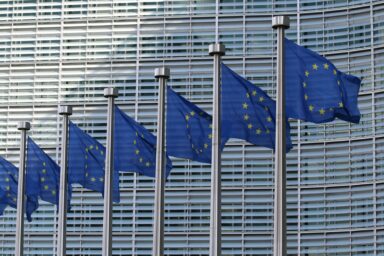
The push for eliminating Russian energy from European consumption mix has reached final stages. The European Parliament has passed the Commission’s regulation to phase out Russian natural‑gas imports into the EU.
The regulation amends existing energy‑security rules to strengthen coordination and enforcement. It passed the plenary vote on 17 December, by 500 votes in favour to 120 against, with 32 abstentions. It prohibits imports of pipeline gas originating in or exported from Russia and LNG produced from Russian feedstock or exported directly or indirectly from Russia. Also, it establishes staggered phase out dates: spot market Russian LNG and some short term contracts are to stop first (early/mid 2026), with remaining pipeline imports phased out by 1 January 2028 time frame in the Commission’s roadmap and negotiated texts.
Importers must provide evidence of origin for LNG/mixed cargoes and may face customs refusal or penalties where proof is insufficient; a prior authorisation and monitoring framework applies. Member states must file national diversification plans; the Commission and ACER coordinate monitoring, data sharing and enforcement.
‘Manipulation, extortion, control rather than trade‘
The Commission may temporarily suspend the prohibitions in case of a sudden, significant disruption to security of supply; the regulation enters into force the day after publication, with substantive prohibitions taking effect weeks later.
Two days before the vote, European lawmakers debated the topic, hailing ending Russian energy imports as a turning point in European energy policy. The rapporteur, Ms Vaidere thanked Commissioner Jørgensen for his determination and co-rapporteur Ville Niinistö (Greens-EFA/FIN) for his work.
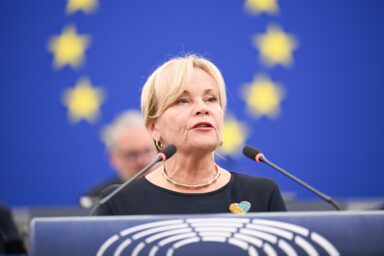
Ms Vaidere emphasized Parliament’s insistence that Europe end its dependence on Russian gas as soon as possible, securing earlier phase-out deadlines and special penalties. The Latvian member said that “for Russia, export of fossil fuels has never been about trade” but about “manipulation, extortion and control.”
Is it working?
Commissioner Jørgensen said the decision “will be noticed in Moscow” and shows Europe “cannot be blackmailed.” He noted the EU is taking steps towards a new era, free of Russian gas and oil, calling it a “historic achievement and outcome” from the trilogues. He said the Parliament wanted an import ban and is getting a statement from the Commission that they will propose a similar ban on Russian fossil oil imports, urging member states to create diversification plans aligned with energy commitments and targets.
For Russia, export of fossil fuels has never been about trade but about manipulation, extortion and control. — MEP Inese Vaidere (EPP/LAT)
The Commissioner stated the house makes many important decisions, but it’s rare that one will see much attention in Moscow, in Washington, all over the world. “Probably with smiles most places, definitely not with smiles in Moscow.” He said the move is taking away real money from Putin’s war chest and showing the world that Europe is impossible to divide or blackmail.
However, despite the praise, some MEPs criticized the decision stating, this is an explicit declaration of war against Russia itself, against the Russian people. Some argued that the “compromise arrived largely because Parliament agreed to make concessions, especially dropping the ambition to ban oil as well.” As MEP Jens Geier (S&D/DEU) added, “The biggest problem with energy sanctions is not that they didn’t achieve their objectives. The biggest problem is that they cause greater damage to European economy than to Russia.”
Loopholes, dependency highlighted
During a discussion of loopholes and long-term dependency, “the shadow fleet is also still in use, and that’s threatening the environment, continuing financing his war activities. That’s why the phase out of Russian oil needs to be quicker,” a member said. MEPs also stressed that Mr Trump‘s oil should not become “our Achilles’ heel”, either.
“We’re turning off the tap, tyranny to Putin but that means we need to fund our own green energy sources a lot more so that European citizens are not facing a cost of energy crisis so that we can be truly autonomous never again should we dependent on any regime in the West or the East,“ the chamber heard.
MEP Andi Cristea (S&D/ROU) stated: “We are talking about infectious dependencies that bind us, or bind certain member states, to a sick regime that exports fear and terror per cubic metre.” For his part, MEP Rihards Kols (ECR/LAT) noted that what has been paid to Putin by buying gas collectively this year is 15 billion euros. “15 billion euros is three times the annual budget for Erasmus+. It’s two years of Horizon Europe,” he stated.
Infrastructure concerns
According to MEP Jörgen Warborn (EPP/SWE), with this decision the EU has increased sanctions against Russia. “We have increased provision of weapons to Ukraine. We’ve increased humanitarian support. We’ve increased financial support. And we are standing side by side with Ukraine since day one.” But the member stated, “in all honesty, as long as we continue to import Russian gas, we are continuing to finance Putin’s war machine. And that is untenable.”
We are talking about infectious dependencies that bind us, or bind certain member states, to a sick regime that exports fear and terror per cubic metre. — MEP Andi Cristea (S&D/ROU)
Later in the session, Commissioner Jørgensen discussed infrastructure. “Imagine making a puzzle, jigsaw puzzle, like I guess probably maybe even some of you will do that in your Christmas break. Now imagine making it without looking at the picture on the box.” Mr Jørgensen stressed the need for more top-down planning, giving the EU the power to draw the map, show where interconnections are needed, and dictate what to do, when to do it, and how to do it.
The Commissioner stated the need to take security much more into consideration when making these big cross-border projects, introducing a concept that security should be more deeply considered. He also addressed permitting, which can take up to a decade. “We need to move much faster,” he noted.