The EU-Western Balkans Summit concluded in Brussels on Wednesday, 17 December without a final press conference and without the presence of Serbian President Aleksandar Vucic. Council President Antonio Costa reiterated the EU’s enlargement priorities: geopolitical perspective, security, and the attraction of membership in the EU. Union’s enlargement, however, is facing new challenges for its credibility.
“Enlargement is a merit-based process, not a race or a competition between candidates. Those who move faster should not be held back by others. Quite the contrary, they should set the pace and serve as an inspiration for all,” said Antonio Costa at the end of the summit with the Western Balkan countries. In recent days, Serbian President Aleksandar Vucic declared that he would propose that all Western Balkan countries be welcomed into the European Union together. Montenegrin Prime Minister Milojko Spajic responded that Montenegro would join the other Balkan countries in the EU as early as 2028 and called on other candidates to “hurry up and accelerate accession.”
Controversial no-show
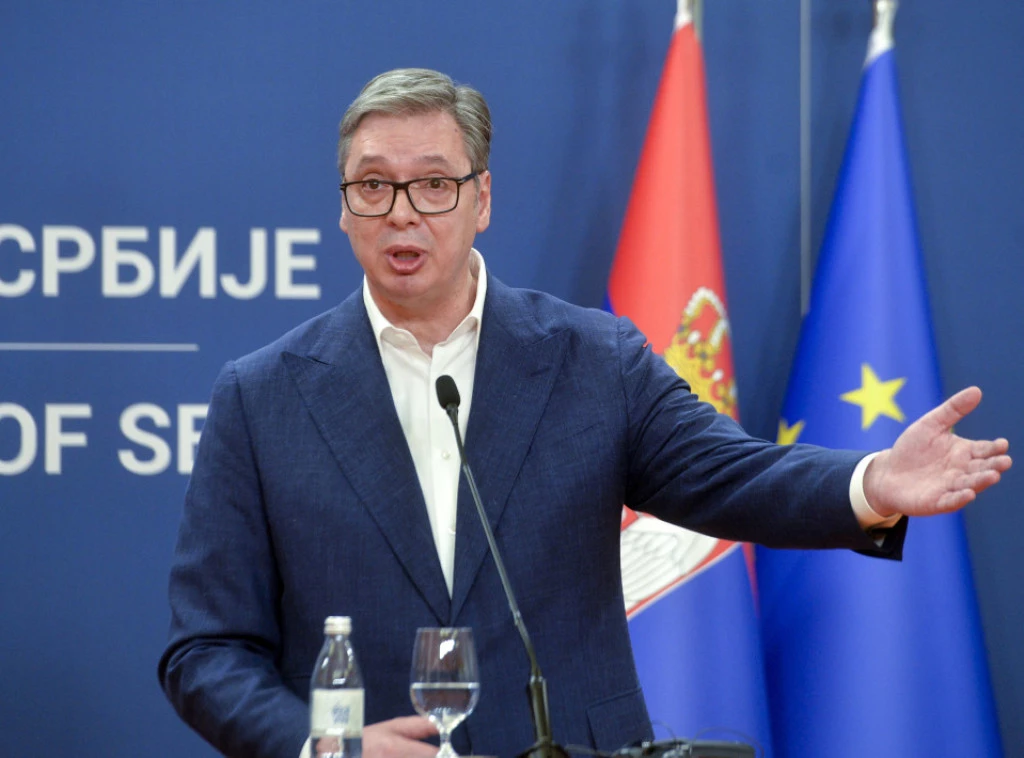
However, Serbian President Aleksandar Vucic did not travel to Brussels because he believed doing so would protect his country’s interests. “For the first time in the last 13 or 14 years, neither I nor anyone else will participate in the intergovernmental conference,” Mr Vucic declared. He explained that he had made the decision personally “so that no one else is to blame,” adding: “I will not allow the government to be pressured.”
Enlargement is a merit-based process, not a race or a competition between candidates. Those who move faster should not be held back by others. – António Costa, Council President
President Vucic also reported that he had spoken with numerous European leaders in the last 24 hours. “I think what we are doing is for the good of Serbian citizens. I know the decision will be criticized in Brussels and by those who criticize everything, regardless of what I do, but I believe I am protecting Serbia and its interests,” Mr Vucic said. He stressed that Belgrade must first demonstrate its achievements, “and we have done a lot, and this has been recognized.” Vucic finally reiterated that Serbia will continue its European path as long as he remains in office.
I think what we are doing is for the good of Serbian citizens. – Aleksandar Vucic, Serbian President
The EU has not officially commented on Vucic’s absence. Serbian ultra-nationalists, on the other hand, responded with harsh words. “The hypocrisy and disrespect that the Brussels bureaucracy shows towards Serbia and the Serbian people, including those in Kosovo and Republika Srpska, can no longer be accepted or tolerated,” said Milorad Dodik, controversial former President of Republika Srpska (internationally unrecognized territorial unit, part of Bosnia and Herzegovina).
Postponed, again
Member states have decided to once again postpone the decision on the opening of Cluster 3 in Serbia’s accession negotiations. Despite technical progress assessed positively by the European Commission, the lack of political consensus among EU governments has prevented formal approval of the proposal. Cluster 3, dedicated to competitiveness and inclusive growth, represents a key step in aligning Serbia’s economy and regulation with the standards of the European single market.
The Commission had already indicated that Serbia is substantially ready from a technical standpoint, but some member states believe that insufficient progress has been made on sensitive political issues. According to the formal conclusions endorsed by the 26 countries, the Council reserves the right to reconsider the matter in the future ’in accordance with the negotiating framework’, without, however, specifying a date for a new deliberation. The document reiterates the need for Belgrade to advance its rule of law reform and normalize relations with Kosovo.
Serbia has not opened any new chapters or clusters of negotiations with the EU since December 2021. The last opening was on December 14, 2021, when Cluster 4 on the Green Agenda and Sustainable Connectivity was opened.
Priority, or losing momentum?
Technically, enlargement is a priority item on the Council’s agenda. Italian Prime Minister Giorgia Meloni, a longtime supporter of enlargement to the Balkans, mentioned the process of EU accession in her speech to the Italian Chamber. “Working to implement the European enlargement process, with particular attention to the countries of the Western Balkans area, which remains a geopolitical necessity for our country and the Union in terms of peace, stability, security and prosperity,”, Ms Meloni said.
The European Commission’s recent report praises the progress made by Albania and Montenegro. These two countries can possibly join the EU already in 2028. The same report, however, seems to be shaky for the other candidate states. Georgia is now a candidate in name only, and the other countries are awaiting their arrival, respecting their obligations regarding the rule of law, reforms, and merit. Slowly and patiently, hoping for a breakthrough while Russian President Putin persists with interference and disinformation attacks on Moldova, Serbia, and Bosnia and Herzegovina.