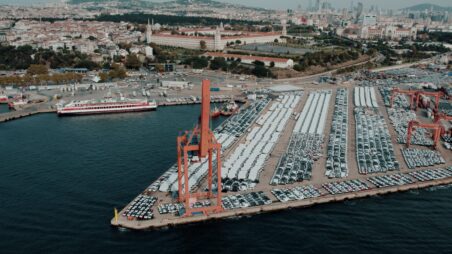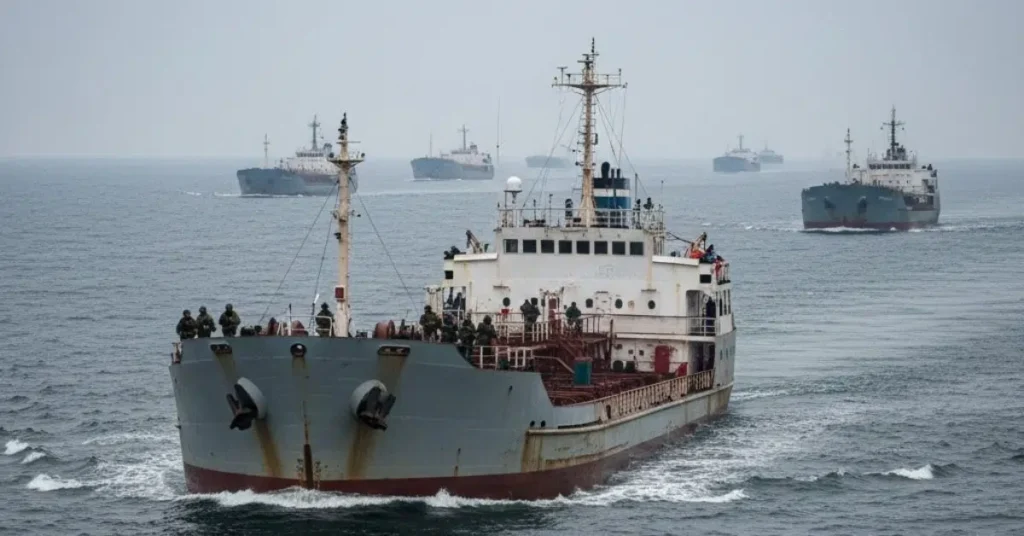
Council imposed on Thursday, 18 December restrictive measures on an additional 41 vessels, that are part of Russia’s ‘shadow fleet’ of oil tankers and contribute to Russia’s energy revenues. The move includes a port access ban and ban on provision of a broad range of services related to maritime transport. The decision brings the total of designated vessels to almost 600.
The restrictive measures are intended to target non-EU tankers that are part of Moscow’s so-called shadow fleet. These vessels help to circumvent the oil price cap mechanism or support the Russia’s energy sector. It also targets vessels that are responsible for transporting military equipment for Russia or involved in the transport of stolen Ukrainian grain and cultural goods from Ukraine.
Russia’s export revenues down
Russia’s fossil fuel revenues, though still significant, have been dwindling since 2022. In the second half of 2025, the Russia’s earning through fossil fuels export amounted to ca. €550m per day. That is less than one half compared to early 2022, when the Russia’s invasion to Ukraine was launched, an analysis conducted by Centre of Research on Energy and Clean Air (CREA) shows. Crude oil accounts for the largest share of these exports.
In response to Russia’s military aggression against Ukraine in February 2022, the EU has massively expanded sanctions against Russia. The aim is to significantly weaken Russia’s economic base. It is also intended to deprive Russia of critical technologies and markets, thus significantly curtailing its ability to wage war.
Just a few days ago, on Monday 15 December, Council had imposed sanctions on five individuals and four entities responsible for supporting Russia’s shadow fleet and its value chain.