In the EU, the link between defence, security and non-formal education of adults is indirect but strategically essential, Ukrainian expert on the field tells EU Perspectives. Beyond military and technological capabilities, Europe’s security increasingly depends on resilient, informed and cohesive societies.
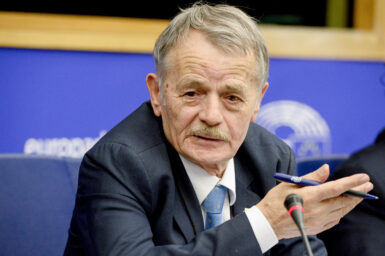
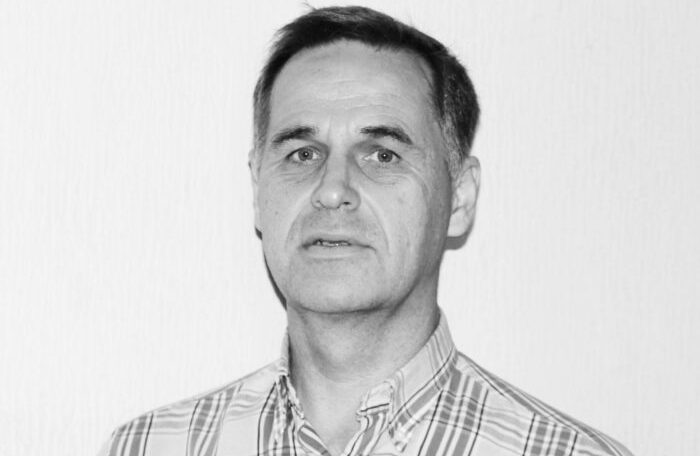
Non-formal adult education contributes to preventive security “by preparing citizens for crisis situations, strengthening civic engagement, media literacy and critical thinking”, Oleg Smirnov, Vice-President of the European Association for the Education of Adults (EAEA), told EU Perspectives. This, in turn, “reduces vulnerability to disinformation, radicalisation and hybrid threats”, said the founder of the Integration and Development Center for Information and Research in Crimea and Director of DVV International in Ukraine.
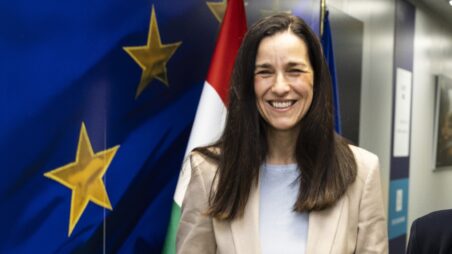
As shown by recent crises, including the war in Ukraine, investing in people and communities is indispensable for effective defence. For the EU, according to Greta Pelucco, Senior Public Affairs Coordinator at EAEA, this means recognising non-formal adult education not only in policy narratives but also in concrete frameworks and budgets, ensuring that security, democracy and long-term societal sustainability receive attention together.
How could democracy be at risk without any serious approach from the EU to non-formal adult education?
We have already witnessed the underestimation of non-formal education in many European countries, during election campaigns, mainly, and also polarising in societies, or authoritarian pressures as a result. Without access to civic education, media literacy, critical thinking and public dialogue a growing proportion of citizens feel alienated from political processes, do not understand decision-making mechanisms and lose trust in democratic institutions. In such a vacuum, democracy becomes vulnerable to populism, radicalisation and disinformation.
Non-formal adult education helps people to make sense of complex social changes, peacefully resolve conflicts and take a responsible part in public life. Without systematic support from the EU for this sector, social cohesion and the ‘democratic immunity’ of society weaken, which in the long term undermines the ability of democracies to effectively confront internal and external threats. The adult population needs constant updating of civic knowledge and skills.
The latest Eurostat data shows that 44 per cent of Europeans aged between 16 and 74 lack at least basic digital skills. What does this mean in concrete terms?
Nearly half of the population lacks fundamental skills such as using email, basic software or online tools. If citizens do not have these basic competences, how can we realistically expect them to understand, question and avoid fake news and media manipulation?
Moreover, a 2025 Eurobarometer survey shows an alarming situation regarding democracy. When questioned what are the most serious challenges to democracy in the EU, respondents mention growing public distrust towards democratic institutions and processes (49%), and foreign information manipulation, interference, and disinformation, including in the context of elections (42%). The military sector cannot address these threats. Only by training and educating citizens can we prevent the gradual deterioration of our democracies.
How could disinformation undermine the democratic resilience of the EU?
In Ukraine, as well as in the European and global information space, direct Russian and pro-Russian disinformation has become a tool of hybrid threats to weaken EU democracies from within. It devalues expertise, questions the legitimacy of institutions and weakens social cohesion. The massive spread of false or manipulative information polarises society, intensifies fears and prejudices, and contributes to radicalisation.
As a result, citizens make decisions not based on facts, but under the influence of emotions and imposed narratives, which directly affects electoral processes and public policy. Disinformation undermines the sustainability of democracy in the EU, as it distorts citizens’ perceptions of reality and erodes trust, both between people and in democratic institutions.
Over the past year, Europe has witnessed several cases of accusations of manipulation of national elections and the spread of fake news — and, in the case of Romania, this even led to the annulment of the elections. This is another clear example of how disinformation and misinformation can overturn democracy overnight: such episodes do not happen only in war zones. They can occur everywhere nowadays.
Which members states can be examples of good/bad practice regarding the non formal-adult education in the defence-and-security context?
As far as I am familiar with the experience of European countries and can judge I can say that in countries where adult education is based on the concept of Bildung—an integral approach on the development of a holistic, responsible and critically thinking personality—better practices related to the sustainability of democracy, social cohesion and security are more likely to emerge. Such adult education systems do not address only instrumental skills training, but combine civic education, ethical values, cultural reflection and active participation in public life.
At the same time, it is important to emphasise that the concept of Bildung in itself does not guarantee success but creates a favourable environment for the development of media literacy, trust, responsible citizenship and the ‘social fabric’ of society. A strong social fabric means people trust each other and institutions enough to cooperate, share information, and resist manipulation. It is these elements that make countries more resistant to disinformation, radicalisation and external threats, which explains why in such countries one can more often identify examples of successful combination of non-formal adult education with issues of democracy, defence and security.
In the EU, Finland is often cited as a best practice example in combining non-formal adult education with defence and security issues. The country has a strong system of liberal adult education (folk high schools, civic institutes), covering all age groups, and the concept of ‘comprehensive security’, where civic awareness, trust, social cohesion and citizen participation are considered as important as military capabilities. There is also close cooperation between the state, municipalities and civil society, including through non-formal adult education.
What are the risks present in the lack of such cooperation?
It could be correct to speak about risk models that occur in some EU countries. These are usually situations where non-formal adult education is underfunded or marginalised and security issues are reduced exclusively to military or police measures, without investment in civic education, which leads to lack of dialogue with civil society, which in its turn weakens social trust. So, defence and security remain incomplete without strong non-formal adult education. It is education that shapes a resilient, informed and responsible society.
Moreover, Estonia has clearly linked non-formal adult education, especially digital and media literacy for adults, to issues of cybersecurity and defense against hybrid threats. This emerges from Estonia’s comprehensive approach to national security and societal resilience. Adult learning is seen as a strategic tool to strengthen citizens’ awareness, critical thinking and resilience in the digital space, which is increasingly where democratic processes are influenced and challenged.
What we do see instead are risk models: contexts where non-formal adult education is underfunded or marginalised, and defence and security are framed almost exclusively in military or policing terms. In such cases, the lack of investment in civic education and adult learning weakens trust, dialogue with civil society and ultimately democratic resilience.