A big leap for Brussels, a modest step for European security. On 15 January, the European Commission endorsed the national defence-investment plans of eight member states and asked the Council to unlock about €38bn in ultra-cheap loans under the Security Action for Europe (SAFE) scheme.
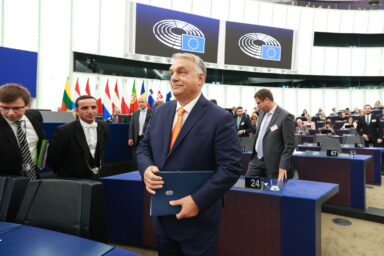
Belgium, Bulgaria, Denmark, Spain, Croatia, Cyprus, Portugal and Romania are close to drawing an unprecedented sum in joint EU debt. “Last year, the EU has made more progress in defence than in decades before. The White Paper and the Readiness Roadmap 2030 enabled member states to mobilise up to 800 billion euros for defence,” declared Ursula von der Leyen, the Commission’s president, as she unveiled the decision.
Ms von der Leyen stressed that SAFE is the bloc’s first serious pot of cash for joint procurement. “This includes the 150 billion euros for joint procurement – SAFE. We have now approved an initial batch of SAFE plans for Belgium, Bulgaria, Denmark, Spain, Croatia, Cyprus, Portugal and Romania,” she said, adding that “The others will follow shortly after. It is now urgent for the Council to approve these plans to allow fast disbursement.”
Visibility matters
The Council is expected to nod the package through within four weeks, leaving the European Investment Bank to sign individual loan contracts. If all goes smoothly, the first money could land in national treasuries in March 2026.
The headline figure of €38bn dwarfs anything Brussels has attempted before. The European Defence Fund, launched in 2021, spreads only €7.3bn of grants over seven years. Yet compared with the continent’s yawning capability gap the new sum looks modest. EU leaders reckon that European armies under-invest by €75-90bn every year. The €3bn, disbursed over several years and split eight ways, is therefore a down-payment rather than a transformation.
Even so, the loans will bulk up national budgets. The eight recipient governments together spent roughly €60bn on defence in 2025. If they draw the full SAFE allocation, capital spending could climb by a tenth each year for four years. Such visibility matters to manufacturers: contracts that run into the next decade justify expanded production lines and new shifts.
A cautious infusion
The Commission claims leverage, not volume, is the main point. Firms that know orders will keep flowing will match public money with their own. Private banks tend to follow. For countries like Bulgaria or Croatia—the poorest in the group—the promise of long-term, low-interest EU debt cuts financing costs that would otherwise bite.
Last year, the EU has made more progress in defence than in decades before. — Ursula von der Leyen, European Commission President
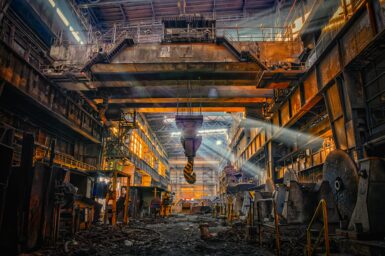
Yet timing nags. Council approval, though likely, is not automatic; diplomatic horse-trading may stretch until the spring. Each loan then needs a project-by-project negotiation with the EIB. Tooling, hiring and certification come next. If contracts close by late 2026, expanded output will peak in 2028-29. Deterring Russia, however, requires credible force levels by 2026-27. SAFE’s first wave therefore lands just as the present security window begins to close.
Money helps. Belgium, Denmark and Portugal boast relatively healthy debt paths and can absorb new borrowing quickly. Existing industrial pipelines matter too. Spain and Croatia are already upgrading 155 mm shell plants; Denmark assembles naval missiles; Belgium co-owns an artillery venture with France’s Nexter.
Bulgaria and Romania inherit Soviet-calibre lines that can be modernised at speed. Cyprus’s and Portugal’s plans, heavy on cyber and coastal surveillance, drew fewer export-control doubts and so sped through the Commission’s desks.
Speed versus scale
Politics loomed large. Brussels may have wanted a north-south-east mix in the first tranche to blunt complaints from bigger spenders still stuck in drafting. By approving a micro-state such as Cyprus alongside the likes of Spain, the Commission signalled that SAFE is neither a subsidy for the rich nor a charity for the exposed but a club whose door is open to all.
Henna Virkkunen, the Commission’s executive vice-president for tech sovereignty, offered the hard-sell. “Europe’s security is our top priority and there is no time for incremental steps,” she proclaimed. “With the SAFE initiative, we are building our defence readiness at record speed.” The rhetoric jars slightly with the two-year wait for the first cash, but the urgency is genuine.
Our mission is clear: to very quickly build a more resilient Union through our SAFE initiative. — Andrius Kubilius, EU defence commissioner
Ms Virkkunen pushed the strategic line too. “This is not just about investment; it is about ensuring that our infrastructure and technologies are resilient and that we stand firmly with Ukraine. Today, we move from the stage of opportunities to the stage of delivery.” SAFE funds can indeed be used to place orders jointly with Kyiv, and Ukrainian firms may plug gaps in Europe’s supply chain, particularly in drone electronics.
The missing giants
Andrius Kubilius, the commissioner for defence and space, drilled into the economics. “Our mission is clear: to very quickly build a more resilient Union through our SAFE initiative. This is about our collective security and European readiness,” he argued. Joint orders, he insisted, slice unit costs and align standards—an outcome NATO planners have sought for decades.
Mr Kubilius linked those savings to industrial muscle. “By focusing on joint procurement, we are ensuring that member states buy together, which reduces costs and ensures our equipment works seamlessly across borders. This is about making our EU defence industry growing, innovating and creating more jobs.” The Commission estimates that for every billion euros of SAFE lending, suppliers could generate perhaps €1.5bn in turnover and support thousands of posts. Such numbers soothe sceptical finance ministries.
For all the fanfare, SAFE’s launch feels oddly tentative. Germany, France, Italy and Poland—Europe’s four big spenders—remain absent from the first wave. Berlin and Warsaw are still thrashing out their plans; Paris prefers national subsidies to EU debt; Rome frets about deficit rules. If those holdouts do not join, SAFE risks becoming a side-show for medium-sized players rather than the backbone of Europe’s re-armament.
A breakthrough of sorts
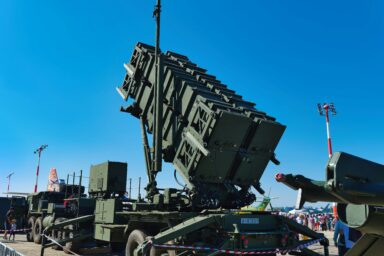
Much therefore rides on the scheme’s second and third tranches, pencilled in for later this year. Should the heavyweight quartet sign up, Brussels could push loan approvals past €100 billion and give factories the scale needed to meet NATO stock targets. Without them, SAFE will struggle to fill even half the shortage of shells, missiles and air-defence rockets laid bare by the war in Ukraine.
For now the Commission can claim a breakthrough. Joint EU borrowing for guns and ammunition was unthinkable a decade ago; today it is routine. That alone shifts the political baseline. Yet Europe’s deterrent will not be measured by press releases or loan signatures.
It will be judged by crates of 155 mm rounds, by rows of launch-ready interceptors and by production lines humming well before 2030. SAFE has loaded the starting gun. The real test is whether member states pull the trigger fast enough.