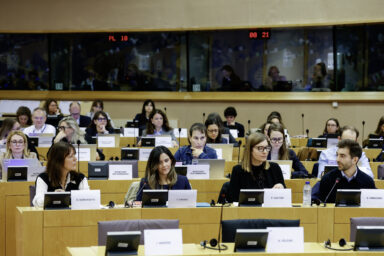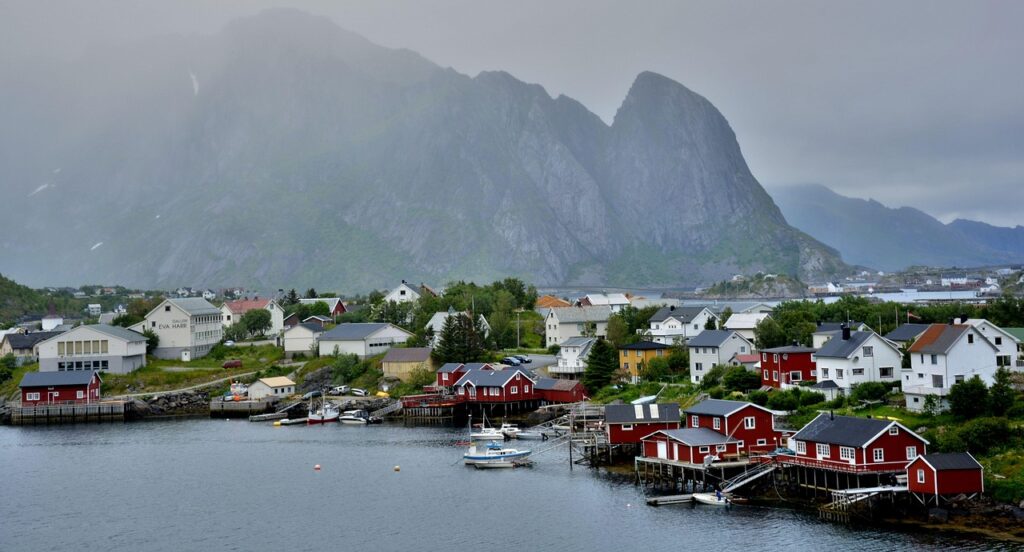
From the Azores to the Cyclades, Europe’s islands face unique challenges—from patchy internet to irregular transport links—that demand solutions tailored to their realities. On Friday, the European Economic and Social Committee held a public hearing under Opinion ECO/689 to explore how EU policy can better connect, support, and sustain remote island communities. The event offered a rich overview of how islands, despite barriers, form a vital part of European identity.
The in-person and online hearing featured a long list of distinguished speakers, including not only parliamentarians but also independent researchers and experts. The latter highlighted different aspects of island life and policy challenges.
Urban-focussed spatial planning
Jørgen Primdahl, professor emeritus at the University of Copenhagen, emphasised the unique governance challenges of islands:
“My field is spatial planning and governance of rural areas, countryside, rural landscapes. And I have often been working on Danish islands and of course I know very well that the conditions are different, the constraints are different, there are also opportunities which are different from the mainland.”
He explained that urban-focused spatial planning often does not address the specific problems of island communities, where stakeholder diversity is high and territories are interdependent. Centralised decision-making rarely works, so solutions must be developed collaboratively.
The conditions are different, the constraints are different [but] there are also opportunities which are different from the mainland — Jørgen Primdahl, Professor Emeritus, University of Copenhagen
Complex issues such as migration, environmental management, biodiversity, landscape, and economic challenges require integrated solutions rather than simple regulatory fixes. Islands provide a unique context for learning about policy integration, which he recommended be incorporated into future strategies.
Nordic research
Researcher Pia Prost highlighted the scale and density of Nordic archipelagos and the practical implications for governance and services:
“I’m very grateful for the opportunity to tell you about islands in the north. I have worked with the archipelago development for many years since 2017 at the Archipelago Institute at Åbo Akademi University in Finland. I’m now a PhD candidate at Södertörn University in Stockholm on the theme sustainable archipelagic communities. And for more than 10 years, I have also been a member of ISIN, the European Small Islands Federation.”
Speaking via online cast from the southwest of Finland, she noted:
“It’s not the biggest in size nor population, but in island density. The Archipelago Sea, stretching from the Finnish mainland to Åland Islands, consists of roughly 40,000 islands, and about 130 of these islands are populated by 60,000 permanent residents. I’m sitting by the orange dot right outside the archipelago sea biosphere reserve that covers most of the area.”
Ms Prost explained that most Nordic islands are small and sparsely populated, presenting governance and infrastructure challenges. Many islands are managed from the mainland, with a few exceptions such as Åland. Seasonal population fluctuations from tourism and second-home owners place extra demands on services, while climate change, transport costs, and population decline add further pressures. She also emphasised the strategic and economic significance of islands, noting how they extend national exclusive economic zones and contribute to maritime resources, energy, and fisheries. Her message stressed the importance of integrated, island-specific planning for sustainable development.
The Archipelago Sea, stretching from the Finnish mainland to Åland Islands, consists of roughly 40,000 islands, and about 130 of these islands are populated by 60,000 permanent residents. — Pia Prost, Researcher, Archipelago Institute, Åbo Akademi University
Common ground
These individual insights were then brought together by Ioannis Vardakastanis, rapporteur for the EESC opinion on The Island Dimension in European Cohesion, Competitiveness and Sustainable Development Policies. He summarised the broader implications for policy:
“From the expert contributions and civil society voices heard today is that the one-size-fits-all approach to cohesion simply does not work for islands. EU cohesion policy must be place-based, flexible, and tailored to insular realities so that investment truly fosters territorial cohesion, competitiveness, and sustainable development. This aligns with the broader goal from the European Economic and Social Committee that we design policies that address islands’ specificities rather than treating them as an afterthought.”
Equitable access
The representative noted that connectivity—physical, digital, social, and economic—is essential for islands to participate fully in the EU single market, attract investment and talent, and support sustainable tourism. Multi-level governance and locally grounded solutions are critical to ensure tangible results. Sustainable development, including green transition and climate resilience, must be central to island policy to protect fragile ecosystems.
“Islands deserve equitable access to the benefits of Cohesion policy, to tailor-made funding instruments, and to solutions that recognise their permanent structural difficulties. Only then can we truly claim to have delivered on the promise of territorial cohesion that underpins the European project.” The hearing highlighted the need for flexible, people-focused approaches that strengthen connections, bolster local economies, and help island communities thrive while addressing the challenges of isolation and environmental pressures.”
Islands deserve equitable access — Ioannis Vardakastanis, Rapporteur for the EESC opinion
These insights will feed into the draft opinion, which will be refined and formally adopted at the EESC plenary session in February 2026.