Tensions over Greenland continued this weekend as US President Donald Trump renewed calls for American ownership of the Arctic territory, leaving local residents and European allies increasingly anxious. The spotlight has focused on Nuuk, where many protested at the weekend over fears of annexation.
EU Perspectives spoke with Marc Lanteigne, Professor of Political Science at UiT: The Arctic University of Norway and Adjunct Lecturer at Ilisimatusarfik University of Greenland, about Mr Trump’s rhetoric, his threat to impose further sanctions on European countries, and the mounting pressure on Europe to respond in kind.
Have you spoken to colleagues, students, friends in Greenland? What are they saying?
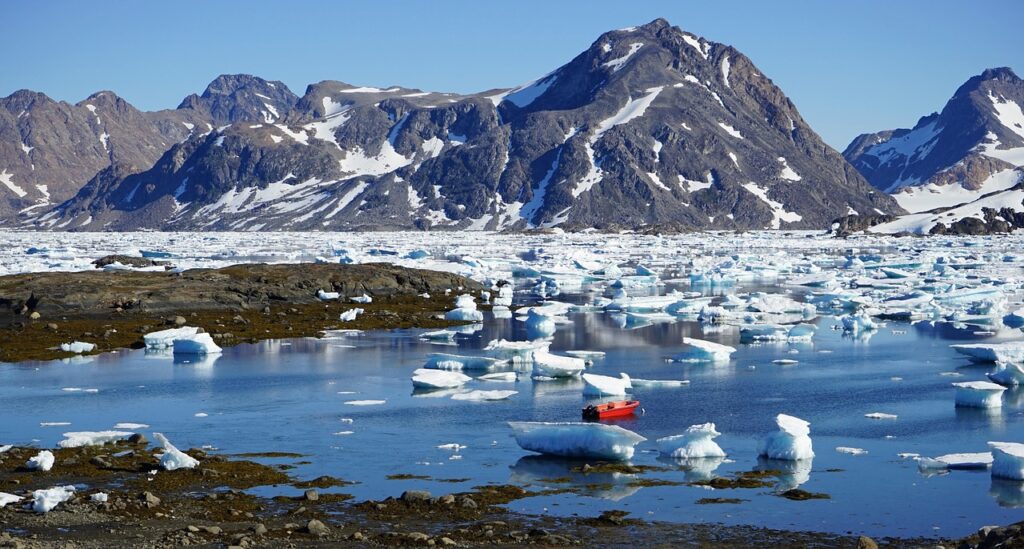
Yes, I have been talking to my students and colleagues, and at the moment there is a lot of concern there. This is a part of the world that was very isolated for a very long time and at the moment there is a lot of questioning of ‘why’ this has happened. There’s just a great deal of stress, especially among my students wondering what’s next? Will my colleagues wake up and suddenly be ‘in another part of the world’?
The sheer amount of press that’s descended upon Nuuk, which is not a very big city, is adding to the stress. You have people literally being tagged on the street saying, ‘Oh, what do you think of this? What do you think of that?‘ It’s a very, very difficult time for them.
Some of those who spoke to the media expressed real fear, saying they were watching the skies as if an invasion were imminent. Mr Trump’s rhetoric has made many people truly very nervous.
Nor has it helped at all that we have very little to go on in terms of coherent American policy. All we have to go on is basically whatever kind of excerpts appear at any given time. It’s just been a very chaotic situation.
Guardrails long forgotten
When we compare it to Mr Trump’s first term, there were some overtures towards Greenland already then. Things are much worse now, aren’t they?
The first time around it was treated almost as a joke, that this was basically ‘Trump being Trump’, that this was his lack of understanding of international politics, international law, not knowing the Arctic. And at that time, I imagine that he had quite a few advisors who basically dampened the whole thing and said when something was simply ‘not doable’.
Those people are long gone: the Kellys and McMasters, there is no one like that in the White House now. Obviously, we have a much different circle of advisors surrounding the American president.
If you heard the comments by Stephen Miller, they were not exactly a voice of reason. And we now have the after effects of this national security strategy that the US put out last month, which was very direct in stating they consider the Western Hemisphere to be the United States’ domain, of which Greenland is a part. I think that is guiding a lot of the current thinking, the idea that the Western Hemisphere would be much safer and happier with the US as a hegemon.
Where’s the love?
I would also say that looking at some of Trump’s statements, I get the feeling that he honestly can’t believe that this is so complicated. I think he thought the Greenlanders would want to jump at US sovereignty because they will become rich, quote-unquote. And I think part of this is due to the fact that, at least in his mind, he had an easy victory in Venezuela, he has proven his credentials, and now he seems to be complaining that Europe owes him for all the wonderful things the United States has given to Europe over the last few decades. It’s a very, very, neo-imperialist mindset. Like others have said, it’s like we’re almost back to the late 19th century.
People are talking about the Monroe Doctrine, which is more than 200 years old. We’re talking about a doctrine established by the fifth president of the United States.
It seems really a very weird combination of isolationism and geopolitics, where great powers have spheres of influence and the more land you control, the more power you have.
Old-fashioned or backwards?
It’s a very outdated concept. That was seen as outdated back in the ‘90s. Now, all of a sudden, it’s back. Part of it, I think, is definitely impacting Greenland: with Russia and China being hegemonic, the United States feels the need to do the same. And if it gives Mr Trump the ability to say, I’m the first president over many decades to expand American territory, so much the better, from his perspective.
Want doesn’t get
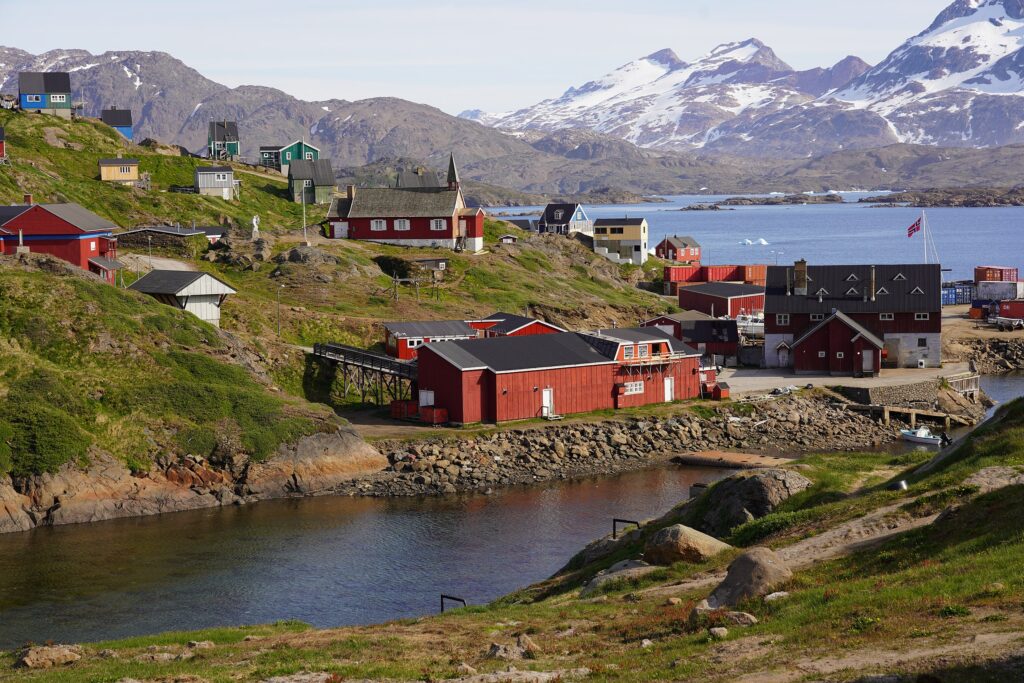
Mr Trump has used the rationale that there’s somehow a difference between ownership and a treaty when it comes to protecting an area. Yet a treaty has been in place since 1951 during the Cold War and it was perfectly fine in defending Greenland then. Does this argument hold water? That in order to defend it, you have to own it?
The whole security aspect of this is what I find probably the most confusing, because as you correctly point out, so we have agreements in 1951. Those were recodified in 2004. Both the Greenland and Danish governments have said multiple times that they have no problems whatsoever with the United States or any other NATO member fortifying security installations in Greenland. Trump constantly harps on these supposed Russian and Chinese boats, which are bubbling around off of Nuuk ready to strike, except the fact that they don’t exist. And there is simply no advantage to owning Greenland that the United States doesn’t already have.
The usual playbook
Already they have so many options to build up Greenland’s defences. I would happily argue that yes, Greenland should play a bigger role in Arctic defence. There’s a great deal of concern about eventual Russian submarine ships using the GIUK gap as a thoroughfare to the Atlantic. But the idea that well, it needs to be owned… maybe it coincides with Trump’s narrative that it’s completely Denmark’s fault that Greenland isn’t properly protected, never mind NATO, never mind the US base. It’s just a really, really weird set of almost alternative histories being written.
Which follows the playbook he has always had regarding the truth: completing ‘the wall’ or when you hear about the ‘millions of people’ invading from the south and so on, those numbers are often very exaggerated or used very loosely to suit the narrative.
And we saw this with Venezuela. We saw this with arguments about Canada. It’s really a very interesting case of misinformation and disinformation being used to create alternative stories.
Growing competition for the North
You are an expert on the Arctic space which, no matter how we look at it, is becoming more strategically important. And it will be increasingly between the US, between Arctic states, including Russia, but also non-Arctic ones, like China which you have written and spoken about. China doesn’t have a direct foothold in the Arctic, and yet it is a strategic priority.
One point that tends to get lost in a lot of the media and a lot of the yelling back and forth about China is that in comparison with many non-Arctic states, and I could point to Britain, France, Italy, Poland, like China is a very, very much a newcomer in the Arctic. Like it only had a really serious Arctic policy going back maybe 25 years. Now, it was an original signatory to the Spitsbergen Treaty, but it was a long kind of dormant period between 1925 and the turn of the century. So China is still having to crash learn the region. The idea that China has a grand plan to take over the Arctic really does not hold up to the facts.
That said, China has identified the Arctic, the polar regions as a whole, as strategic new frontiers. They very often use that. They say this is an area which we need to look very carefully at strategically. But it is not an Arctic state. It is very dependent on the goodwill of Arctic states, including Russia, for access to the region. And even though it was very optimistic about a polar silk road when they announced it in 2017, a lot of it has not come about.
Yes, there’s been Chinese investments in Siberia and the Russian Far East. But once you take Russia off the table, China has very little show for it in regards to its presence in the Arctic. There were plans for about four mines in Greenland that had Chinese partners. None of them are operational. They’re either on hold or cancelled. They’re either too expensive or too environmentally damaging. As a result, they don’t exist.
Expensive – Period
Pardon me for jumping in, but I assume that calculus applies to the US as well?
Well, one of China’s advantages, if you want to look at it that way, in Greenland is that if you wanted to set up a mine in Greenland, first of all, you’ve got to put down a lot of startup money. You need to bring in literally everything, including the kitchen sink! All your infrastructure, labour, all of that. And then assuming the conditions were perfect, which is a very big if, you’re looking at about 20 years before you see a profit. And that is a very hard sell for a Danish or Australian or American company. China, they can wait. They’ve said they can wait.
Now, the reason why China has been running into trouble, though, is some of it is environmental. Some of the current parties in the Greenland coalition have been very nervous about any mining that would create environmental damage. It’s a very delicate ecosystem. I can vouch for that. Others are concerned, like, for example, there was a big snit over an iron mine about 15 odd years ago, but iron prices simply did not justify putting up a mine of that type. Good old-fashioned economics got in the way.
China has been trying to reset its Arctic policy. It’s been kind of quietly going back and saying, oh, let’s talk about scientific cooperation. Let’s talk about maybe small-scale economic cooperation. But it’s not selling very well, especially since China and Russia are now seen as much closer in the Arctic.
Flustered: What now EU, NATO?
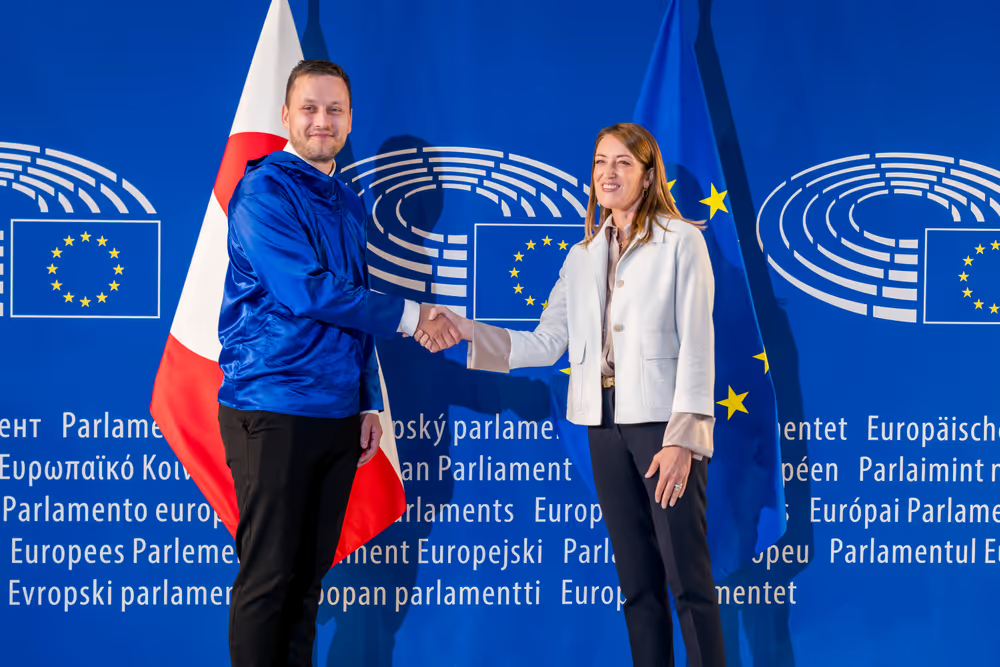
Let me come back to Europe, because that is really big unknown at the moment: Mr Trump announced punitive tariffs related directly to support for Greenland in the form of delegations being sent there for NATO related exercises and so on. This to me seems extremely damaging. These are traditionally close allies, so what does that do for Europe? What does it do for NATO when the US president comes out with these kinds of threats?
Really, I mean, going back to Trump’s first term, I mean, there were noises that he made that, you know, we don’t need to be a NATO anymore, that NATO is freeloading off the US budget. But again, the more kind of sane advisors around him said, no, no, you can’t do that. Now, though, we seem to be getting hints that Trump is perfectly willing to jeopardise NATO in order to acquire Greenland, which, yeah, the logic is just off the scale.
Fareed Zakaria’s most recent reflection on developments was that the European Union had been very good at restraining reactions to Trump’s tariffs from the start. But will it last with tariffs now being used as additional punishment?
Now everyone’s talking about the mechanism they call ‘the bazooka’, meaning a series of reciprocal tariffs, which could, for example, hurt the American tech industry. So we’re looking at a trade war here. Anyone who does anything wrong, hit them with tariffs. That’s Trump’s only tool.
I bluff you not
Europe, especially the Danish government, was really hoping that this was basically a bluff, that Trump could agree to something to save face, like opening up some military bases like ‘Camp Trump‘ somewhere in northern Greenland. But he doesn’t seem to be taking any of those potential carrots. He says consistently that the only option is to acquire Greenland. Now, he’s threatening tariffs, which further demonstrates his kind of one-dimensional approach to diplomacy, like anyone who does anything wrong, hit them with tariffs. Like that’s his only tool that he seems to be able to use.
This is a problem because, for example, here in Norway, the US hit us with a 15 percent tariff. Now they are raising it to 25 percent, which delivers a pretty considerable blow. Denmark has stressed that the operations they just announced were already planned. They just moved up the timetable as a show of solidarity. And my Danish colleagues are saying, well, wait a minute, like you can’t have it both ways. On one hand, you’re criticising Denmark for not protecting Greenland. But here we are augmenting NATO cooperation in Greenland and it’s still wrong. So, which is it?
Never interrupt your enemies when…
And it seems pretty clear who benefits from all this in the end?
It’s kind of a running joke up here in Tromsø. We’re about 450 kilometres from the Russian border and if you listen can carefully, we joke, you can hear the champagne corks going off next door. That’s an issue. Now the Norwegian press is all getting into a snit over the fact that Trump had sent a message to our Prime Minister basically saying, hey, this is all your fault for not giving me the Nobel Peace Prize. It’s like, where does this end? In a private message he essentially blamed Norway for having not given the Nobel Peace Prize when it mattered…
If it isn’t about protection or protection only, and mining for resources is expensive, is it about Mr Trump’s own desire for legacy, for leaving a mark?
There is one thing about the resources: if the United States annexed Greenland, they could not only have access to the strategic materials, but they could shut other countries out. And I think that is at least partially what the US is thinking. We’re seeing this with Venezuela.
Mr Trump originally said they wouldn’t interfere with oil trade, but it looks like China won’t be able to import oil from Venezuela anymore. Plus, some major tech bosses suggest that AI needs rare earths, so they should invest and basically have a hammerlock over these resources. But there’s the problem of very large expenses to set up even a single mine.
Legacy, folly or both?
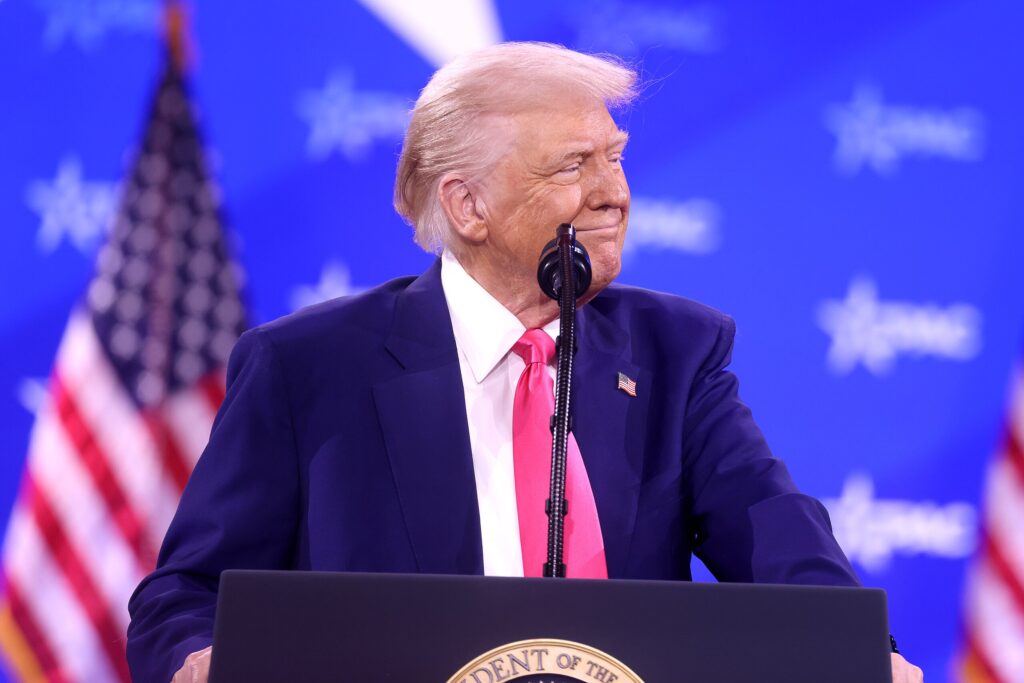
Your point about whether this is primarily due to Trump’s ego, wanting to leave a legacy, seems to suggest there’s no middle ground here. Either the US gets Greenland or we suffer the consequences.
Leaders this week are meeting in Davos: is this another opportunity perhaps to stave off disaster? Trump will be there, might there be a chance for everyone to save face and come back to their senses?
That is a possibility, although I imagine these discussions are going to be very tense. We had a few American government officials go to Copenhagen and again said, look, he’s not speaking for all of us. There are ways of diffusing this that are obvious. The question is, will Trump take them? The European side has basically offered everything it can. They have made it very clear that any kind of blackmail will not succeed. So if there’s a way to create some kind of halfway point, an additional defence agreement, or just something to allow Trump to go away and say, I got most of what I wanted, great. But the atmosphere just isn’t there right now.
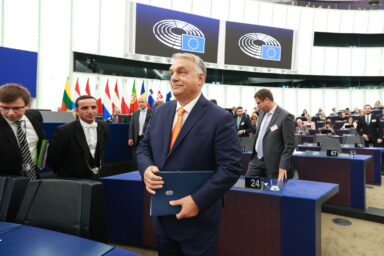
Last week, NATO Secretary General Mark Rutte was in the European Parliament, assuring parliamentarians or lawmakers that he wasn’t too concerned about Greenland. One thing many analysts agree on is that Trump forced everybody to increase their military spending. But I wonder if he’s changed his mind at this point now, since NATO and the EU don’t seem to be enough.
He’s been very slow to understand the seriousness of the situation in this case. I think he hoped it would be bluster and that [Mr Trump] would have moved on by now.