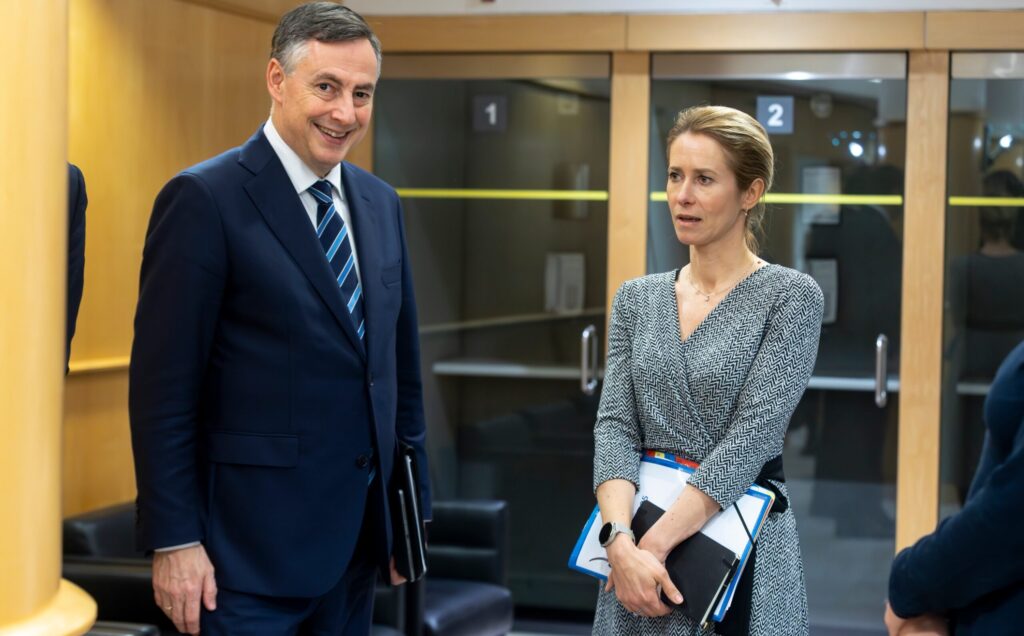
A world without rules, where borders are reformed by force or economic pressure, may offer short-term gains to a few, but it definitely guarantees long-term losses for everyone. German Christian democrat David McAllister provided Tuesday’s plenary debate on foreign affairs, security, and defence with a motto.
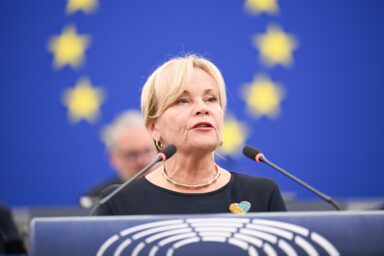
Europe’s legislators spent the evening of January 20th in Strasbourg dissecting annual reports on the the bloc’s security, defense and foregin affairs. MEP David McAllister (EPP/DEU), rapporteur on the foreign-policy report, set the stakes bluntly. “The international order forged after the Second World War based on law institutions and cooperation is unraveling,” he warned.
Mr McAllister insisted that Europe’s first duty is to draw red lines. “Sovereignty and territorial integrity are not optional,” he said, telling colleagues that Ukraine’s battle and Denmark’s stand over Greenland were “the heart of our own security”. He then listed two other priorities: deeper partnerships and a louder trumpet about what the EU already does abroad.
Thijs Reuten (Renew/NLD), shepherding the defence report, pressed the accelerator. “A common and collective European defense is not a luxury. It’s an absolute necessity,” he declared. “Faced with unprecedented threats and risks, we must ask ourselves, if not now, then when?” For him the gap was not only matériel. “We have a deterrence gap, not merely a capability gap.”
Holding the ground
Kaja Kallas, the Union’s high representative on foreign affeairs and defence, replied with a 12-minute tour of the horizon. “Ukraine’s security is European security,” she reminded the chamber. “If Ukraine falls, there is a risk that Europe is next.” She reeled off numbers—“Since the start of Russia’s full-scale invasion, the EU and member states have delivered over €69bn in military assistance”—before turning her fire on Moscow’s wider mischief. “Our response must be collective and decisive.”
Ms Kallas conceded the trans-Atlantic marriage is creaking. “The United States remains an important ally, but…this moment is a chance to be more self-confident and assertive on our interests, and we will defend these interests, if necessary, also against the United States.” She closed with a plea: “When Europe acts as one, we can engage the world as a confident partner.”
Wouter Beke (EPP/BEL) called that unity overdue. “Naivety is not a strategy,” he snorted. “We have to take action in order to protect peace and prosperity.” He demanded “a European Security Council and then gradually a European army,” adding, “If we don’t make headway now, when are we going to do it?”
Decades of complacency
Others jabbed at the Union’s softer spots. Adam Bielan (ECR/POL) fretted about spending gaps: “Poland is reaching 5 per cent of GDP in line with NATO responsibilities, [yet] the EU average remains only around 2.1 per cent.” Nathalie Loiseau (Renew/FRA) scolded decades of complacency: “European defence has to make headway with headwinds against it.” Her warning was stark. “If we remain alone, we will be weak and vulnerable. If we stand united, we will be strong and we will be respected.”
Sergey Lagodinsky (Greens-EFA/DEU) urged cooler realism about Washington. “If our closest partner believes in security through blackmails and deals, Europe must react with strategic maturity,” he said, pushing for “deterrence, real power behind diplomacy”. Marc Botenga (The Left/BEL) turned the accusation around, saying Europe had long “agreed with the United States when it came to bombing countries in the South”. Such double standards, he argued, now sap the EU’s credibility.
A common and collective European defense is not a luxury. It’s an absolute necessity. — MEP Thijs Reuten (Renew/NLD)
Stanislav Stoyanov (ESN/BGR) mistrusted Brussels itself. “Bypassing the right of veto…leads to restricting member states’ powers in the field of foreign policy and security,” he said, insisting that “strong Europe is built on strong nation-states.”
Storm warnings
Still, most speakers circled back to Russian guns and American wobbles. Yannis Maniatis (S&D/GRC) told colleagues that Europe “needs military capabilities…so that we can protect the territorial integrity of all EU member states from Finland to Cyprus and from Greece to Greenland.” Pierre-Romain Thionnet (PfE/FRA) echoed him from the right: “It’s clear that the strategic interests of the US can collide with the strategic interests of Europe.”
Cristian Terheș (ECR/ROU) said deterrence must be credible. “Europe is no longer living in a time of peace by default. Deterrence, preparedness, and resilience must be now guide our actions.” Marie-Agnes Strack-Zimmermann (Renew/DEU) pleaded for purchasing discipline. “We need a true European preference when it comes to the weapons and arms we buy,” she argued.
Isabella Lövin (Greens-EFA/SWE) asked why Gaza’s carnage earned less outrage than Ukraine’s. “We won’t get clarity and visibility if we fall into the trap of double criteria,” she said. Pekka Toveri (EPP/SUO) took the opposite flank: “Wars, including hybrid wars, are not won by defending. It’s time for us to stop thinking about what Russia does to us and start thinking what we are going to do to Russia to stop its aggression.”
Cards on the table
Near the end Ms Kallas returned to the rostrum. “Our shared responsibility is clear…to build a safer, fairer, and more resilient Europe,” she said. Addressing Cypriot complaints, she insisted, “I have been raising Cyprus’ issue with the Turkish colleagues every time I meet them.” She urged MEPs to match their rhetoric with money when the next budget is negotiated.
It’s clear that the strategic interests of the US can collide with the strategic interests of Europe. — Pierre-Romain Thionnet (PfE/FRA)
Mr McAllister closed by asking the House to back “a stronger common foreign and security policy”. Mr Reuten echoed him. “Let’s do it now,” he said, “so that we do not stand here next year and say again, well, we should do this and we should do that.”
Whether that resolve survives the election season—and the chill blowing from Washington—remains to be seen. For now, at least, Strasbourg agrees on one thing. As Ms Loiseau put it, “If we stand united, we will be strong and we will be respected.”